Underfloor Heating in Truro
If you've ever stood on a cold stone floor on a January morning in Truro, you'll know exactly why underfloor heating is becoming one of the most popular home improvements in the city. Whether you're renovating a Victorian terrace near Lemon Street, extending a period cottage on the outskirts, or fitting out a new-build on one of Truro's modern estates, underfloor heating offers a level of warmth and comfort that traditional radiators simply can't match. It's also increasingly practical — freeing up wall space, running efficiently at lower temperatures, and adding genuine value to your home. This guide covers everything you need to know before committing to installation in Truro.
Plumbing Conditions in Truro
Moderately Hard water
Mixed housing stock across different eras. With 22% of properties built before 1919, older pipework and drainage systems are common — specialist knowledge of period properties matters.
Underfloor Heating in Truro — Local Expertise
Truro's housing stock is genuinely varied, and that variety matters when it comes to underfloor heating. The older stone-built properties and period cottages that make up much of the city's character present real challenges — thick granite walls, solid original floors, and limited insulation beneath the ground floor. In these homes, wet underfloor heating (water-fed pipes embedded in a screed) tends to be the better long-term choice, though it requires more disruption and careful assessment of floor depth and existing joists. Modern estates on the edges of Truro are generally far more straightforward — suspended timber floors or concrete slabs with good insulation already in place make installation quicker and cleaner. It's also worth noting that Truro sits in a moderately hard water area, which means corrosion inhibitor and proper system treatment is important for wet UFH systems to prevent scale build-up in the pipework over time — something a good local installer will factor in from the outset.
How We Work
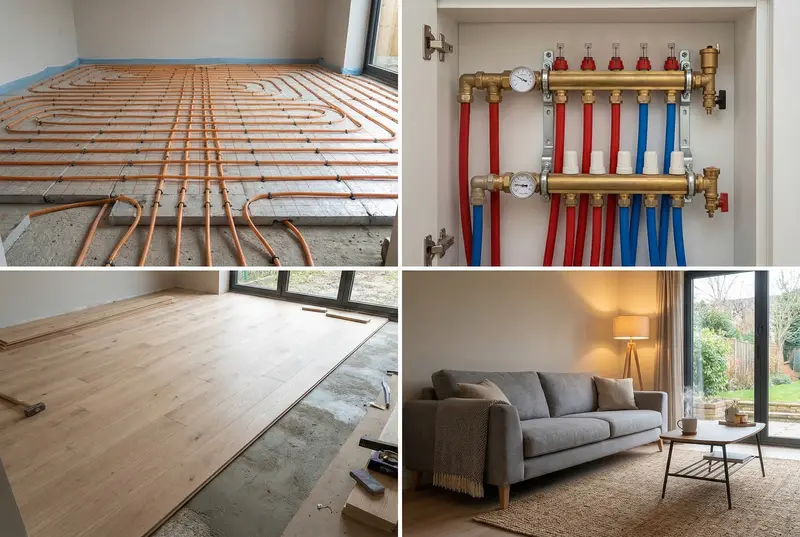
A professional underfloor heating installation in Truro typically begins with a site survey, where an engineer assesses your floor construction, existing heating system, and insulation levels. For wet systems — the most common choice for whole-house or ground-floor installations — the process involves laying insulation boards first to reflect heat upward rather than losing it into the subfloor. Pipework is then laid in loops across the floor area and connected back to a manifold, which controls the flow of warm water from your boiler or heat pump. A self-levelling screed is poured over the pipes, which then needs to cure — typically for several weeks — before the floor finish is laid on top. Electric mat systems are faster to install and better suited to smaller areas like bathrooms or kitchen extensions in Truro homes, with mats rolled out under tiles or stone floors and connected to a thermostat. Throughout the process, a competent installer will pressure-test the pipework, commission the system carefully, and explain how to use the controls efficiently. Most installations across Truro take between two and five days depending on the floor area, though period properties with unexpected subfloor conditions can take longer.
Why Choose a Local Truro Specialist
Choosing a Truro-based installer rather than a national firm makes a real practical difference on a job like this. A local tradesperson will have worked in the city's older stone properties before — they'll know what to expect under a Victorian floor, how to work around Truro's period property quirks, and which suppliers can turn around materials quickly if something unexpected comes up mid-job. They're also accessible for any post-installation questions or adjustments during that first heating season, which matters more than people realise when you're learning how a new underfloor system behaves in your home.
Frequently Asked Questions
Is underfloor heating practical in an older stone-built Truro property?
Yes, but it takes more planning. Solid floors may need to be broken up to add insulation, and floor depth can be tight in older homes. A proper survey is essential before committing. Many Truro homeowners in period properties choose to install UFH in a new extension or rear kitchen renovation rather than tackling the whole ground floor in one go.
How does Truro's moderately hard water affect an underfloor heating system?
Hard water can cause limescale to build up inside wet UFH pipework over time, reducing efficiency and potentially causing blockages. A good installer will add a corrosion and scale inhibitor to the system at commissioning, and you may want to consider a system filter. Annual checks of the inhibitor levels will keep everything running well long-term.
Can I install underfloor heating under the original slate or stone floors in my Truro cottage?
In many cases, yes — slate and stone are actually excellent conductors of heat, making them ideal floor finishes for UFH. The main challenge is whether there's enough depth to add insulation and pipework without raising the finished floor level too significantly. This is something your installer should measure and plan carefully during the initial survey.
How long will it take before I can use the underfloor heating after installation?
For wet systems with a poured screed, you'll typically need to wait four to six weeks for the screed to fully cure before laying any floor covering and commissioning the heating. Your installer should provide a screed commissioning schedule — a gradual warm-up process — to prevent cracking. Electric mat systems can often be up and running within days of installation.
Other Plumbing Services in Truro
What do you need?
Select your service and urgency level