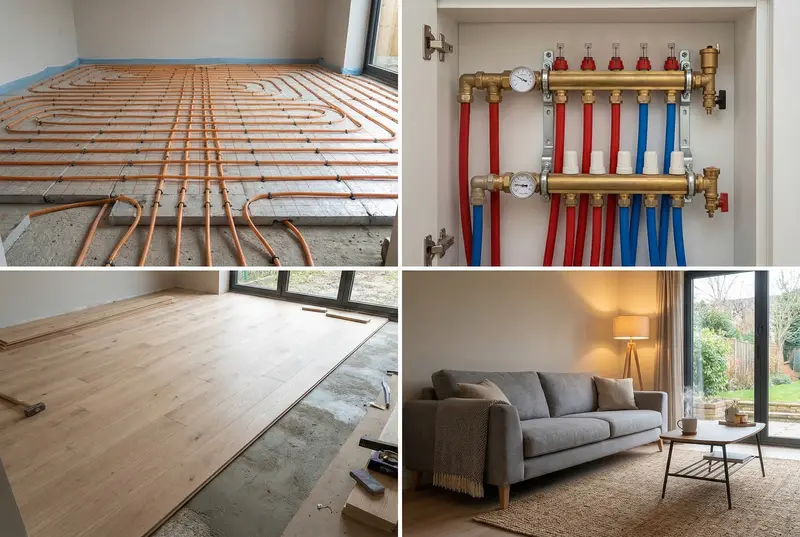
Underfloor Heating in Lincoln
The most common reason Lincoln homeowners start looking into underfloor heating is a kitchen or bathroom renovation — they're already ripping up the floor, so it makes sense to do it properly while they have the chance. Whether you're extending your home near the Brayford Waterfront, renovating an Edwardian semi in the Uphill area, or fitting out a new build on one of Lincoln's modern housing estates, underfloor heating offers a genuinely comfortable, efficient alternative to radiators. Done well, it can reduce heating bills, free up wall space, and make stone or tiled floors a pleasure to walk on rather than something to dread on a cold morning.
Plumbing Conditions in Lincoln
Hard water — Lincolnshire limestone
Mixed housing stock across different eras. With 22% of properties built before 1919, older pipework and drainage systems are common — specialist knowledge of period properties matters.
Underfloor Heating in Lincoln — Local Expertise
Lincoln's housing stock is genuinely varied, and the type of property you own has a real impact on how straightforward an underfloor heating installation will be. Edwardian semis — particularly those in the Uphill and West End areas — often have suspended timber ground floors, which means a wet underfloor system requires careful structural assessment and sometimes insulation work underneath to avoid heat loss downwards. Post-war estates, with their solid concrete subfloors, are often much more practical for a screed-based wet system. Modern developments in areas like North Hykeham and Birchwood tend to come ready with insulated slabs, making them the easiest and most cost-effective properties to work with. Lincoln sits in a moderately hard water area, which is worth factoring in — a water softener or inhibitor treatment is worth considering to protect the pipework in your underfloor heating system and extend its working life. Any good Lincoln-based installer will advise you on this during the survey stage.
How We Work
Underfloor heating installation broadly splits into two types: wet systems (hydronic), which circulate warm water through pipes embedded in or clipped to your floor, and electric mat systems, which use a heating element under tiles or hard flooring. For most Lincoln homes undertaking a full renovation or extension, a wet system connected to the boiler or a heat pump is the more cost-effective long-term option. Electric systems are better suited to smaller areas like a single bathroom where digging up the floor isn't practical. The installation process for a wet system starts with a proper survey of your subfloor, insulation levels, and existing heating setup. The installer will design a pipe layout, specify a manifold location, and calculate the heat output needed for each room. On a solid floor, pipes are typically laid in insulation board before a self-levelling screed is poured over them — you'll then need to wait for the screed to cure fully before laying your final floor finish, which usually takes several weeks. Timber floors use a different approach, with pipes clipped into routed channels in the boards or insulation panels. Commissioning involves slowly bringing the system up to temperature over a few days to settle the screed and check for leaks. Your installer should provide full documentation and a pressure test certificate.
Why Choose a Local Lincoln Specialist
Choosing a Lincoln-based installer who knows the local housing stock really does make a difference. They'll understand the quirks of Edwardian suspended floors, be familiar with the insulation standards needed for Lincoln's older post-war properties, and won't be guessing at the local water chemistry. A local tradesperson is also far easier to get back if there's a commissioning issue or you have questions once the system is running. Look for someone registered with Gas Safe (if connecting to a boiler), a member of a recognised trade body like the CIPHE or APHC, and ideally someone who can show you completed underfloor heating projects in Lincoln specifically.
Frequently Asked Questions
Can underfloor heating be installed under an Edwardian timber floor in Lincoln?
Yes, but it needs careful planning. Suspended timber floors common in Lincoln's Edwardian semis require a different approach — typically aluminium-backed insulation panels with routed channels for the pipes rather than a screed. Insulation underneath is essential to prevent heat loss into the void. It's entirely achievable but expect slightly longer installation times and higher costs than a solid floor job.
How does Lincoln's hard water affect an underfloor heating system?
Lincoln has moderately hard water, which means limescale can gradually build up inside underfloor heating pipework over time, reducing efficiency. Adding a good quality inhibitor to the system fluid and considering a magnetic filter on the manifold is standard practice here. Some installers will also recommend a whole-house water softener if you're investing in a premium system, particularly in older Lincoln properties.
How long does underfloor heating installation take in a typical Lincoln home?
For a single room electric system, installation is usually completed in a day. A wet system for one floor of a Lincoln semi typically takes three to five days for the pipework and screed, then a further three to four weeks for the screed to cure before floor finishes go down. Whole-house installations during a full renovation will be phased alongside other trades and planned accordingly.
Is underfloor heating worth it in Lincoln's newer housing developments?
Absolutely — modern developments in Lincoln such as those around North Hykeham and Birchwood are often the best candidates, since they're built with insulated concrete slabs that make installation straightforward and keep running costs low. Paired with a modern heat pump, underfloor heating in a well-insulated new build is genuinely efficient and comfortable, and adds real value to the property.
Other Plumbing Services in Lincoln
What do you need?
Select your service and urgency level