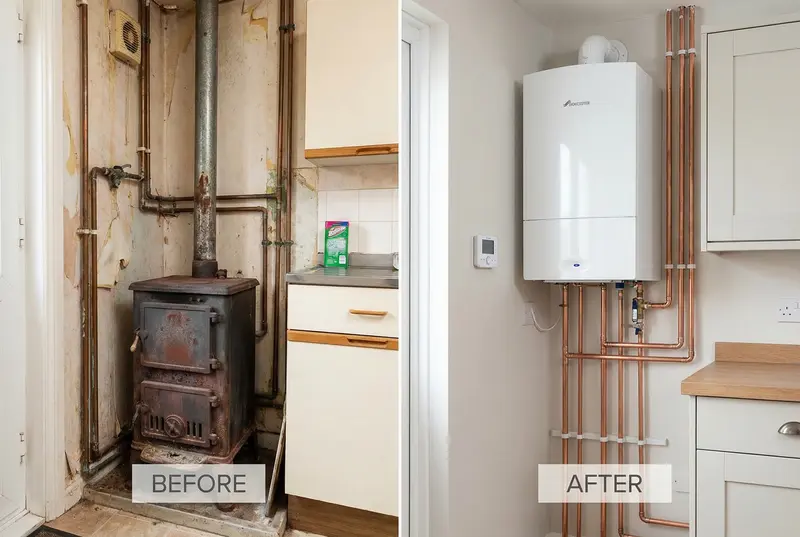
Boiler Installation in Lincoln
Most people in Lincoln start thinking seriously about a new boiler when their old one breaks down in the middle of January and the repair quote is nearly as much as a replacement. It's the nudge nobody wants, but it often turns out to be the right decision. Boilers over 12-15 years old lose efficiency gradually — you might not notice until your gas bills start creeping up year after year. Whether you're replacing a clapped-out unit, upgrading ahead of a house move, or fitting a boiler in a newly built property, getting the installation right from the start saves a lot of headaches down the line.
Plumbing Conditions in Lincoln
Hard water — Lincolnshire limestone Regular descaling and annual servicing is particularly important in Lincoln.
Mixed housing stock across different eras. With 22% of properties built before 1919, older pipework and drainage systems are common — specialist knowledge of period properties matters.
Boiler Installation in Lincoln — Local Expertise
Lincoln's housing stock is genuinely varied, and that variety matters when it comes to boiler installation. Edwardian semis — common in areas like Monks Road and off Yarborough Road — often have original pipework layouts that need updating before a modern combi boiler can be fitted properly. Post-war estates across the south and west of the city frequently have older back boilers or outdated system boilers that haven't been touched in decades. Meanwhile, the modern developments around the north of Lincoln and out towards Canwick tend to have newer systems but may need upgrades as the city's housing stock grows and families expand into larger properties. Lincoln sits in a moderately hard water area, which means limescale build-up is a real consideration — particularly in the heat exchanger of a combi boiler. Fitting a scale reducer or magnetic filter at the time of installation isn't just a nice-to-have here; it genuinely extends the life of your new boiler and protects your warranty.
How We Work
A boiler installation in Lincoln typically takes one to two days depending on the complexity of the job. A straightforward like-for-like swap — replacing an existing combi boiler in the same location — is usually completed in a day. More involved work, such as converting from a back boiler to a combi, relocating the boiler to a different room, or upgrading the pipework and radiators at the same time, will take longer and involves more planning upfront. Here's what to expect from the process. A good engineer will start with a proper heat loss assessment of your home to make sure they're recommending the right boiler size — not just the cheapest unit that fits the space. They'll discuss flue positioning, where the condensate pipe will drain, and whether your current radiators are adequately sized for the new system. On installation day, the old boiler is decommissioned and removed, the new unit is mounted and connected, and the system is flushed and balanced before the engineer fires it up. You should receive a Building Regulations compliance certificate (often called a Benchmark document) and the engineer must register the installation with Gas Safe — this is non-negotiable, not optional. Before they leave, a decent installer will walk you through how to use the new controls and thermostat properly, which more people appreciate than you might expect.
Why Choose a Local Lincoln Specialist
Choosing a Gas Safe registered engineer based in or around Lincoln makes a genuine difference. Local engineers know the quirks of the city's housing stock — the pipework layouts common in Edwardian semis, the system types found on post-war estates, the access challenges in older terraces near the city centre. They're also easier to get back if something needs attention under the workmanship guarantee. Someone travelling in from further afield has less stake in the local reputation they build here. Ask for Gas Safe registration as a minimum, and check that they've done similar installations to yours — back boiler conversions, for instance, are a specific skill set.
Frequently Asked Questions
How long does a boiler installation take in Lincoln?
A like-for-like combi boiler replacement is usually done in a single day. If you're converting from a back boiler, relocating the unit, or having radiators upgraded at the same time, allow two days. Your engineer should give you a realistic timeframe once they've assessed the property — any quote given without a proper look at the job should be treated with caution.
Do I need a new boiler or just a repair — how do I know?
Many Lincoln homeowners on older post-war estates find they're paying for repeated repairs on ageing systems when a new boiler would have paid for itself in efficiency savings within a few years.
Is a combi boiler the right choice for my Lincoln home?
Combi boilers are ideal for most Lincoln homes — they're efficient, compact, and don't need a cold water tank in the loft. However, if you have a larger Edwardian semi with multiple bathrooms and high hot water demand, a system boiler with a cylinder might actually perform better. A proper heat loss survey before installation will confirm which type suits your property and usage.
Does hard water in Lincoln affect my new boiler?
Lincoln's water is moderately hard, which means limescale can gradually damage a boiler's heat exchanger and reduce efficiency over time. Fitting a scale reducer and a magnetic system filter at the point of installation is the practical solution — most good engineers will recommend this as standard. It also helps protect your manufacturer's warranty, many of which require evidence of a filter being fitted.
Other Plumbing Services in Lincoln
What do you need?
Select your service and urgency level