Underfloor Heating in Rotherham
Most people in Rotherham start thinking seriously about underfloor heating when they're already mid-way through a renovation — usually after ripping up old carpets and realising the floor is being replaced anyway. It's one of those installations that makes much more sense to do at that point than to come back to later. Underfloor heating transforms how a room feels, eliminates chunky radiators, and works particularly well with the open-plan layouts that are popular in both new builds and extended older homes across the town. Whether you're renovating a Victorian terrace near the town centre or fitting out a new extension on a post-war estate, this guide covers everything you need to know.
Plumbing Conditions in Rotherham
Moderately Soft water — mixed Pennine/limestone
Mixed housing stock across different eras. With 22% of properties built before 1919, older pipework and drainage systems are common — specialist knowledge of period properties matters.
Underfloor Heating in Rotherham — Local Expertise
Rotherham's housing stock is genuinely varied, and that variety matters when it comes to underfloor heating. The Edwardian semis found in areas like Whiston and Maltby tend to have solid or suspended timber ground floors, which affects which system is suitable — wet underfloor heating can work, but the floor build-up needs careful planning to avoid raising finished floor levels too much. Post-war estates, which make up a significant chunk of Rotherham's housing, often have solid concrete floors that are actually ideal for a screed-based wet system. Modern developments around Waverley and Catcliffe are sometimes already plumbed for underfloor heating, making upgrades or extensions to existing systems straightforward. Because Rotherham sits in a moderately hard water area, it's worth ensuring any wet underfloor heating system is correctly inhibited and includes a magnetic filter — limescale buildup in manifolds and pipework is a genuine long-term risk if the system isn't protected from the outset.
How We Work
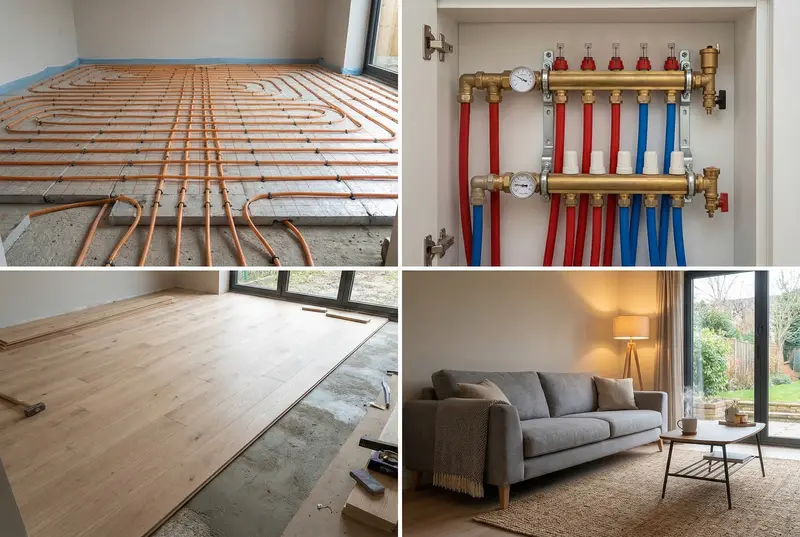
Underfloor heating installation broadly splits into two types: wet systems (also called hydronic), which circulate warm water through pipework connected to your boiler or heat pump, and electric mat systems, which use resistance cables and suit smaller areas like bathrooms. For most Rotherham homes undergoing a full renovation or extension, a wet system is the better long-term investment. The installation process starts with a site survey, where the installer assesses your floor construction, room dimensions, heat loss calculations, and how the system will connect to your existing heating. After agreeing a design, the pipework is laid in a pattern across the floor — either within a new screed layer or through specialist low-profile panels that sit between joists or directly on an existing solid floor. The manifold, which controls flow to each zone, is installed in a cupboard and connected to your boiler or heat pump. If you're adding underfloor heating to just one or two rooms, it typically runs as a separate zone off your existing system. Once pipework is pressure-tested, the floor covering goes on top — tiles, stone, and engineered wood all work well. Electric mat systems, popular for Rotherham bathroom renovations, are quicker to install: the mat is rolled out under tiles, connected to a dedicated thermostat, and the floor is grouted over it as normal. Commissioning and setting up the thermostat controls is the final step.
Why Choose a Local Rotherham Specialist
Choosing a tradesperson who works regularly in Rotherham means you're dealing with someone who understands the local housing stock — they'll know the quirks of Edwardian suspended floors, the typical slab depths on post-war estates, and which suppliers locally stock quality manifold kits and pipework. A local installer is also easier to reach if you need the system adjusting or commissioning tweaked after first use. Word-of-mouth reputation matters more in a town like Rotherham than it does in a big city, so local tradespeople tend to take quality seriously. Always check they're Gas Safe registered if the work involves boiler connections, and ask for evidence of previous underfloor heating installations specifically.
Frequently Asked Questions
Can underfloor heating be installed in an Edwardian semi in Rotherham without raising the floor height significantly?
Yes, but it requires the right system. Low-profile overlay panels can add as little as 15–20mm to the floor height, which is manageable in most renovations. A suspended timber floor may suit a different approach — pipework fitted between joists, heating from below. An experienced installer will assess your specific floor construction and propose the most practical solution.
Will underfloor heating work with my existing boiler?
Often yes, but it depends on the boiler's age, output, and current demand. Underfloor heating runs at lower flow temperatures than radiators, which actually suits modern condensing boilers well. If your boiler is older or already working near capacity, your installer may recommend an upgrade. Heat pumps pair especially well with underfloor systems and are worth considering if you're doing a full renovation.
How long does a wet underfloor heating system take to install in a typical Rotherham home?
For a full ground floor installation in an average three-bedroom semi, expect two to four days for the pipework and manifold, plus time for screed to cure — typically four to six weeks before the floor covering goes on. Electric mat systems in a single bathroom can be completed in a day. Your installer should give you a clear programme before work starts.
Does the moderately hard water in Rotherham cause problems for underfloor heating systems?
It can over time if the system isn't properly protected. Hard water encourages limescale deposits in pipework and manifolds, which reduces efficiency. A good installer will add corrosion inhibitor to the system water and fit a magnetic filter to catch debris. These are standard steps that protect your investment — make sure they're included in any quote you receive.
Other Plumbing Services in Rotherham
What do you need?
Select your service and urgency level