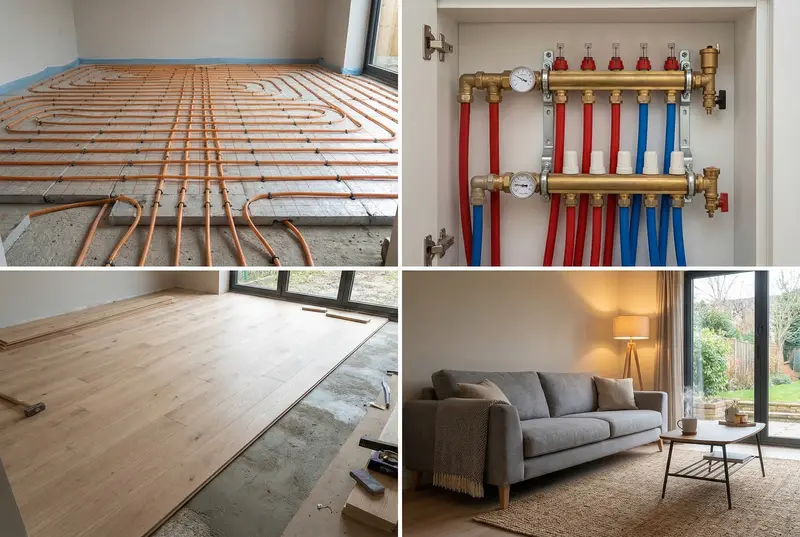
Underfloor Heating in Leeds
It's a significant investment, but one that genuinely pays off — particularly in older Leeds properties where radiators struggle to heat large, draughty rooms efficiently. Whether you're renovating a Victorian terrace in Headingley or updating a detached home in Roundhay, underfloor heating offers a noticeably better level of comfort, frees up wall space, and can reduce running costs when paired with a modern heat pump or combi boiler.
Plumbing Conditions in Leeds
Soft water — Pennine reservoir water
Mixed housing stock across different eras. With 22% of properties built before 1919, older pipework and drainage systems are common — specialist knowledge of period properties matters.
Underfloor Heating in Leeds — Local Expertise
Leeds presents some interesting challenges and opportunities when it comes to underfloor heating. The city's housing stock is dominated by Victorian terraces and Edwardian semis — especially across areas like Hyde Park, Burley, Chapel Allerton, and Meanwood — and these properties weren't built with underfloor heating in mind. Solid ground floors, limited ceiling height, and older joisted timber floors all require careful planning before any system goes in. That said, wet underfloor heating systems work exceptionally well once installed, and the soft water supply that Leeds draws from Pennine reservoirs is actually a real advantage here. Soft water causes far less limescale buildup inside pipework and manifolds than hard water does, meaning UFH systems in Leeds tend to have a longer operational lifespan and require less maintenance over time. It's one less thing to worry about once the job is done.
How We Work
A professional underfloor heating installation in Leeds follows a clear process, though the specifics depend on whether you're going with a wet (hydronic) system or an electric mat system. Wet systems are more cost-effective to run long-term and are the right choice for whole-floor heating across multiple rooms. Electric systems suit smaller areas like bathrooms or kitchen extensions where running pipework isn't practical. The process begins with a heat loss calculation for your home — a proper survey that accounts for your floor type, insulation levels, room dimensions, and your existing boiler or heat source. In Leeds's older Victorian and Edwardian properties, this step is especially important because heat loss through uninsulated ground floors can be significant. For wet systems, the installer will lay insulation boards first to prevent heat escaping downward, then run the UFH pipework in a continuous loop across the floor. A manifold — typically installed in a cupboard or utility space — controls the flow of hot water to each zone. The system is then pressure-tested, connected to your boiler or heat pump, and commissioned carefully, with floor temperature raised gradually over a screed curing period of several weeks if a new screed has been poured. From survey to completion, most installations in Leeds take between two and five days depending on the number of rooms involved. You'll typically be left with full zone controls and a smart thermostat.
Why Choose a Local Leeds Specialist
Choosing a Leeds-based installer rather than a national contractor makes a real difference on a job like this. A local tradesperson will have hands-on experience with the specific property types common across Leeds — they'll know what to expect when lifting floors in a back-to-back terrace in Beeston or working around original tiling in an Edwardian semi in Alwoodley. They're also easier to contact if any commissioning issues arise after the job is done, and they're accountable to their local reputation. Look for someone Gas Safe registered, ideally with CIPHE membership or Trustmark accreditation, and always ask to see examples of comparable Leeds installations.
Frequently Asked Questions
Can underfloor heating be installed in a Victorian terrace in Leeds?
Yes, though it requires more planning than a modern build. Many Leeds Victorian terraces have solid ground floors, which are ideal for a wet screed system. Suspended timber floors can also accommodate UFH using low-profile panels designed to fit between joists. A proper survey will confirm which approach suits your property and whether additional insulation is needed beneath the floor.
Does Leeds's soft water supply make any difference to an underfloor heating system?
It does, and it's a positive one. Leeds is supplied with soft water from Pennine reservoirs, which means far less limescale accumulation inside UFH pipework and manifolds compared to hard water areas. This reduces the likelihood of flow restrictions or efficiency loss over time, and means you're less likely to need chemical inhibitor top-ups as frequently as homeowners in harder water regions.
How long does underfloor heating installation take in a typical Leeds home?
Most single-floor installations in Leeds take two to four days for the physical fitting work. If a new screed is poured over the pipework, you'll then need to allow three to four weeks for it to cure fully before the floor covering goes down and the system is ramped up to operating temperature. Your installer should provide a written commissioning schedule to follow during this period.
Will my existing boiler cope with underfloor heating in a Leeds terraced house?
It depends on the age and output of your current boiler. Underfloor heating runs at lower flow temperatures than traditional radiator systems, which actually suits modern condensing boilers very well. Many Leeds homes will find their existing combi or system boiler is perfectly adequate. An installer will check capacity during the survey stage and flag any upgrades needed before work begins.
Other Plumbing Services in Leeds
What do you need?
Select your service and urgency level