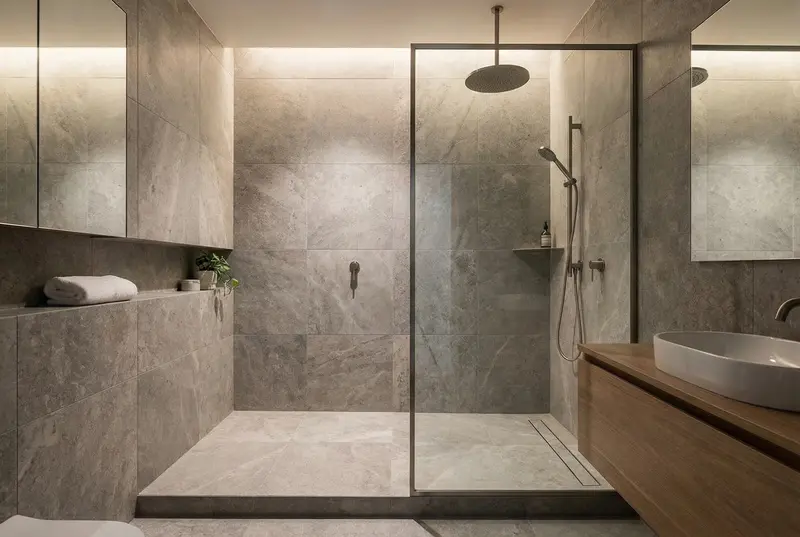
Wet Room Installation in Halifax
Wet rooms have become one of the most popular bathroom upgrades in Halifax over the past few years, and it's easy to see why. They look sleek, they're genuinely easier to clean than a traditional shower enclosure, and done properly, they add real value to your home. But a wet room isn't just a shower tray swap — it's a significant building project that needs proper planning, the right waterproofing, and a tradesperson who knows what they're doing. Get it wrong and you're looking at water damage that can cost far more to fix than the original installation. Get it right and you've got a bathroom that'll last decades with minimal fuss.
Plumbing Conditions in Halifax
Soft water — Pennine reservoir water
Mixed housing stock across different eras. With 22% of properties built before 1919, older pipework and drainage systems are common — specialist knowledge of period properties matters.
Wet Room Installation in Halifax — Local Expertise
Halifax's housing stock throws up some interesting challenges for wet room installation. The older Edwardian semis that line streets across Skircoat, Savile Park, and parts of Boothtown often have solid timber floor joists that need careful assessment before any floor-level drainage is cut in. The subfloor void depth matters enormously for getting the fall right on a linear drain, and in some of these older properties it's tighter than you'd like. Post-war council-built estates across areas like Mixenden and Illingworth tend to have concrete floors, which actually makes the tanking process more straightforward — though they can present their own damp-proofing considerations. Newer developments around the town centre and places like Brighouse Road corridors are generally more accommodating in terms of layout. One genuinely useful thing about Halifax is the soft water supply from Pennine reservoirs — limescale is far less of a problem here than it is in the south of England, which means your shower screen, if you keep one, and your drain cover will stay looking cleaner for longer without heavy-duty descaling products.
How We Work
A proper wet room installation in Halifax follows a clear sequence, and understanding it helps you know what you're paying for. The first stage is a survey — a good installer will assess your subfloor, check the existing drainage run, and confirm whether the room layout actually suits a wet room format. Not every bathroom does, and anyone who skips this step is guessing. Once the design is agreed, the existing bathroom is stripped out completely. If there's a timber floor, the boards come up to assess the joists and install the drainage channel at the correct fall — typically around 1:60 to 1:80 gradient. A concrete floor is graded using a screed overlay. The tanking stage is next and arguably the most important — the entire floor and lower walls (sometimes the full wall height) are coated with a waterproof membrane system, with extra attention to corners and the drain connection point. This cures before anything else goes on top. Tiles or another waterproof surface covering then go down, followed by the wall surfaces, screen if desired, shower fixtures, and final connections by a qualified plumber. Expect the full job to take around five to eight working days depending on room size and complexity. Always make sure building regulations are considered — wet rooms in certain configurations do require a notification.
Why Choose a Local Halifax Specialist
Choosing a Halifax-based installer rather than a national firm or someone travelling in from Leeds makes a practical difference. A local tradesperson will have worked in similar properties across the town — they'll know what Edwardian subfloors in Skircoat tend to look like, and they'll have dealt with the access quirks that come with terraced and semi-detached layouts common throughout Halifax. They're also easier to get back if something needs attention after the job is done. Word of mouth matters in a town this size, and a local installer's reputation in Halifax depends on the quality of work they leave behind.
Frequently Asked Questions
Can a wet room be installed in an Edwardian semi in Halifax with timber floors?
Yes, but it needs careful planning. The joists have to be checked for depth and condition before a drain channel is cut in. In some Halifax Edwardian properties the void is limited, which can affect drain placement. An experienced installer will assess this at survey stage and design the drainage layout accordingly. It's very doable — just not something to rush.
Does Halifax's soft water supply make any difference to a wet room?
It does, positively. Because Halifax water comes from Pennine reservoirs and is naturally soft, limescale buildup on your drain, fixtures, and any glass screen will be significantly less than in hard water areas. You won't need aggressive descaling products, and the room will generally be easier to maintain. It's one of the small but genuine benefits of living in this part of West Yorkshire.
How long does a wet room installation take in Halifax?
Most standard wet room installations in Halifax take between five and eight working days. That covers strip-out, any subfloor preparation, tanking, tiling, and final plumbing connections. More complex jobs in older properties — particularly where floor structure work is needed — can run to ten days. Your installer should give you a realistic timeline at the quote stage, not just the best-case scenario.
Do I need building regulations approval for a wet room in Halifax?
In most cases, a wet room itself doesn't require full planning permission, but if the electrical work involved includes new circuits or the project forms part of a larger extension, building regulations may apply. Any electrical work in a bathroom must comply with Part P of the Building Regulations regardless. A reputable Halifax installer will advise you on what notifications are needed before work starts.
Other Plumbing Services in Halifax
What do you need?
Select your service and urgency level