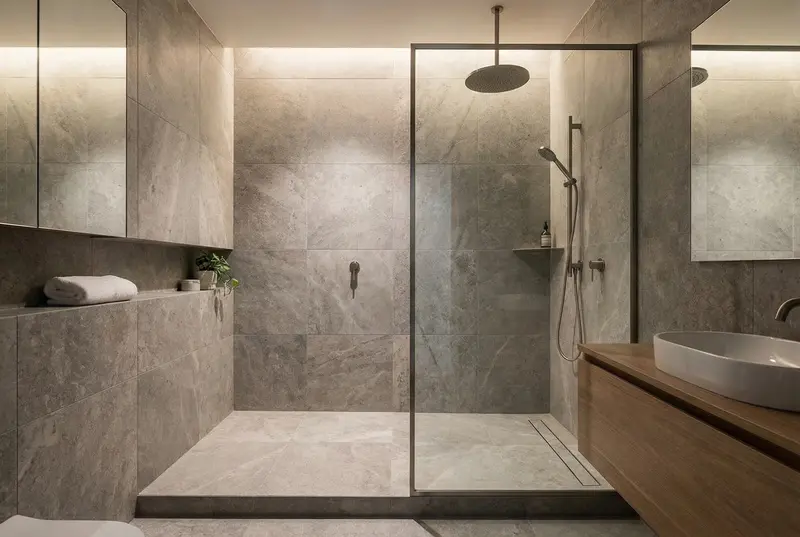
Wet Room Installation in Leeds
That range sounds wide, but it reflects real differences in bathroom size, tile choices, drainage complexity, and how much structural work is needed before a single tile goes on the wall. Done properly, a wet room adds genuine value to a Leeds home and can transform a tired, cramped bathroom into something genuinely impressive. Done badly — with inadequate tanking or poor drainage falls — it becomes an expensive leak. This guide explains what you're actually paying for and what the process involves.
Plumbing Conditions in Leeds
Soft water — Pennine reservoir water
Mixed housing stock across different eras. With 22% of properties built before 1919, older pipework and drainage systems are common — specialist knowledge of period properties matters.
Wet Room Installation in Leeds — Local Expertise
Leeds has a huge stock of Victorian terraces and Edwardian semis, particularly across areas like Headingley, Hyde Park, Chapel Allerton, and Burley. These properties present specific challenges for wet room installation that newer builds simply don't. Floors are often timber joists rather than concrete slabs, which means a linear drain or recessed shower tray requires careful structural assessment and sometimes the installation of a floating screed or specialist wet room former to achieve the correct drainage gradient without compromising the floor's integrity. Wall construction in older Leeds properties is frequently solid brick with plaster directly applied, which can hide uneven surfaces and damp patches that need addressing before tanking begins. On the positive side, Leeds benefits from a soft water supply drawn from Pennine reservoirs, which means limescale build-up on glass screens and tile grout is far less of an issue here than in hard water areas. Your wet room will stay looking cleaner for longer with minimal maintenance, which is a genuine practical advantage worth knowing about.
How We Work
The process starts with a site survey, where an experienced installer assesses the existing bathroom, checks floor construction, identifies waste pipe routes, and discusses your layout and finish preferences. For most Leeds Victorian terraces and Edwardian semis, this survey stage is particularly important — the installer needs to understand what's beneath the floorboards before committing to a design. Once the plan is agreed, the installation begins with full strip-out of the existing bathroom, removal of tiles, sanitary ware, and flooring down to the structural substrate. If the floor is timber, a cement board or specialist wet room deck is fitted over the joists to create a stable, waterproof base. The entire floor and walls to a height of at least 1.8 metres are then tanked using a purpose-made waterproofing membrane — this is the most critical stage and should never be rushed or skimped on. Drainage is set into the screed at the correct fall to direct all water efficiently to the outlet. Once the tanking is cured and tested, tiling begins, followed by the installation of the shower valve, screen if required, sanitaryware, and all fixtures. A final seal around all joints and penetrations completes the waterproofing. From strip-out to finished room, most Leeds wet room projects take between five and ten working days depending on complexity.
Why Choose a Local Leeds Specialist
Choosing a tradesperson who works regularly in Leeds makes a practical difference. They'll already understand the quirks of Victorian and Edwardian properties across the city — the uneven floors in Headingley terraces, the solid walls in Chapel Allerton semis, the tight bathroom layouts common across inner Leeds. A local installer also has established relationships with Leeds-based tile suppliers and bathroom showrooms, which can give you better access to materials and quicker resolution if something needs replacing. And if anything needs attention after completion, they're not a four-hour drive away.
Frequently Asked Questions
Can a wet room be installed in a Victorian terrace with timber floors?
Yes, and it's done regularly across Leeds. The key is using a wet room former or cement board over the joists rather than cutting into them, then applying a full tanking system. A good installer will assess the floor structure during the survey and confirm the right approach for your specific property before any work begins.
How long does a wet room installation take in Leeds?
Most projects in Leeds take between five and ten working days from strip-out to completion. Larger rooms, complex layouts, or properties requiring additional structural floor preparation — common in older Leeds terraces — can extend this slightly. Your installer should give you a realistic programme after the initial survey so you can plan accordingly.
Do I need planning permission for a wet room in Leeds?
In most cases, no. A wet room conversion is treated as a like-for-like bathroom replacement and falls within permitted development. However, if your Leeds property is listed or sits within a conservation area — parts of Headingley and Chapel Allerton have conservation designations — it's worth checking with Leeds City Council before proceeding, just to be certain.
Is soft water in Leeds actually better for wet rooms?
It genuinely is. Leeds receives soft water from Pennine reservoirs, meaning limescale deposits on glass screens, tile surfaces, and shower fittings are minimal compared to hard water areas. This keeps your wet room looking better for longer with less cleaning effort. It also means the grout between tiles is less prone to the chalky build-up that plagues bathrooms in areas like London or the South East.
Other Plumbing Services in Leeds
What do you need?
Select your service and urgency level