Underfloor Heating in Wells
Underfloor heating is one of those upgrades that genuinely transforms how a home feels to live in — warm floors, no cold spots, and radiators off the walls freeing up space. In Wells, interest in underfloor heating has grown steadily, particularly among homeowners renovating older properties or finishing new extensions. But it's not a straightforward swap-out job. The character of Wells housing stock, from medieval stone cottages near the cathedral to post-war semis and newer builds on the edge of town, means each installation comes with its own set of considerations. Getting proper local advice before you commit is essential, and understanding what's involved helps you plan the budget and timeline realistically.
Plumbing Conditions in Wells
Moderately Hard water
Mixed housing stock across different eras. With 22% of properties built before 1919, older pipework and drainage systems are common — specialist knowledge of period properties matters.
Underfloor Heating in Wells — Local Expertise
Wells presents a genuinely varied picture when it comes to underfloor heating suitability. The older stone-built properties and period cottages that make up much of the town's character are beautiful but often present challenges — solid stone floors, low ceiling heights, and original flagstones that owners understandably want to keep. These properties can still benefit from underfloor heating, but they typically need more preparation work, better insulation boards, and careful thought about heat output to compensate for older, less airtight building fabric. Modern estates on the outskirts of Wells are generally far simpler to work with, often built with underfloor heating compatibility in mind or at least with the insulation levels that make it efficient to run. Wells sits in a moderately hard water area, which is worth bearing in mind for wet underfloor heating systems — a quality inhibitor and, in some cases, a scale reducer or filter on the manifold feed can protect your pipework and boiler from limescale buildup over time, extending the life of the whole system significantly.
How We Work
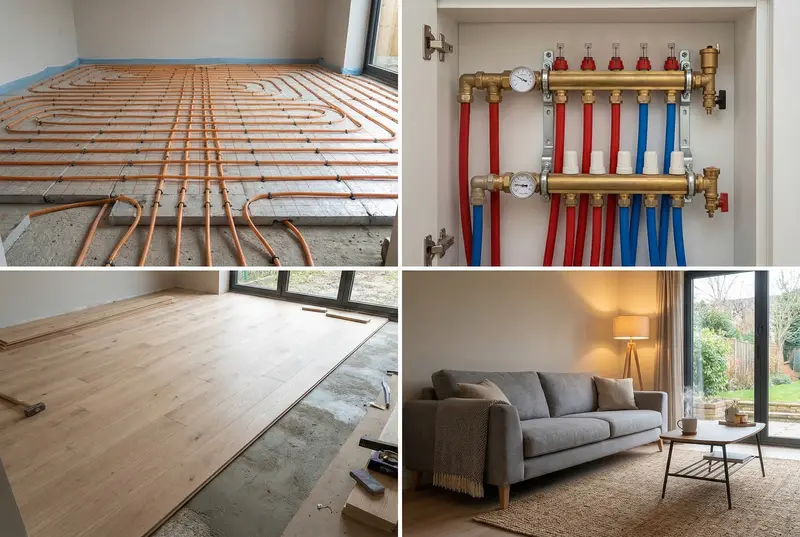
A wet underfloor heating installation — the type connected to your boiler or heat pump — follows a clear process, though the timeline varies depending on your property. The job typically starts with a site survey where the installer assesses your floor construction, existing heat source, and room-by-room heat loss. For Wells properties with solid stone or flagstone floors, this stage matters most — the installer needs to establish whether you're laying screed over insulation, using a low-profile system to minimise floor height gain, or working with a suspended timber floor that requires a different pipe clip and batten approach entirely. Once the design is agreed, insulation boards go down first to stop heat escaping downward. Pipework is then laid in loops across each zone, connected back to a manifold that controls flow to individual rooms. In a screed installation, the concrete mix is poured over the pipes and left to cure — this typically takes several weeks before the system is commissioned. Electric underfloor heating, more common in Wells bathrooms and smaller renovation projects, is faster to install with no screed required, but costs more to run day to day. Either way, commissioning involves pressure testing the pipework, balancing the flow rates, and a slow warm-up process to bed the system in properly before it's handed over to you.
Why Choose a Local Wells Specialist
Working with a tradesperson who knows Wells makes a practical difference. Someone familiar with the town's older stone-built properties and period cottages will have tackled the quirks before — whether that's solid limestone floors, unpredictable subfloor depths, or the constraints of cottage layouts where routing pipework back to a manifold takes creative thinking. A local installer will also have relationships with suppliers in the area, which helps with material lead times and any call-backs during the commissioning period. For an investment of this size, you want someone you can reach easily if questions come up after the job is done.
Frequently Asked Questions
Can underfloor heating be fitted in an older stone cottage in Wells without losing ceiling height?
Yes, though it takes the right system choice. Low-profile overlay systems can add as little as 15–18mm to floor height, making them suitable for period properties where headroom is tight. Your installer should measure existing door clearances and assess the floor substrate before recommending an approach. Solid limestone floors may need grinding back or removal to keep the overall height acceptable.
Does the moderately hard water in Wells affect an underfloor heating system?
It's worth factoring in. Hard water can cause limescale to build up inside the pipework and at the manifold over time, reducing efficiency and potentially causing blockages. A good installer will add a corrosion inhibitor to the system fluid and may recommend a scale filter on the feed. Annual system checks help catch any early signs of buildup before they become a problem.
How long does a full underfloor heating installation take in a Wells home?
For a screed-based wet system covering a ground floor, allow two to four days for the physical installation, then four to six weeks for the screed to cure before the system is commissioned and brought up to temperature. Electric systems in a single room can be completed in a day. Whole-house retrofits in older Wells properties with more complex floors take longer to survey, plan, and complete.
Is underfloor heating compatible with the heat pumps being installed on newer Wells properties?
Absolutely — underfloor heating and heat pumps are genuinely well matched. Heat pumps work most efficiently at lower flow temperatures, which is exactly how underfloor heating operates. If you're on a newer Wells estate and considering a heat pump in future, installing underfloor heating now positions you well for that upgrade. An installer can design the system with heat pump compatibility in mind from the outset.
Other Plumbing Services in Wells
What do you need?
Select your service and urgency level