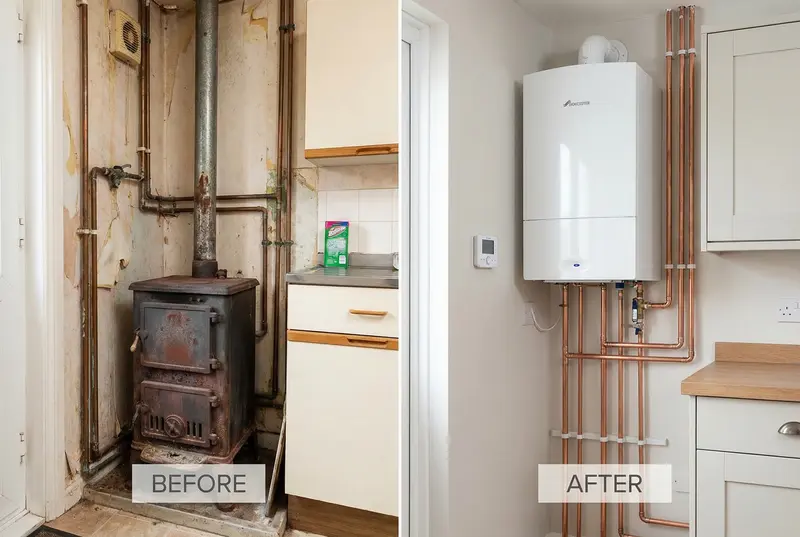
Boiler Installation in Wells
Replacing a boiler in Wells isn't quite the same as swapping one out in a modern city suburb. The city's mix of centuries-old stone cottages, Georgian townhouses, and newer estate homes all present different challenges, and finding an engineer who understands those differences matters more than most homeowners realise. Whether your current boiler has finally given up the ghost or you're planning ahead before winter, a properly specified and installed boiler will make a real difference to your comfort and energy bills. This guide covers what to expect from a boiler installation in Wells, what it's likely to cost, and what questions are worth asking before any work begins.
Plumbing Conditions in Wells
Moderately Hard water
Mixed housing stock across different eras. With 22% of properties built before 1919, older pipework and drainage systems are common — specialist knowledge of period properties matters.
Boiler Installation in Wells — Local Expertise
Wells is unusual for a Somerset town its size — you genuinely do find Victorian stone-built terraces sitting alongside thatched period cottages and relatively modern red-brick estates, sometimes within the same street. Each of these property types throws up its own considerations when it comes to boiler installation. Older stone-built properties often have solid walls, making pipework routes more complicated and labour-intensive. Period cottages may have limited flue options, awkward cupboard spaces, or original gravity-fed systems that need a full conversion to a modern pressurised setup. The newer estates around the edges of Wells are generally more straightforward, though even here you can run into undersized original installations that were never quite right for the property. Wells also sits in a moderately hard water area, which is worth knowing because limescale build-up inside heat exchangers and pipes is a genuine concern over time. A good installer will factor this in, either by fitting a scale reducer or recommending a system filter to protect your investment from day one.
How We Work
A boiler installation in Wells typically begins with a proper survey of your home — not just a glance at the old boiler, but a genuine assessment of your heating and hot water needs, the condition of your existing pipework, radiator sizes, and where the new unit will be sited. This matters because the right boiler for a four-bedroom stone house near the Cathedral is likely different from what suits a two-bedroom cottage on one of the smaller residential roads. Once the specification is agreed, most installations follow a clear sequence. The old boiler is drained down and removed, the pipework is checked and modified as needed, and the new unit is fitted and connected. If you're moving from an older open-vented or gravity system to a modern combi or system boiler, the header tank in the loft is removed and the pipework reconfigured — this is where the extra labour time can add up in older properties. The engineer will also flush the system using a chemical cleaner to remove sludge and debris before the new boiler fires up, which is essential for protecting its warranty. Once running, the system is balanced — meaning radiator valves are adjusted so heat distributes evenly throughout the property. Finally, you should receive a full commissioning certificate, the manufacturer's warranty registration, and a Building Regulations certificate (Part P/Part L) for your records. The whole process typically takes one to two days depending on the complexity of the job.
Why Choose a Local Wells Specialist
Choosing an engineer who actually works in and around Wells regularly is worth more than it might seem. They'll be familiar with the quirks of the older stone-built stock in the city centre, know which flue routes tend to cause problems in period properties, and understand the local Building Control process. Response times for any follow-up queries or warranty call-outs are also quicker when your installer is based nearby rather than travelling in from a larger centre. Word of mouth still carries real weight in a community the size of Wells, and a tradesperson with a local reputation to protect tends to take more care over the finish of their work.
Frequently Asked Questions
How long does a boiler installation take in a typical Wells property?
Most straightforward replacements are completed in a single day. If you're converting from an old gravity-fed system — common in Wells period properties — or having the boiler relocated to a different room, allow two days. Your engineer should give you a realistic timeframe once they've assessed the property, so you're not left without heating overnight unexpectedly.
Do I need to do anything about limescale given Wells' hard water supply?
It's well worth discussing this with your installer before the job starts. A scale reducer fitted on the cold water inlet to the boiler is a relatively small additional cost but can meaningfully extend the life of the heat exchanger. Combined with a magnetic system filter to catch sludge and debris, it's genuinely good value for money and is often required to maintain the manufacturer's warranty.
My Wells cottage has solid stone walls — does that make boiler installation more complicated?
It can do, yes. Running new pipework or a flue through thick stone walls takes longer and may require specialist fixings or core drilling, which adds to the labour cost. The flue outlet position also needs careful thought in older properties, particularly if you're in a conservation area near the city centre. A site survey before agreeing a price is essential in these cases.
What paperwork should I receive after my boiler is installed in Wells?
You should receive a Building Regulations compliance certificate (your installer notifies Building Control on your behalf under the Competent Person Scheme), the manufacturer's warranty documentation and registration confirmation, a Gas Safe certificate, and a commissioning record. Keep these safe — you'll need them if you ever sell the property, and they're often required to make a warranty claim.
Other Plumbing Services in Wells
What do you need?
Select your service and urgency level