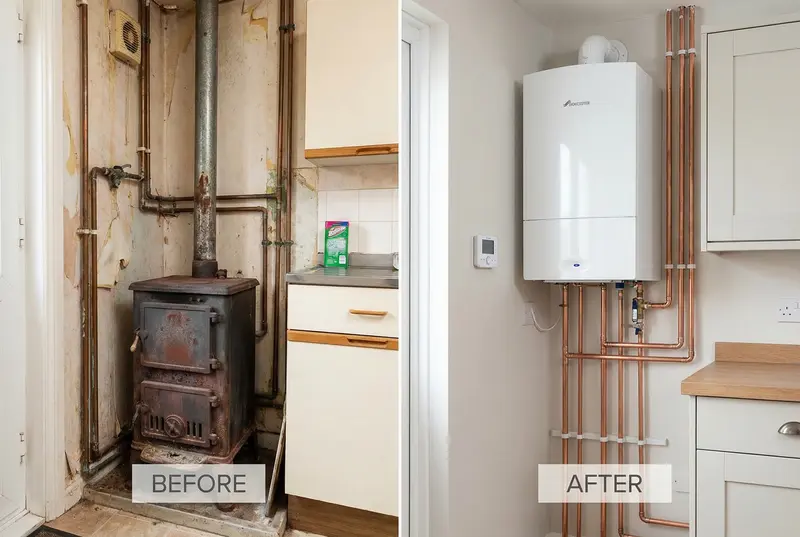
Boiler Installation in Reading
If your boiler has been struggling through another cold Berkshire winter — making strange noises, taking forever to heat up, or simply failing to fire — then a new boiler installation in Reading is probably overdue rather than optional. Reading's housing stock is a real mix of ages and styles, and what works for a Victorian terrace in Caversham is a different job entirely from a 1960s semi in Whitley or a new-build flat in the town centre. Getting the right boiler, properly sized and correctly installed, makes a real difference to your energy bills and your comfort. This guide covers what you actually need to know before you commit.
Plumbing Conditions in Reading
Hard water — Thames Valley chalk Regular descaling and annual servicing is particularly important in Reading.
Mixed housing stock across different eras. With 22% of properties built before 1919, older pipework and drainage systems are common — specialist knowledge of period properties matters.
Boiler Installation in Reading — Local Expertise
Reading presents some specific challenges when it comes to boiler installations that aren't always obvious upfront. The town sits firmly within a hard water zone, supplied by Thames Water and Affinity Water, and the limescale build-up this causes is a genuine problem. Over the years, scale accumulates inside heat exchangers, pipework, and radiators — reducing efficiency and shortening a boiler's working life. Any competent installer working in Reading should be recommending a scale reducer or water softener at the point of installation, and certainly a full system flush before the new boiler goes in. Property type matters too. Reading's Edwardian semis — common in areas like Caversham, Earley, and Tilehurst — often have older, wider radiators and larger pipe runs that need careful assessment before a new condensing combi goes in. Post-war estates around Whitley and Southcote frequently have gravity-fed systems with tanks in the loft that need converting. Modern developments in the town centre or along the river tend to be smaller and well-insulated, often suited to compact combi boilers. A one-size-fits-all approach simply doesn't work here.
How We Work
A proper boiler installation in Reading follows a clear sequence, and understanding it helps you ask the right questions when getting quotes. The process starts with a heat loss survey — a good installer will assess the size of your property, the number of radiators, your hot water demand, and the condition of your existing pipework before recommending a boiler model or output. Skipping this step is a red flag. Once the right boiler is specified, the installation day typically takes between six and ten hours for a straightforward like-for-like swap. More complex jobs — such as converting from a heat-only system to a combi, relocating the boiler, or upgrading the flue — can run across two days. The installer should drain and power-flush the system before connecting the new unit, which is especially important in Reading given the limescale and sludge that builds up over years in hard water areas. After installation, the engineer will commission the boiler, balance the radiators, and register the installation with Gas Safe and the manufacturer. This registration is what triggers your warranty — typically five to ten years depending on the brand — so make sure it's done. You'll also need a new boiler pack with documentation, and your installer should walk you through the controls before leaving. Building regulations notification is handled by the Gas Safe registered engineer as part of the job.
Why Choose a Local Reading Specialist
Choosing a Reading-based installer rather than a national call centre operation genuinely matters for this kind of work. A local engineer will know the quirks of the area's hard water supply and build that into their recommendation from day one. They'll be familiar with the typical pipework layouts in Caversham Edwardian semis, the loft tank arrangements common in Whitley post-war estates, and the tight utility cupboard setups in town centre conversions. They're also far easier to reach if something needs adjusting after the job, and their reputation in Reading depends on the quality of their work — that accountability counts for something.
Frequently Asked Questions
How long does a boiler installation take in Reading?
A straightforward like-for-like combi swap usually takes one full day — around six to eight hours. If you're switching from a conventional system with a loft tank, or if the boiler is being relocated, allow for two days. Your installer should give you a clear timeframe when they survey the job, not just a rough guess over the phone.
Do I need a system flush before my new boiler is fitted?
In Reading, yes — almost certainly. The area's hard water means most existing systems carry a significant load of limescale and magnetite sludge. Installing a new boiler onto a dirty system is one of the most common reasons warranties are invalidated. A power flush or chemical flush before installation is strongly recommended and should be factored into your quote upfront.
Is a combi boiler the right choice for my Reading home?
It depends on the property. Combi boilers work well in smaller homes and modern developments where hot water demand is modest. In larger Reading properties — such as a four-bedroom Edwardian semi with multiple bathrooms — a system boiler with a cylinder may deliver better hot water pressure and flow rates. A proper heat loss survey will clarify what's genuinely right for your home.
What warranty should I expect on a new boiler in Reading?
Most reputable brands offer five to ten years when installed and registered by a Gas Safe engineer. The installation must be registered with the manufacturer within a set window — usually 30 days — to activate the warranty. Make sure your installer confirms this has been done. Some manufacturers also require annual servicing to keep the warranty valid, so factor that into your running costs.
Other Plumbing Services in Reading
What do you need?
Select your service and urgency level