Leak Detection & Repair in Reading
Leaks have a way of hiding in plain sight until they've already done serious damage. Whether you've noticed a damp patch on a ceiling, a suspiciously high water bill, or the sound of running water when everything should be off, getting a leak found and fixed quickly is one of the most important things you can do as a homeowner. In Reading, where a large proportion of housing stock ranges from century-old Edwardian semis to sprawling post-war estates, the variety of pipework and plumbing systems means leaks can come from dozens of different sources — and tracking them down takes real local knowledge and the right detection equipment.
Plumbing Conditions in Reading
Hard water — Thames Valley chalk
Mixed housing stock across different eras. With 22% of properties built before 1919, older pipework and drainage systems are common — specialist knowledge of period properties matters.
Leak Detection & Repair in Reading — Local Expertise
Reading's mix of property types creates a genuinely varied set of leak challenges. Edwardian semis in areas like Caversham, Earley, and the avenues off the Oxford Road often have original or part-replaced pipework, including sections of lead pipe that can corrode and fail silently inside walls or under floors. Post-war estate properties across Whitley, Tilehurst, and Woodley tend to have copper or early plastic systems that are reaching the end of their reliable lifespan. Newer developments — particularly around the town centre regeneration zones and along the M4 corridor — are more likely to use modern push-fit systems, but these aren't immune to joint failures or installer errors. Reading also sits firmly in a hard water area, supplied by Thames Water and Affinity Water, which means limescale build-up inside pipes and around joints is a very real factor. Over time, scale deposits can cause pressure fluctuations and weaken connections, increasing the likelihood of slow leaks developing in heating systems and supply pipes alike.
How We Work
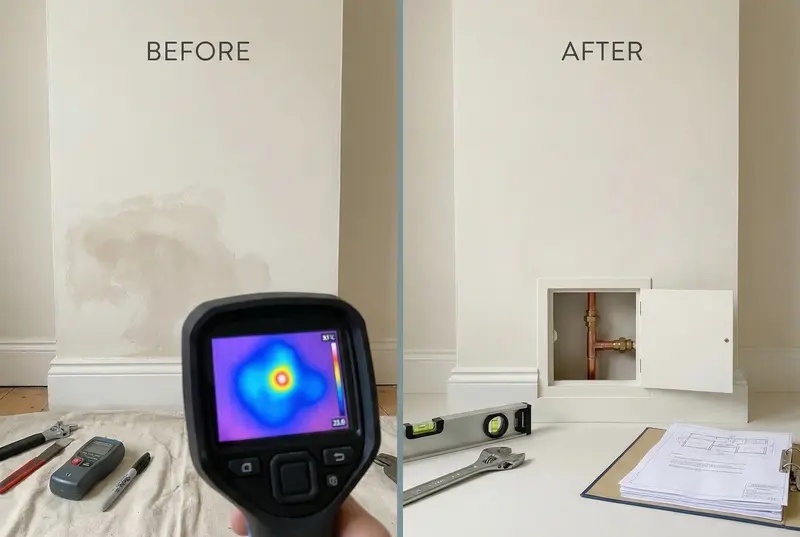
When a plumber arrives to investigate a suspected leak in your Reading home, the first step is a thorough assessment — asking you what you've noticed, when it started, and checking your water meter for movement when all taps are off. This alone can confirm whether a leak is definitely present before any intrusive work begins. Modern leak detection uses a combination of acoustic listening devices, thermal imaging cameras, and tracer gas equipment to pinpoint the exact location of a leak without unnecessary damage to floors, walls, or ceilings. This matters enormously in period properties where original tiling or plasterwork is involved. Once the leak is located, you'll be given a clear explanation of what's been found and what repair options are available. Most straightforward leaks — a failed joint, a small pipe section, a corroded fitting — can be repaired in the same visit. More complex situations, such as a leak beneath a concrete floor or behind a tiled bathroom wall, may require a short follow-up visit once the repair route is agreed. After the repair, a plumber will re-check the system to confirm there's no residual water movement and will typically advise on any related issues spotted during the process, such as early signs of corrosion on adjacent pipework. The whole process is designed to be as low-disruption as possible.
Why Choose a Local Reading Specialist
Choosing a plumber who knows Reading well genuinely makes a difference with leak detection. A tradesperson familiar with local property types will know that a 1930s semi in Caversham is likely to have a very different pipe layout to a 1970s mid-terrace in Whitley, and they'll approach both accordingly. Local plumbers also tend to have established relationships with suppliers in the Reading area, which means parts are sourced quickly rather than waiting on deliveries. And frankly, a plumber who works in the town regularly has a reputation to protect — you'll get honest advice rather than unnecessary upselling.
Frequently Asked Questions
How do I know if I have a hidden leak in my Reading home?
The most reliable first check is your water meter. Turn off all water-using appliances and taps, then watch the meter for 30 minutes — if the dial moves, water is escaping somewhere. Other signs include unexplained damp patches, a musty smell in rooms that should be dry, or a water bill that's noticeably higher than usual. In Reading's older housing stock, internal pipe leaks can go unnoticed for months.
Can hard water in Reading cause leaks?
Yes, it's a genuine risk. Reading sits in a hard water zone served by Thames Water and Affinity Water, and limescale build-up inside pipes can restrict flow and increase pressure on joints over time. Scale can also form around valve seats and fittings, making them more prone to weeping leaks. Boiler and heating system connections are particularly vulnerable, especially in older properties that haven't had system treatment applied.
Will the plumber need to break into my walls or floors to find the leak?
Not necessarily. Modern acoustic and thermal detection equipment means a skilled plumber can often pinpoint a leak's exact location before making any access holes. This is especially important in Reading's Edwardian semis where original tiled floors or decorative plasterwork are worth preserving. If access is unavoidable, a good tradesperson will take the smallest route possible and discuss the approach with you beforehand.
How quickly can a leak be repaired once it's found?
In most cases, straightforward leaks — a cracked joint, a failed compression fitting, a section of corroded copper pipe — can be fixed on the same visit as the detection work. More complex repairs involving buried pipes or tiled surfaces may need a follow-up appointment once the repair method is agreed. Most Reading plumbers carrying out this type of work will aim to complete detection and basic repair within a single half-day visit.
Other Plumbing Services in Reading
What do you need?
Select your service and urgency level