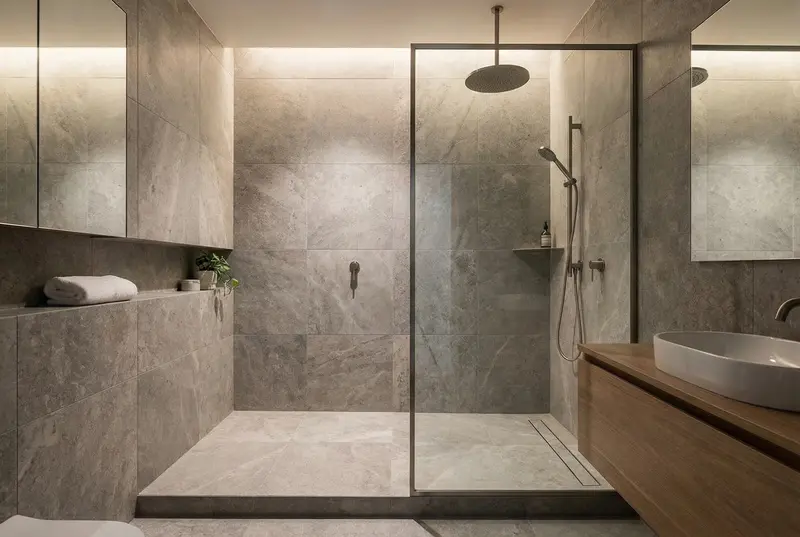
Wet Room Installation in Reading
Wet rooms have become one of the most popular bathroom upgrades across Reading, and it's easy to see why. A properly installed wet room transforms a tired, cramped bathroom into something genuinely luxurious — fully waterproofed, easy to clean, and ideal for anyone with mobility needs or simply a taste for clean, modern design. But wet room installation isn't a job for the inexperienced. Done badly, it can cause serious water damage hidden behind walls and under floors for months before anyone notices. Getting it right in Reading requires a tradesperson who understands the specific quirks of local properties and knows how to build a watertight system that will last decades.
Plumbing Conditions in Reading
Hard water — Thames Valley chalk
Mixed housing stock across different eras. With 22% of properties built before 1919, older pipework and drainage systems are common — specialist knowledge of period properties matters.
Wet Room Installation in Reading — Local Expertise
Reading's housing stock is wonderfully varied, and that variety directly affects how a wet room installation is scoped and priced. The Edwardian semis you find across areas like Caversham, Tilehurst, and Earley typically have solid timber floor joists that require careful reinforcement and waterproof tanking before a wet room floor can be laid — cutting corners here is how leaks develop. Post-war estates, common throughout Whitley, Southcote, and parts of Woodley, often have concrete ground floors that are actually easier to work with, but may have older pipework that needs assessing before the project begins. Newer developments in the town centre and around the station quarter tend to have more straightforward access but limited floor void depth. Reading also sits in a hard water area, supplied by Thames Water and Affinity Water. Hard water accelerates limescale build-up on shower screens and fittings, so many Reading homeowners opt for frameless glass or open designs specifically to reduce cleaning effort — a smart choice that any experienced local installer will suggest.
How We Work
A wet room installation is a multi-stage process that typically takes between five and ten working days depending on the size of the space and the complexity of the waterproofing required. The first stage is a thorough survey of the existing bathroom — checking floor structure, drain positions, existing pipework, and the condition of any walls that will be tiled or lined. In Reading's older Edwardian properties especially, this survey stage is critical because hidden issues like sagging joists or outdated lead pipework can significantly affect the plan. Once the survey is complete and materials are specified, the existing bathroom is stripped out entirely. The floor is then prepared — either reinforced and boarded in the case of a timber sub-floor, or cleaned back to a sound concrete base — before a full tanking system is applied. This waterproof membrane is arguably the most important part of the whole job; it goes across the floor, up the walls to at least 150mm above the highest water line, and into every corner and junction. The linear or point drain is then set into the screed at the correct fall, typically between 1:40 and 1:80 gradient, to ensure water flows away cleanly without pooling. After the screed cures — usually 24 to 48 hours — tiling can begin, followed by fitting the shower valve, screen if required, and final plumbing connections. A good installer won't rush the cure times, and if anyone is quoting you a three-day wet room in a Victorian terrace, that's a warning sign worth heeding.
Why Choose a Local Reading Specialist
Choosing a Reading-based installer for your wet room isn't just about convenience — it genuinely affects the quality of the job. A local tradesperson will have worked in Reading's Edwardian terraces and post-war semis repeatedly and will know immediately what to look for during the survey stage. They'll have local supplier relationships that keep material costs competitive, and they'll be available if any snagging issues arise after completion. They'll also understand Thames Water's requirements around drainage connections in the area. Tradespeople who travel in from outside the county often miss these local details, and with a job as technically demanding as wet room waterproofing, local knowledge really does make a tangible difference to the finished result.
Frequently Asked Questions
Can a wet room be installed in an Edwardian semi in Reading?
Yes, absolutely — but it requires more preparation than a modern property. The timber floor joists common in Reading's Edwardian homes need to be checked, potentially reinforced, and overlaid with a rigid waterproof board before tanking begins. It's more work, but experienced local installers do this regularly and it's entirely achievable to a very high standard.
Will hard water in Reading damage my wet room fittings?
Hard water from Thames Water and Affinity Water will cause limescale to build up on fittings and glass over time. Choosing frameless screens, matt or textured tiles, and quality chrome or brushed brass fittings that are easy to wipe down helps considerably. A water softener fitted at the incoming supply is worth considering if limescale is already a problem elsewhere in your home.
How long does a wet room installation take in Reading?
For most Reading properties, allow five to eight working days. Older properties with timber floors that need structural preparation can extend this to nine or ten days. The floor screed needs adequate time to cure before tiling starts — a good installer will not rush this stage, as cutting cure times short is one of the most common causes of wet room failures.
Do I need planning permission to install a wet room in Reading?
In almost all cases, no. A wet room installation is treated as permitted development in Reading, the same as any standard bathroom renovation. You won't need to notify the council. However, if you live in a listed building or within a conservation area — there are several in the Caversham and central Reading area — it's worth checking with the local planning authority before you begin.
Other Plumbing Services in Reading
What do you need?
Select your service and urgency level