Underfloor Heating in Reading
Underfloor heating has become one of the most sought-after home upgrades in Reading, and it's easy to see why. Compared to traditional radiators, it delivers even, comfortable warmth across the whole room without eating into wall space or creating cold spots. Whether you're renovating a kitchen, extending into the rear garden, or doing a full house refurb, a properly installed underfloor heating system can transform how your home feels day-to-day. In Reading, where property prices remain high and homeowners invest seriously in improvements, underfloor heating is increasingly the default choice for anyone doing significant floor work — and when it's done right, it adds genuine value to the property.
Plumbing Conditions in Reading
Hard water — Thames Valley chalk
Mixed housing stock across different eras. With 22% of properties built before 1919, older pipework and drainage systems are common — specialist knowledge of period properties matters.
Underfloor Heating in Reading — Local Expertise
Reading's housing stock creates a real mix of challenges and opportunities for underfloor heating installation. The town's Edwardian semis — particularly common in areas like Caversham and Earley — often have suspended timber ground floors, which rules out wet systems unless you're willing to do structural groundwork, but makes electric mat systems a practical and cost-effective alternative. Post-war estates, which make up a significant portion of Reading's housing, typically have solid concrete floors that are ideal for wet (hydronic) underfloor heating, though older screed can need replacing. Modern developments in central Reading and out towards the A33 corridor are increasingly built with UFH already designed in, meaning extensions or renovations simply need to tie into the existing manifold. One factor that's easy to overlook in Reading is the hard water supply — this area sits firmly in the Thames Water and Affinity Water zone, and without proper inhibitor treatment and a quality manifold, limescale build-up inside pipework can reduce efficiency and shorten system life over time.
How We Work
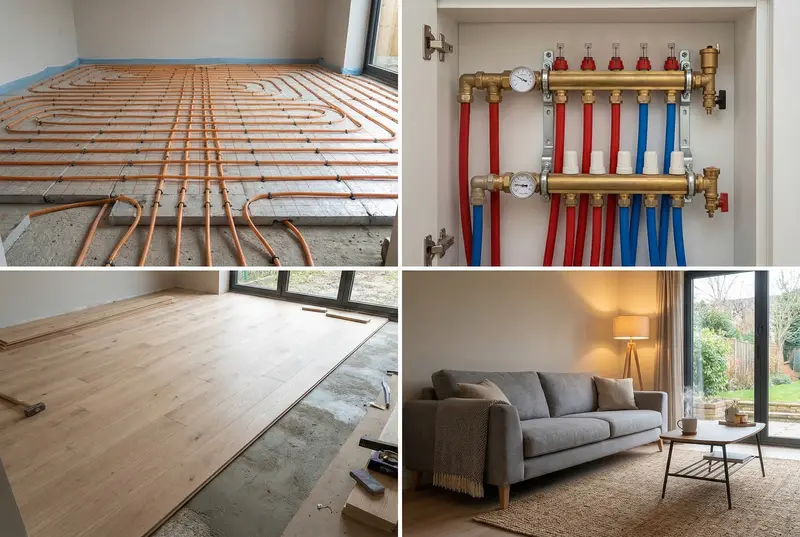
A professional underfloor heating installation in Reading follows a clear process, though the specifics depend heavily on your floor type and which system suits your property. The first step is a proper site survey — a good installer will assess your existing floor construction, measure heat loss for each room, check boiler compatibility (for wet systems), and give you an honest recommendation on whether hydronic or electric is the better fit. For wet systems, which use warm water pumped through flexible pipework laid in a specific pattern across the floor, the work involves laying insulation board first to stop heat escaping downward, then carefully routing the pipes before a new screed is poured on top. This screed typically needs four to six weeks to cure fully before you can lay your chosen floor finish. For electric systems using heating mats or loose cables, the process is quicker and less disruptive — mats can be laid directly onto existing floor prep, covered with a thin layer of flexible adhesive, and have a floor thermostat fitted the same day. Either way, a competent installer will commission the system thoroughly, check for leaks or continuity faults before anything is covered over, and set up your thermostat controls so you understand how to run it efficiently. In Reading's hard water environment, wet systems should always be flushed and dosed with a limescale inhibitor as part of commissioning.
Why Choose a Local Reading Specialist
Choosing a Reading-based installer rather than a national firm makes a practical difference. A local tradesperson will have worked in Edwardian semis in Caversham, knows the floor construction quirks common in the post-war estates around Whitley, and understands that the hard water supply here demands proper system protection as standard. They're also easier to get back if there's an issue during commissioning, or if you need a follow-up visit when your screed has fully cured. In a town like Reading where word of mouth still carries real weight, local installers have genuine reputation at stake — that usually means a better quality job.
Frequently Asked Questions
Is underfloor heating suitable for the Edwardian semis common in Reading?
It depends on the floor type. Most Edwardian semis in Reading have suspended timber ground floors, which aren't ideal for wet UFH without significant structural work. However, electric mat systems work well here and can be installed with minimal disruption. If you're already planning to replace the floor, a low-profile wet system using aluminium spreader plates is another option worth discussing with your installer.
Will Reading's hard water cause problems with underfloor heating pipework?
It can, if the system isn't protected properly. The Thames Water and Affinity Water supply area is notably hard, and untreated water will deposit limescale inside pipework over time, reducing efficiency and potentially causing blockages. A reputable installer in Reading should always flush the system, add a quality inhibitor, and fit a magnetic filter as standard — don't accept a quote that doesn't include this.
How long does underfloor heating installation take in a typical Reading home?
For a wet system covering a full ground floor, allow roughly three to five days for the physical installation, then four to six weeks for the screed to cure before floor finishes go down. Electric mat systems in a single room can be completed in one day. Either way, the screed curing period is non-negotiable — rushing it causes cracking and can damage the pipework beneath.
Does underfloor heating work with the combi boilers most Reading homes have?
Many combi boilers can run underfloor heating, but it's important to check compatibility before committing. UFH runs at lower flow temperatures than radiators, and older or smaller combis may struggle to modulate down efficiently. Your installer should assess this during the survey stage and advise whether a system boiler, buffer vessel, or simply a boiler upgrade makes more sense for your Reading property.
Other Plumbing Services in Reading
What do you need?
Select your service and urgency level