Underfloor Heating in Liverpool
It's a significant investment, but for Liverpool homeowners looking to improve comfort, reduce energy bills, and add real value to their property, it's one of the most worthwhile upgrades available. Whether you're renovating a kitchen extension in Allerton, fitting out a new bathroom in Woolton, or upgrading the ground floor of a period home in Aigburth, the right system installed properly will pay dividends for decades.
Plumbing Conditions in Liverpool
Moderately Soft water — blended supply
Mixed housing stock across different eras. With 22% of properties built before 1919, older pipework and drainage systems are common — specialist knowledge of period properties matters.
Underfloor Heating in Liverpool — Local Expertise
Liverpool's housing stock presents some interesting challenges and opportunities for underfloor heating. The city is dominated by Victorian terraces and Edwardian semis — properties with solid or suspended timber ground floors, original joists, and limited ceiling height in some rooms. This matters because the type of underfloor heating you can realistically install often comes down to floor construction. Solid floors are ideal for wet (hydronic) systems embedded in screed, while suspended timber floors typically suit electric mat systems or low-profile wet systems designed to sit between joists. On the plus side, Liverpool sits in a soft water area, supplied from Pennine reservoirs, which is genuinely good news for wet underfloor heating systems. Soft water is far less likely to cause limescale build-up in the pipework and manifold compared to hard water areas, meaning less maintenance and a longer system lifespan. That's a real benefit worth knowing about if you're weighing up the long-term running costs.
How We Work
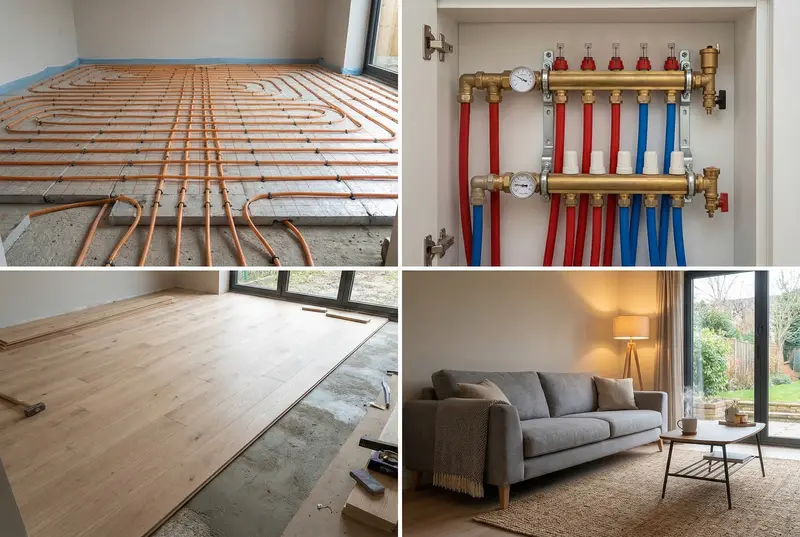
A professional underfloor heating installation in Liverpool starts with a proper site survey. An experienced installer will assess your floor construction, check the existing boiler capacity (wet systems need a boiler that can handle lower flow temperatures, typically 35–45°C), and calculate heat loss for the rooms involved. This isn't a job where guesswork is acceptable — undersized systems lead to cold spots and disappointment. For wet systems, the process involves laying insulation boards first to prevent heat escaping downward, then running flexible pipework in a continuous loop pattern across the floor before connecting it to a manifold, which controls the flow to each zone. The screed is then poured over the top and needs several weeks to cure before the system is commissioned. For electric systems — often the better fit for Liverpool's Victorian and Edwardian homes where raising floor levels isn't practical — heating mats or cables are laid directly onto the subfloor, covered with tile adhesive or a thin self-levelling compound. The whole installation for a single room can often be completed in a day. Either way, the system is tested, the thermostat and controls are fitted, and you'll be walked through how to programme and use everything before the installer leaves.
Why Choose a Local Liverpool Specialist
Choosing a Liverpool-based installer rather than a national firm makes a practical difference on a job like this. Local tradespeople understand the quirks of the city's Victorian and Edwardian housing — the uneven subfloors, the original suspended timbers, the older boiler setups that need upgrading before a wet system will work efficiently. They're also easier to get back if there's an issue during commissioning or in the first heating season. Word-of-mouth reputation matters in Liverpool, and established local installers have a strong incentive to get the job right first time.
Frequently Asked Questions
Can underfloor heating be installed in a Victorian terrace in Liverpool?
Yes, but it depends on the floor construction. Solid concrete floors are well suited to wet screed systems. Suspended timber floors — common in Liverpool's older terraces — usually work better with electric mat systems or low-profile wet systems designed to fit between joists without significantly raising floor height. A proper survey will confirm what's suitable for your specific property.
Will my existing boiler cope with an underfloor heating system?
Wet underfloor heating runs most efficiently at lower temperatures than standard radiators, so your boiler needs to be compatible. Many modern condensing boilers in Liverpool homes work fine with the right setup, but older or undersized boilers may need replacing or upgrading. Your installer should assess this during the survey — it's an important step that shouldn't be skipped.
Does Liverpool's soft water supply make any difference to underfloor heating?
It actually works in your favour. Soft water from the Pennine reservoir supply is low in calcium and magnesium, which means far less risk of limescale building up inside the pipework and manifold over time. In hard water areas, this can be a real maintenance headache. Liverpool homeowners with wet underfloor heating systems generally have fewer long-term issues as a result.
How long does underfloor heating installation take in a typical Liverpool home?
A single-room electric system can be installed in one day. A wet system covering a full ground floor — say, the kitchen-diner and hallway of an Edwardian semi — typically takes three to five days for installation, followed by a curing period of four to six weeks before the screed is ready for floor coverings. Planning ahead is essential, especially if you're tiling.
Other Plumbing Services in Liverpool
What do you need?
Select your service and urgency level