Leak Detection & Repair in Liverpool
Most straightforward repairs — a dripping pipe joint, a weeping radiator valve, or a slow leak under the kitchen sink — come in at the lower end. Hidden leaks behind walls or under floors push costs up because of the detective work and any making-good required afterwards. Getting a leak dealt with quickly nearly always saves money in the long run, both on your water bill and on structural damage that builds up silently over months.
Plumbing Conditions in Liverpool
Moderately Soft water — blended supply
Mixed housing stock across different eras. With 22% of properties built before 1919, older pipework and drainage systems are common — specialist knowledge of period properties matters.
Leak Detection & Repair in Liverpool — Local Expertise
Liverpool's housing stock is dominated by Victorian terraces and Edwardian semis, and both present specific challenges when it comes to leaks. Pipes in these properties are often original or have been patched over decades, meaning you can find a mix of lead, iron, copper, and more modern plastic all joined together in creative ways. That patchwork plumbing is more prone to joint failures, pinhole corrosion, and hidden drips inside old lathe-and-plaster walls. Liverpool is also a soft water area, fed by Pennine reservoir supply. Soft water is generally kinder to pipes than hard water — it doesn't fur up boilers or cause limescale blockages — but it is slightly more corrosive to copper over time, which can accelerate pinhole leaks in older pipework. This is worth knowing if your home still has its original copper runs, as a single small pinhole is sometimes a sign that more are developing nearby.
How We Work
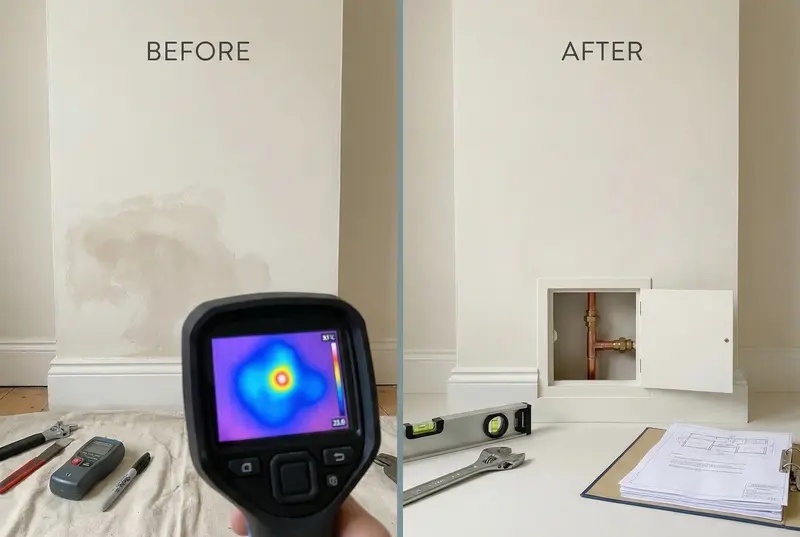
When a plumber comes out to investigate a leak in your Liverpool home, the first stage is always diagnosis. For obvious leaks — a visible drip, a wet patch on the ceiling, or water around a pipe joint — this part is quick. For hidden leaks, a decent tradesperson will use a combination of pressure testing, thermal imaging, and acoustic listening equipment to pinpoint exactly where water is escaping without tearing everything apart unnecessarily. Once the source is identified, you'll be given a clear explanation of what's been found and what fixing it involves before any work starts. The repair itself depends entirely on what's been found. A leaking compression joint might take twenty minutes. A split pipe inside a party wall of an Edwardian semi might mean careful removal of plasterwork, cutting out the damaged section, fitting new pipe, and then making good the wall. Responsible plumbers will always document what they find, especially in older properties where a leak has been running unnoticed for some time, because damp can travel a long way through Victorian brickwork before it becomes visible. After the repair, the system should be pressure-tested again to confirm the fix is holding before the job is signed off.
Why Choose a Local Liverpool Specialist
A plumber who works regularly across Liverpool understands the quirks of the local housing stock in a way that someone parachuted in from outside simply doesn't. They'll know that the terraces in Anfield or Toxteth often have shared pipework running through party walls, that many Edwardian semis in the south of the city still have partially original plumbing, and that certain pipe configurations crop up again and again in houses of the same era. That local knowledge speeds up diagnosis, reduces the chance of unnecessary disruption, and generally means fewer surprises once the work is underway.
Frequently Asked Questions
How do I know if I have a hidden leak in my Liverpool home?
Common signs include an unexplained rise in your water bill, damp or discoloured patches on walls or ceilings, the sound of running water when everything is turned off, or soft spots in floorboards. In Liverpool's older terraces, damp patches are sometimes dismissed as condensation or rising damp, so it's worth having a plumber check if you're unsure of the cause.
Does soft water in Liverpool affect how quickly pipes corrode?
Yes, slightly. Soft water from the Pennine reservoir supply is less likely to cause limescale but is marginally more aggressive towards copper pipework over long periods. In Victorian and Edwardian homes where original copper runs are still in place, this can mean pinhole leaks start appearing as the metal thins with age. It's not an urgent concern in most cases, but worth factoring in if your home is over 80 years old.
Will a plumber need to damage my walls to find and fix a leak?
Not necessarily. Modern leak detection equipment — including acoustic sensors and thermal imaging cameras — can locate many hidden leaks without opening up walls at all. When access is needed, a good tradesperson will keep disruption to a minimum and be clear upfront about what making-good is included in the quote. In older Liverpool properties with original plasterwork, this conversation is particularly important.
How much does emergency leak detection cost in Liverpool compared to a booked appointment?
In Liverpool, most plumbers covering areas like the city centre, Wavertree, or the north end will be with you within a few hours for a genuine emergency. If it's not urgent, booking in advance will almost always be cheaper.
Other Plumbing Services in Liverpool
What do you need?
Select your service and urgency level