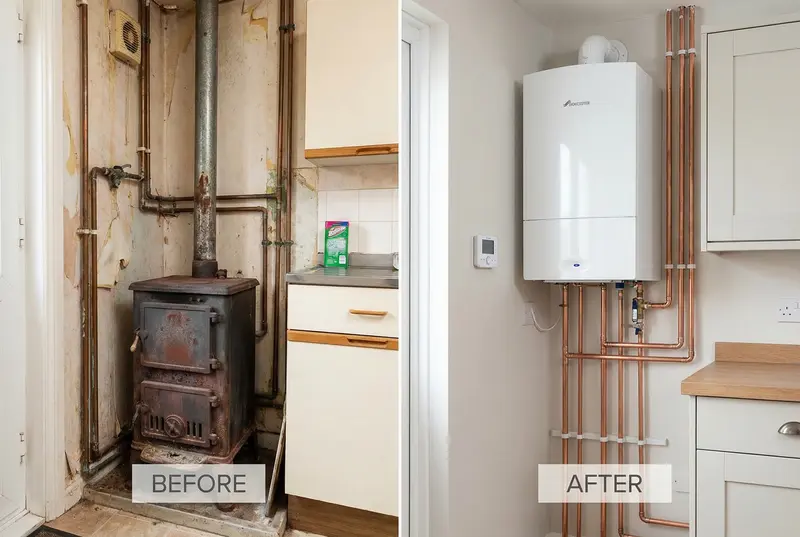
Boiler Installation in Liverpool
A new boiler is one of the most important investments a UK homeowner can make. Whether you are replacing a failing boiler, upgrading from a conventional to a combi system, or installing heating in a new extension, the work must be carried out by a Gas Safe registered engineer. A typical boiler installation takes 1-3 days depending on whether the boiler type or position is changing, and includes removing the old unit, fitting the new boiler, connecting gas, water and flue, and commissioning the system to manufacturer specifications.
Plumbing Conditions in Liverpool
Moderately Soft water — blended supply
Mixed housing stock across different eras. With 22% of properties built before 1919, older pipework and drainage systems are common — specialist knowledge of period properties matters.
Boiler Installation in Liverpool — Local Expertise
Liverpool's diverse housing stock presents a wide range of boiler installation challenges, from the grand Victorian terraces of Toxteth and Aigburth to the post-war semis of Speke and the newer builds emerging across the waterfront regeneration zones. Merseyside sits within a mixed water hardness region of England, meaning properties can experience varying degrees of limescale accumulation depending on their precise location — a factor that influences which boiler models and system filters an engineer might recommend during installation. In older Liverpool homes, particularly the Edwardian and inter-war properties common throughout areas like Wavertree and Mossley Hill, existing pipework and radiator configurations often require assessment before a new unit is fitted, since upgrading to a modern condensing boiler may involve additional work to bring the surrounding system up to current standards. Choosing a Gas Safe registered installer familiar with the local area ensures the correct equipment is specified for both the property's age and the regional water conditions, delivering reliable, efficient heating from day one.
How We Work
Boiler installation starts with a site survey to determine the right boiler type, output, and position for your property. Your engineer will assess the number of radiators, bathrooms, and hot water demand to calculate the correct kilowatt output — an undersized boiler will not heat the house properly, while an oversized one wastes energy. The three main boiler types are combi (no cylinder, instant hot water, ideal for 1-2 bathrooms), system (separate cylinder, better for larger homes with multiple bathrooms), and regular/conventional (separate cylinder and header tank, found in older properties). Installation involves isolating and removing the old boiler, fitting the new unit to the wall or floor, connecting the gas supply, running condensate drain pipe, fitting or modifying the flue, connecting the central heating and hot water circuits, filling and pressure-testing the system, and commissioning the boiler. Your engineer must complete a Building Regulations notification and register the installation on the Gas Safe register.
Why Choose a Local Liverpool Specialist
Boiler installation requires a qualified Gas Safe registered engineer who can attend for a site survey, carry out the installation over 1-3 days, commission the system, and return for any snagging work. A local installer can offer all of this efficiently — no inflated travel costs, no wasted time getting to site, and genuinely available for the annual servicing that keeps your warranty valid. Local heating engineers also understand the specific characteristics of your area's housing stock and water supply, which affects everything from boiler sizing to system design. If your boiler develops a fault at 6pm on a January evening, a local engineer can attend the same day rather than scheduling you in for next week.
What Boiler Installation Involves
A new boiler installation involves removing your existing unit, upgrading the flue and pipework where required, fitting and commissioning the new boiler, and registering it with Building Control via the Competent Person Scheme. All new boiler installations must be carried out by a Gas Safe registered engineer — it is illegal for anyone else to do this work.
The Process
Day 1: drain down the system, remove the old boiler, cap off existing connections. Upgrade the flue if required — most modern boilers use a concentric flue that vents through an external wall. Fit the new unit, connect flow and return pipes, gas supply, and condensate drain. Commission the boiler following manufacturer guidelines, balance the radiators, and register the installation. You'll receive a Building Regulations completion certificate within 28 days.
What to Expect
A standard like-for-like boiler swap takes 1-2 days. A full system change — moving the boiler or converting from back boiler to combi — takes 2-4 days. Your new boiler should come with a manufacturer warranty of 5-12 years depending on brand. Always register the warranty within 30 days of installation.
Frequently Asked Questions
Do I need a combi boiler or a system boiler?
Combi boilers suit most homes up to 3 bedrooms with 1-2 bathrooms — no hot water tank needed. System boilers suit larger homes with higher hot water demand. Your installer should calculate your requirements before recommending.
What is the best boiler brand?
Worcester Bosch, Viessmann, and Vaillant consistently top reliability surveys. All three offer extended warranties of 8-12 years when installed by accredited engineers. Brand matters less than correct sizing and installation quality.
Do I need to notify anyone when a new boiler is installed?
Yes — your Gas Safe registered installer must notify Building Control within 30 days of installation under the Competent Person Scheme. You will receive a Building Regulations completion certificate.
How much can a new boiler save on energy bills?
The actual saving depends on your home size, insulation, and usage patterns.
Other Plumbing Services in Liverpool
What do you need?
Select your service and urgency level