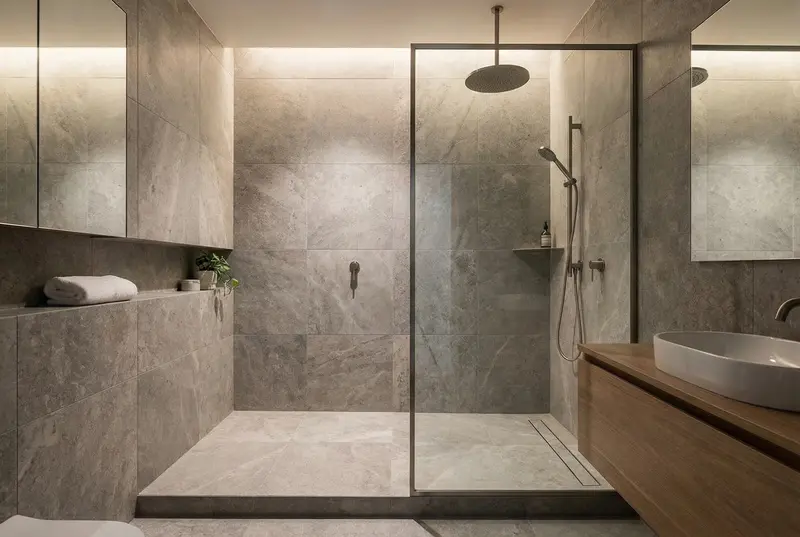
Wet Room Installation in Liverpool
That's a significant investment, but wet rooms consistently add value to Liverpool homes and are increasingly popular with buyers — particularly in the city's large stock of Victorian terraces and Edwardian semis where bathrooms tend to be compact and awkward. If you're planning a wet room, the most important thing is getting the waterproofing and drainage right from the start. Get that wrong and you're looking at structural damage that costs far more to fix than the original installation.
Plumbing Conditions in Liverpool
Moderately Soft water — blended supply
Mixed housing stock across different eras. With 22% of properties built before 1919, older pipework and drainage systems are common — specialist knowledge of period properties matters.
Wet Room Installation in Liverpool — Local Expertise
Liverpool's housing stock presents some specific challenges for wet room installation that a good tradesperson will flag up straight away. Victorian terraces and Edwardian semis — which make up a huge proportion of homes across areas like Wavertree, Anfield, Toxteth, and Aigburth — typically have solid floors downstairs and suspended timber floors upstairs. A wet room on a timber floor requires a tanking system, a recessed drainage tray, or a specially engineered floor build-up to create the right fall toward the drain. It's perfectly doable, but it takes more planning than a concrete ground floor. Liverpool is supplied by Pennine reservoirs, making it a soft water area — which is actually an advantage for wet rooms. Soft water is far less likely to leave limescale deposits on glass screens and tiled surfaces, meaning your wet room will look cleaner for longer with less maintenance than you'd expect in harder water areas. That said, soft water can be slightly more aggressive on metal fittings, so choosing quality brassware is worth the extra spend.
How We Work
The installation process for a wet room in Liverpool generally follows the same broad stages, though the specifics vary depending on your property. It starts with a survey and design consultation — a decent installer will assess your floor construction, check where your existing waste runs, and talk through drainage options, including linear drains and central point drains, before any work begins. Once you've signed off on the design, the first physical stage is stripping the existing bathroom back to the shell. Any old sanitaryware, flooring, and wall finishes come out, and the installer will assess the condition of the subfloor and walls underneath. On timber floors, this often involves installing a cement board substrate before the waterproofing layer goes on. Tanking — the application of a continuous waterproof membrane across the floor and walls — is the single most critical part of the job. It needs to go under the tiles, not over them, and every junction and corner needs to be properly sealed with reinforcing tape and slurry. After tanking is signed off, tiling begins, with the floor tiles laid to a precise fall (typically 1 in 50) toward the drain. Plumbing for the shower, basin, and any radiator or heated towel rail is fitted, screens and glass panels go in last, and the room is sealed and tested before handover. A full wet room installation in Liverpool typically takes five to eight working days.
Why Choose a Local Liverpool Specialist
Choosing a Liverpool-based installer matters more than people realise for a job like this. Someone who works regularly across the city will know the common floor constructions in local terraces, understand how properties on certain streets were built, and have relationships with local tile suppliers and merchants — which can save you time and occasionally money on materials. They're also accountable in a way that a national firm or a contractor drafted in from elsewhere isn't. When something needs checking or adjusting after the job, a local tradesperson is a phone call and a short drive away, not a customer service queue.
Frequently Asked Questions
Can a wet room be installed in an upstairs bathroom in a Liverpool Victorian terrace?
Yes, and it's done regularly across Liverpool's older housing stock. The key is correctly preparing the suspended timber floor — usually with cement board and a proper tanking system. It adds cost and complexity compared to a ground-floor concrete base, but an experienced local installer will have done this many times and will specify the right build-up for your floor.
How long does a wet room installation take in Liverpool?
Most installations take between five and eight working days, assuming no major surprises once the room is stripped back. Older Liverpool properties occasionally reveal unexpected issues — rot in floor joists, old pipework that needs rerouting, or walls that need more preparation than anticipated. A good installer will flag these as they arise rather than rushing past them.
Do I need planning permission to install a wet room in Liverpool?
In most cases, no. Wet room installation is classified as permitted development for standard residential properties in Liverpool. However, if your home is a listed building or sits within a conservation area — which applies to parts of the Georgian Quarter and some streets in Everton and Toxteth — you may need consent before altering the bathroom. Check with Liverpool City Council if you're unsure.
Will a wet room add value to my Liverpool home?
Generally yes, particularly in mid-to-upper market areas of Liverpool like Childwall, West Derby, or Aigburth. A well-designed wet room with quality tiling and fixtures is seen as a premium feature by buyers. The key is a high standard of finish — a poorly installed wet room with water damage or substandard tiling can actually put buyers off, so the quality of the waterproofing matters as much as the aesthetics.
Other Plumbing Services in Liverpool
What do you need?
Select your service and urgency level