Leak Detection & Repair in Manchester
Leaks have a nasty habit of hiding in plain sight — or worse, staying completely hidden until they've done serious damage. In Manchester, where older housing stock dominates and the wet climate gives water every opportunity to find its way in, getting a leak diagnosed and fixed quickly isn't just a convenience, it's essential. Whether you've noticed a damp patch on the ceiling, an unexplained spike in your water bill, or you can hear water running when everything's turned off, a professional leak detection service can pinpoint the problem without unnecessary disruption — and get it sorted before it becomes something much more expensive.
Plumbing Conditions in Manchester
Soft water — Pennine reservoir supply
Mixed housing stock across different eras. With 22% of properties built before 1919, older pipework and drainage systems are common — specialist knowledge of period properties matters.
Leak Detection & Repair in Manchester — Local Expertise
Manchester's housing stock tells you a lot about why leak detection is such a common call-out here. Victorian terraces and Edwardian semis make up the majority of properties across suburbs like Didsbury, Chorlton, Levenshulme, and Fallowfield. These homes are characterised by lead or early copper pipework, original clay drainage, and walls that have been replastered and altered many times over the decades. That layered history means leaks often develop slowly and silently inside walls or under floors. Manchester is also a soft water area, supplied from Pennine reservoirs — and while soft water is generally gentler on pipework than hard water, it can be slightly more corrosive to older metal pipes over time, gradually thinning pipe walls and increasing the risk of pinhole leaks. Add in Manchester's well-earned reputation for rainfall, and you've got conditions where even minor leaks can quickly escalate into damp, mould, or structural problems if left unaddressed.
How We Work
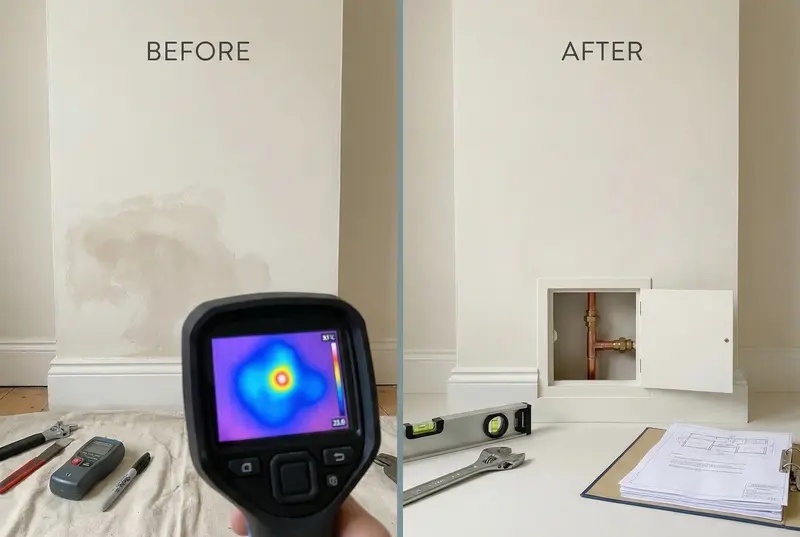
Modern leak detection is far less invasive than most people expect. Rather than opening up walls or lifting floors on a hunch, a qualified plumber will use a combination of techniques to locate the source with precision before any remedial work begins. The process typically starts with a thorough visual inspection — checking visible pipework, joints, stopcocks, and any areas showing signs of moisture. If the leak isn't immediately obvious, acoustic detection equipment can pick up the sound of water escaping through pressurised pipes, even behind plasterwork. For more complex cases, thermal imaging cameras can reveal temperature differences caused by hidden moisture, and tracer gas or dye testing may be used to confirm the exact location. Once the leak is found, your plumber will talk you through the repair options clearly. In a Manchester Victorian terrace, this might mean replacing a section of older lead or iron pipework, resealing a joint behind a tiled bathroom wall, or relining a cracked underground drain. The repair itself is usually completed in the same visit for straightforward cases. More complex issues — like a leaking underground supply pipe — may require a return visit or specialist groundworks, but you'll know exactly what's involved before any work proceeds. Throughout the process, a good local plumber will keep disruption to a minimum and explain what they've found in plain English.
Why Choose a Local Manchester Specialist
Choosing a Manchester-based plumber for leak detection isn't just about convenience — it genuinely matters for the quality of diagnosis. A local tradesperson will know the typical pipework configurations in Victorian terraces and Edwardian semis, understand which Manchester neighbourhoods have older lead supply pipes still in use, and be familiar with the local water authority's infrastructure. That local knowledge speeds up diagnosis and reduces the risk of unnecessary exploratory work. They're also more accountable — they work by reputation in the community and are far easier to reach if a follow-up issue arises.
Frequently Asked Questions
How do I know if I have a hidden leak in my Manchester home?
Common signs include an unexplained rise in your water bill, damp patches on walls or ceilings, the sound of running water when everything is switched off, or a drop in water pressure. In older Manchester terraces, musty smells in ground floor rooms can also indicate a slow underground leak that's gone unnoticed for some time.
Will the plumber need to break through my walls or floors to find the leak?
Not necessarily. Modern acoustic and thermal imaging equipment can locate most leaks without any initial damage. A plumber will only need to open up walls or floors once they know exactly where the problem is, which keeps disruption to a minimum. In many Manchester properties, leaks are accessible via existing access points or only require a small, targeted opening.
Is soft water from Manchester's Pennine supply a factor in pipe corrosion?
It can be, particularly in older properties. Soft water has a lower mineral content, which means it doesn't form the same protective scale lining inside pipes that hard water does. Over decades, this can make older copper or lead pipes in Manchester homes more susceptible to pinhole leaks. It's one reason why regular checks are sensible in houses with original Victorian or Edwardian pipework.
How quickly can a plumber respond to a suspected leak in Manchester?
Many Manchester plumbers offer same-day or next-day appointments for leak detection, and emergency call-outs are available for active leaks causing immediate damage. If water is visibly running or you suspect a burst pipe, turn off your stopcock first to limit damage, then call for urgent assistance. Most areas of Manchester, including the suburbs, are well covered for rapid response.
Other Plumbing Services in Manchester
What do you need?
Select your service and urgency level