Leak Detection & Repair in Huddersfield
Leaks have a habit of hiding in plain sight — a slightly higher water bill, a faint damp patch on a ceiling, or the sound of running water when every tap is turned off. In Huddersfield, where the housing stock spans everything from century-old Edwardian semis to sprawling post-war estates, tracking down exactly where a leak originates isn't always straightforward. The older the property, the more convoluted its pipework tends to be. Getting a qualified local plumber to carry out proper leak detection early can save you hundreds — sometimes thousands — in structural damage, mould remediation, and inflated water bills.
Plumbing Conditions in Huddersfield
Soft water — Pennine reservoir water
Mixed housing stock across different eras. With 22% of properties built before 1919, older pipework and drainage systems are common — specialist knowledge of period properties matters.
Leak Detection & Repair in Huddersfield — Local Expertise
Huddersfield's housing mix creates a genuinely varied set of leak-related challenges. Edwardian semis in areas like Lindley, Marsh, and Birkby were typically built with lead or early copper pipework, much of which has been patched and re-routed over the decades, creating a maze of joints that are prime candidates for slow weeping leaks. Post-war council and semi-detached estates — common across Newsome, Dalton, and Crosland Moor — often have ageing plastic or copper supply pipes nearing the end of their serviceable life. Newer developments around Waterloo and Bradley are generally more straightforward, but slab foundations can make under-floor leaks particularly tricky to locate without specialist equipment. One factor worth knowing: Huddersfield sits in a soft water area, fed primarily by Pennine reservoirs. While soft water is gentler on limescale, it can be slightly more corrosive to certain metals over time, which may accelerate pinhole leaks in older copper pipe runs — something experienced local plumbers are well used to seeing.
How We Work
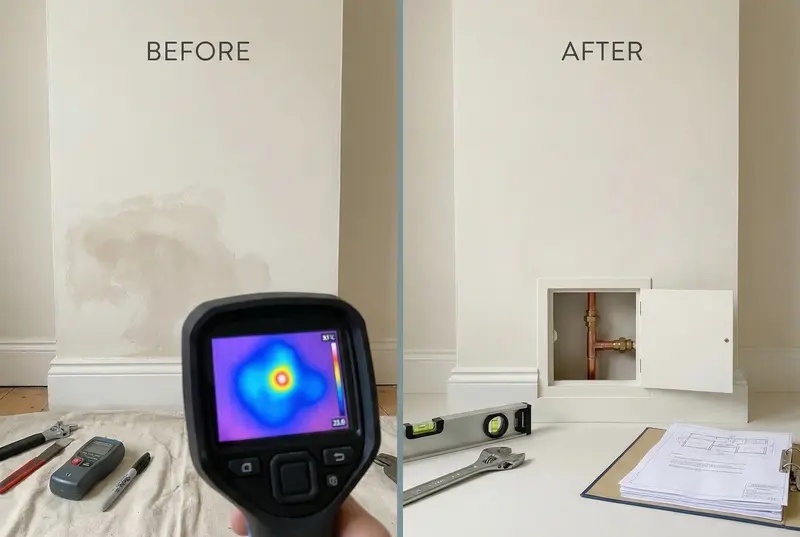
When you call a leak detection specialist in Huddersfield, the process typically starts with a thorough visual inspection — checking visible pipework, joints, radiator valves, under-sink connections, and the area around the boiler. This alone solves a surprising number of cases. If the leak isn't immediately obvious, the plumber will usually isolate the water supply and observe your meter for movement to confirm there's an active leak somewhere in the system. From there, the approach depends on where the leak is suspected. For suspected underground or concealed pipe leaks, acoustic listening equipment is used to detect the sound of water escaping through a pipe — this is non-invasive and highly accurate in the right conditions. Thermal imaging cameras can also be used to spot moisture hidden behind walls or under floors without lifting a single floorboard. Tracer gas detection — where a harmless hydrogen and nitrogen mix is introduced to the pipe — is another option for particularly stubborn, hard-to-locate leaks. Once the source is confirmed, the plumber will discuss repair options with you. In most cases this means cutting out the faulty section of pipe, replacing the joint or fitting, and pressure-testing before signing off. You'll get a clear explanation of what was found and what was done — no guesswork.
Why Choose a Local Huddersfield Specialist
A plumber who works regularly across Huddersfield will recognise the quirks of local housing stock almost immediately — the typical pipe routes in an Edwardian semi, the way post-war estates were plumbed, the specific challenges of soft Pennine water on older copper systems. That local knowledge cuts down diagnostic time significantly. They'll also be familiar with local building control requirements if any structural access is needed, and they can respond quickly when a leak is actively causing damage. Choosing someone local means accountability too — they're not a distant call centre, they're part of the same community.
Frequently Asked Questions
How do I know if I have a hidden leak in my Huddersfield home?
The most reliable early sign is an unexplained rise in your water bill without a change in usage. Other indicators include damp patches on walls or ceilings, the sound of running water when nothing is in use, or soft ground near your external stop tap. If your water meter continues moving after you've turned off all appliances, that's a strong sign of an active leak that needs professional investigation.
Will the plumber need to dig up my floors or break into walls?
Not necessarily. Most Huddersfield leak detection specialists use non-invasive methods first — acoustic equipment and thermal imaging can pinpoint leaks through floors and walls without any damage. Investigative access is only needed when the leak location has been confidently identified. A good tradesperson will always exhaust non-destructive options before recommending any cutting or lifting.
Are leaks more common in older Huddersfield properties like Edwardian semis?
Yes, generally speaking. Edwardian properties often have pipework that's been modified multiple times over the decades, creating a higher number of joints — and joints are where leaks most commonly develop. The soft water supply in Huddersfield, while low in limescale, can be mildly corrosive to older copper pipe over time, making pinhole leaks more likely in properties that haven't had their plumbing updated in recent years.
How quickly can a leak detection plumber get to me in Huddersfield?
Many local Huddersfield plumbers offer same-day or next-day appointments for suspected leaks, particularly where there's active water damage. Emergency call-outs are available through most firms for situations where water is visibly escaping and causing immediate damage. Response times are generally faster when you use a genuinely local tradesperson rather than a national booking platform that subcontracts the work.
Other Plumbing Services in Huddersfield
What do you need?
Select your service and urgency level