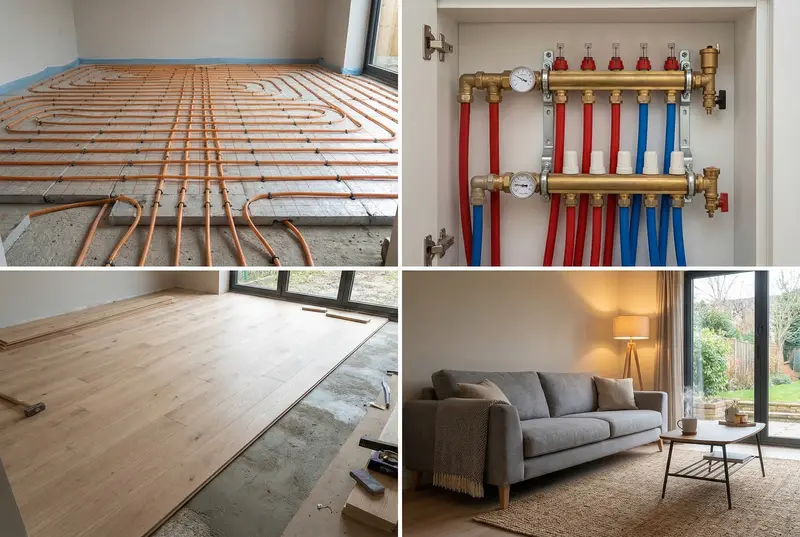
Underfloor Heating in Durham
The most common reason Durham homeowners look into underfloor heating is simple: their existing radiator system just doesn't suit the house anymore. Whether you're renovating a stone-built terrace near the city centre, extending a period cottage on the outskirts, or fitting out a new-build on one of Durham's modern estates, underfloor heating has become the go-to choice for anyone doing significant floor work and wanting to future-proof their home at the same time. It delivers even, comfortable warmth without the bulk of radiators taking up wall space, and when installed properly, it runs efficiently — particularly when paired with a modern heat pump or condensing boiler.
Plumbing Conditions in Durham
Soft water — Pennine catchments
Mixed housing stock across different eras. With 22% of properties built before 1919, older pipework and drainage systems are common — specialist knowledge of period properties matters.
Underfloor Heating in Durham — Local Expertise
Durham's housing stock is genuinely varied, and that variety matters a great deal when it comes to underfloor heating. The older stone-built properties and period cottages that give Durham so much of its character present real challenges — thick solid floors, limited ceiling height in ground-floor rooms, and original timber joists that need careful assessment before any wet system goes in. Retrofit installations in these homes take more planning and often cost more, but they're very achievable with an experienced installer. On the newer estates around the city's edges, open-plan layouts and screed floors mean wet underfloor heating can be integrated far more straightforwardly. It's also worth knowing that Durham sits in a soft water area, supplied from Pennine reservoirs. Soft water is actually kinder to underfloor heating pipework and manifolds than hard water — scale build-up is far less of a concern here than it would be in parts of the country with chalky groundwater. That said, your installer should still correctly inhibit the system to protect against corrosion.
How We Work
A proper underfloor heating installation in Durham follows a clear sequence, and a good installer will walk you through each stage before anything is touched. It starts with a heat loss calculation for each room — this isn't optional, it's the foundation of a system that actually works. Without it, you risk zones that can't reach temperature or a boiler that's working harder than it needs to. Once the design is agreed, the installer will discuss whether a wet (hydronic) system or electric mat system suits your situation. Wet systems, fed from your boiler or heat pump via a manifold, are the standard choice for whole-house installs and ground floors; electric systems tend to suit smaller areas or upper floors where pipe routes aren't practical. For wet systems in Durham's older properties, the installer will assess whether you're going with a traditional screed pour over the pipes, a lower-profile system using pre-formed panels (which works well where floor height is tight), or a suspended timber solution for rooms with joists. Once pipework is laid and pressure-tested, screed is poured and left to cure — this typically takes four to six weeks before the system is commissioned. During commissioning, the installer sets flow temperatures, balances each zone, and checks everything runs as designed. You'll be shown how to use the thermostats and given documentation for your records.
Why Choose a Local Durham Specialist
Choosing a Durham-based installer rather than a national firm genuinely makes a difference on a job like this. Local tradespeople know the property types here — they've worked in the stone terraces near Gilesgate, the Victorian semis off Nevilles Cross, and the newer builds out toward Belmont. They understand the quirks of older Durham floors, how thick the original construction tends to be, and what complications to plan for before the job starts. They're also easier to reach if something needs adjusting after commissioning, and their reputation is local — they rely on word of mouth from Durham homeowners, which tends to keep standards high.
Frequently Asked Questions
Can underfloor heating be installed in an older stone-built Durham property?
Yes, it can — but it requires more careful planning than a new-build. The key questions are floor height, joist condition if it's a timber floor, and whether the existing boiler can deliver the lower flow temperatures UFH needs. An experienced installer will assess all of this before committing to a design. Many of Durham's period homes have been successfully retrofitted.
How long does the screed take to dry before we can use the heating in Durham?
Standard sand-and-cement screed typically needs four to six weeks to cure fully before the system is commissioned. During that time, the heating should be left off. Some installers use faster-drying liquid screed products that cut this down to around a week, which is worth discussing if you're on a tight timeline — particularly relevant if you're renovating a Durham property in the colder months.
Does soft water in Durham cause any issues with underfloor heating systems?
Soft water from Durham's Pennine reservoir supply is actually beneficial for underfloor heating — it's far less likely to cause limescale build-up in the pipework and manifold compared to hard water areas. You still need the system properly inhibited with a corrosion inhibitor to protect the pipework and heat exchanger, but scaling is rarely a problem here the way it can be in southern England.
Will underfloor heating work with my existing boiler, or do I need to upgrade?
Many existing condensing boilers in Durham homes are compatible with underfloor heating, but it depends on the age and output of your current system. UFH runs at lower flow temperatures than radiators, so modern condensing boilers are generally well-suited. Older boilers may struggle or run inefficiently. Your installer should assess your boiler as part of the survey — don't let anyone skip this step.
Other Plumbing Services in Durham
What do you need?
Select your service and urgency level