Leak Detection & Repair in Durham
The most common reason Durham homeowners call out a plumber for leak detection isn't a burst pipe they can see — it's a suspicion. Maybe the water bill has crept up without explanation, there's a faint damp patch on a wall, or the boiler pressure keeps dropping overnight. Silent leaks are frustratingly common, and in a city where many properties are decades or even centuries old, the pipework behind those thick stone walls can fail quietly for months before anyone notices. Getting a professional in quickly matters, because a small undetected leak rarely stays small — and in Durham's older housing stock especially, water damage to original stonework and period features can be costly to put right.
Plumbing Conditions in Durham
Soft water — Pennine catchments
Mixed housing stock across different eras. With 22% of properties built before 1919, older pipework and drainage systems are common — specialist knowledge of period properties matters.
Leak Detection & Repair in Durham — Local Expertise
Durham's housing mix creates a genuinely varied set of leak challenges. The older stone-built properties and period cottages that characterise much of the city — particularly around the city centre, Gilesgate, and Framwellgate — often have original or early-replacement pipework running through thick walls and under solid floors. These buildings weren't designed with easy plumbing access in mind, which means leaks can travel a long way from their source before showing up as visible damp. Modern estates on the outskirts, such as those around Sniperley and Belmont, tend to have more accessible pipework but are not immune to concealed leaks within cavity walls or under screed floors. Durham sits in a soft water area, supplied from Pennine reservoirs, and while soft water is gentler on boilers and kettles than hard water, it can actually be slightly more corrosive to older copper pipework over time — a factor worth bearing in mind if your home has original or mid-century plumbing that hasn't been replaced.
How We Work
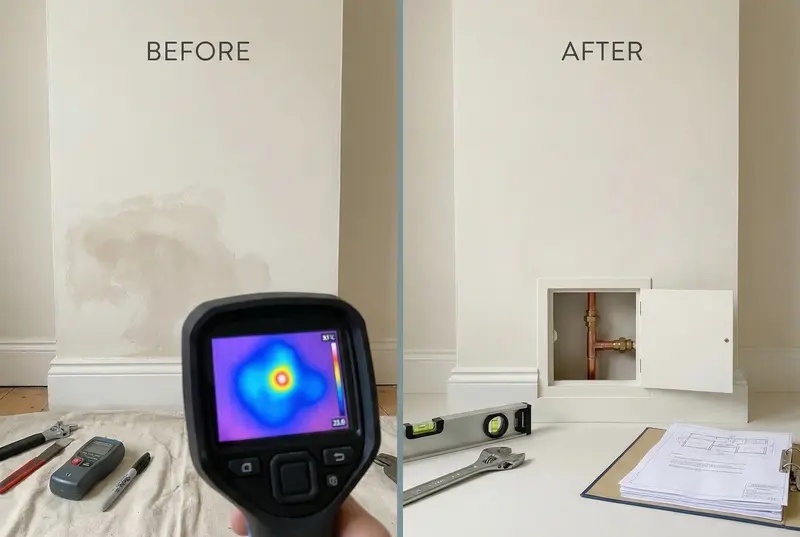
Leak detection in Durham typically begins with a conversation about symptoms — what you've noticed, when it started, and whether anything changed recently such as a cold snap or recent plumbing work. From there, a plumber will carry out a visual inspection of accessible pipes, fittings, and appliances. If the leak isn't immediately obvious, they'll move on to pressure testing the system: the water supply is isolated and the pressure is monitored over a set period to confirm whether a leak is present and roughly how significant it is. For harder-to-find leaks, thermal imaging cameras or acoustic listening equipment may be used. These tools allow the plumber to identify the leak location without immediately opening up walls or floors — which is especially valuable in Durham's stone-built properties, where unnecessary damage to original fabric should be avoided wherever possible. Once the leak is pinpointed, you'll be given a clear explanation of what's been found and the options for repair. Most straightforward repairs — a failed joint, a corroded section of pipe, a faulty valve — can be completed in the same visit. More complex situations involving buried pipework or inaccessible runs may require a follow-up appointment. You should always receive a clear quote before any repair work begins, and a reputable plumber will explain whether any investigative access, such as lifting floorboards or cutting into plasterwork, is necessary and what making good will involve.
Why Choose a Local Durham Specialist
Choosing a Durham-based plumber for leak detection makes a practical difference. Someone who works regularly across the city will be familiar with the types of pipework commonly found in different eras of local housing — from the Victorian terraces near the city centre to the newer builds on the edge of town. They'll understand the quirks of older stone construction, know which areas tend to have ageing lead or galvanised pipework, and be easier to get back quickly if a follow-up visit is needed. Local tradespeople also tend to rely heavily on word-of-mouth reputation, which generally means you're dealing with someone who has a genuine stake in doing the job properly.
Frequently Asked Questions
How do I know if I have a hidden leak in my Durham home?
The most common signs are an unexplained rise in your water bill, a drop in water pressure, damp patches on walls or ceilings with no obvious cause, or a boiler that keeps losing pressure. In older Durham properties, musty smells in ground-floor rooms can also indicate a slow leak under a solid floor. If you notice any of these, it's worth getting a plumber to investigate rather than waiting.
Will a plumber need to break through my walls to find the leak?
Not necessarily. Modern leak detection equipment — including acoustic sensors and thermal imaging cameras — can often pinpoint the location of a leak without opening up walls or floors first. This is particularly useful in Durham's period properties where preserving original stonework or plasterwork matters. Investigative access is only recommended when non-invasive methods haven't been able to confirm the exact location.
Does soft water in Durham make leaks more likely?
Soft water from the Pennine reservoirs that supply Durham is less likely to cause the limescale build-up you'd find in hard water areas, but it can be slightly more aggressive towards copper pipework over time. This means older copper installations — particularly in Durham's period cottages and pre-1970s homes — may be more vulnerable to pinhole corrosion leaks than equivalent properties in harder water areas of the country.
How quickly can a plumber get to me in Durham for a suspected leak?
For an active or visible leak causing damage, most local Durham plumbers offer same-day or emergency call-outs, often within a few hours. For a suspected but non-urgent hidden leak — for example, where you've noticed rising bills but no immediate damage — you'd typically be looking at booking within a few days. It's worth not delaying too long, since even slow leaks can cause significant damage to Durham's older stone and timber-framed properties over time.
Other Plumbing Services in Durham
What do you need?
Select your service and urgency level