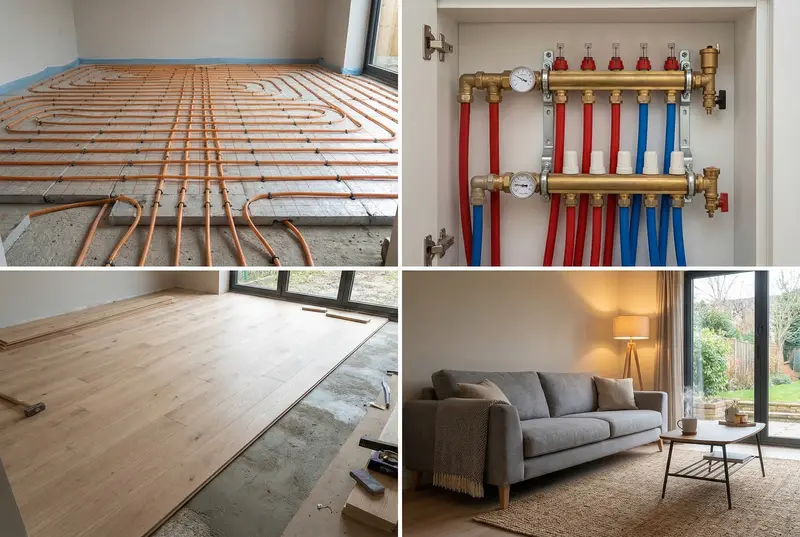
Underfloor Heating in Newcastle upon Tyne
You've just had new tiles laid in your kitchen, the bathroom's been renovated, and now you're standing on cold stone floors every morning wondering why you didn't sort the heating out first. It's a familiar situation for plenty of Newcastle upon Tyne homeowners. Underfloor heating turns that cold-floor frustration into a genuinely comfortable home — no radiators eating up wall space, no cold spots, just even, efficient warmth rising from the ground up. Whether you're planning a full house installation or just want to heat a single bathroom or kitchen extension, getting the right system fitted properly from the start makes all the difference to how well it performs long term.
Plumbing Conditions in Newcastle upon Tyne
Soft water — Pennine supply
Mixed housing stock across different eras. With 22% of properties built before 1919, older pipework and drainage systems are common — specialist knowledge of period properties matters.
Underfloor Heating in Newcastle upon Tyne — Local Expertise
Newcastle upon Tyne has a huge stock of Victorian terraces and Edwardian semis, particularly across areas like Jesmond, Heaton, Fenham, and Arthur's Hill. These properties weren't designed with modern heating in mind, which creates a few practical considerations when installing underfloor heating. Solid original floors often need to be broken up and relaid, which adds time and cost compared to newer builds. Suspended timber floors in these older homes can work well with electric underfloor heating mats, but wet systems require careful assessment of the floor void depth and joist structure before any work begins. On the plus side, Newcastle upon Tyne sits in a soft water area, supplied by Pennine reservoirs. Soft water is gentler on pipework and heating components, which means wet underfloor heating systems tend to suffer less from limescale buildup over time — a real benefit for the long-term efficiency and lifespan of your installation compared to hard water areas further south.
How We Work
A proper underfloor heating installation in Newcastle upon Tyne follows a clear process, though the specifics vary depending on whether you're going electric or wet (water-based), and what type of floor you're starting with. The first step is a proper survey — a good installer will assess your floor construction, existing insulation levels, room dimensions, and boiler capacity before recommending a system. Skipping this step is how people end up with an underfloor system that takes two hours to warm up or drives energy bills through the roof. For wet systems, pipework is laid in loops across the floor area and connected to a manifold, which in turn links to your boiler or heat pump. Insulation boards go down first to direct heat upward rather than losing it into the subfloor. The screed or floor finish is then laid over the top. For electric systems in homes like the Edwardian semis common across Newcastle, heating mats are rolled out under tiles or engineered wood and wired back to a thermostat and your consumer unit. Thermostats — ideally smart, programmable ones — are installed in each zone so you can control rooms individually. The whole job typically takes two to five days for a single room and up to two weeks for a whole-house installation. You'll need to allow a curing period before turning the system on properly, which your installer should walk you through in detail.
Why Choose a Local Newcastle upon Tyne Specialist
Choosing a locally based installer who knows Newcastle upon Tyne well is genuinely worth it for a job like this. Someone familiar with the area understands the quirks of Victorian and Edwardian property construction that's so prevalent here — they won't be surprised by suspended timber floors, awkward joist layouts, or limited access under ground floors. They'll also know local building control requirements and can advise on whether your planned work needs to be notified. Local tradespeople tend to be more accountable too; their reputation in the city matters to them, and they're easier to get back if any snagging issues arise after installation.
Frequently Asked Questions
Can underfloor heating be fitted in a Victorian terrace in Newcastle upon Tyne?
Yes, though it requires more planning than in a newer home. Many Newcastle Victorian terraces have solid floors that need breaking up or suspended timber floors that need assessment. Electric systems are often the most practical option in these properties, as they're thinner and easier to retrofit without major structural work. A proper survey beforehand is essential.
Does soft water in Newcastle affect how underfloor heating performs?
It's actually a benefit. Newcastle upon Tyne's soft Pennine reservoir water causes far less limescale buildup in pipework and manifolds than hard water does. This means wet underfloor heating systems tend to run more efficiently for longer, with less risk of blockages or reduced flow over the years. It's one less maintenance concern for local homeowners.
How long does underfloor heating take to heat up in a Newcastle home?
Wet systems typically take one to two hours to reach comfortable temperature, though this depends on insulation quality and floor finish. In older properties with less insulation, warm-up times can be longer. A programmable or smart thermostat — set to pre-heat before you need the room — makes this a non-issue in day-to-day use.
Do I need planning permission for underfloor heating installation in Newcastle upon Tyne?
Generally no, but there are some exceptions. If you live in a listed building or a conservation area — both of which exist across parts of Newcastle — you may need consent before altering floor structures. Wet system installations must also be notified to building control under Part P electrical and heating regulations. Your installer should handle all relevant notifications as part of the job.
Other Plumbing Services in Newcastle upon Tyne
What do you need?
Select your service and urgency level