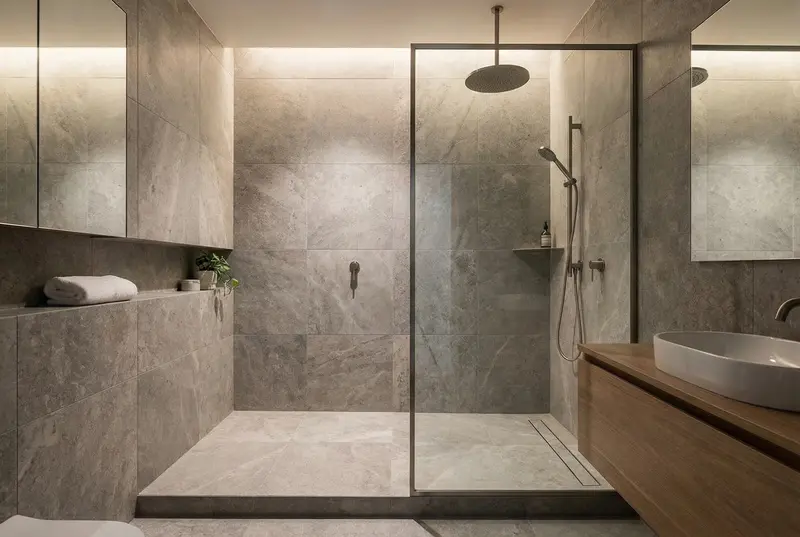
Wet Room Installation in Plymouth
The most common reason Plymouth homeowners look into wet room installation is accessibility. Whether it's ageing parents moving in, a family member with reduced mobility, or simply the desire to future-proof a home, a fully tiled, level-access wet room solves real problems while adding genuine value to a property. That said, plenty of Plymouth residents are also converting bathrooms purely because they love the look — open, spacious, and much easier to clean than a traditional shower enclosure. Whatever your reason, a wet room is a significant investment, and getting the installation right from the waterproofing out is everything.
Plumbing Conditions in Plymouth
Moderately Hard water
Mixed housing stock across different eras. With 22% of properties built before 1919, older pipework and drainage systems are common — specialist knowledge of period properties matters.
Wet Room Installation in Plymouth — Local Expertise
Plymouth's housing stock is one of the most varied in the South West, and that variety matters a great deal when planning a wet room. Victorian terraces — particularly common in areas like Mutley, Greenbank, and Stoke — often have suspended timber floors on the upper storeys, which require careful structural assessment before any wet room work begins. These floors need to be tanked and reinforced properly, and sometimes a specialist former or raised deck system is the only sensible solution. Post-war properties, especially the large estates built across Plympton and Estover in the 1950s and 60s, tend to have solid concrete floors on the ground level, which are generally more straightforward to work with. Newer homes in Derriford and Plymstock's more recent developments usually have modern building regulations compliance already built in. Plymouth sits in a moderately hard water area, which means limescale will gradually affect shower heads and glass screens — a consideration when choosing grout, tile finish, and fittings that will be easy to maintain long-term.
How We Work
A professional wet room installation in Plymouth typically unfolds over five to seven working days, though more complex conversions in older properties can take longer. The process begins with a detailed survey of your existing bathroom — the installer will assess the floor structure, drainage position, and wall construction before any design decisions are finalised. Once the existing suite is stripped out, the floor is prepared and a linear or central drain is set at the correct fall. This is arguably the most critical stage: the gradient must be precise, usually around 1-2%, to ensure water drains efficiently without pooling. The tanking system — a waterproof membrane applied to the floor and walls — is then installed, often in two or three coats, with reinforced tape at all junctions. This is what keeps moisture out of your subfloor and joists; cutting corners here is what causes expensive damage down the line. Once the tanking is cured, tiling begins. Most Plymouth installers will recommend larger format tiles for a modern look and fewer grout lines for easier cleaning. Finally, the shower valve, screen (if you're having one), and sanitaryware are fitted and everything is sealed and tested. A good installer will pressure test the drainage before signing off.
Why Choose a Local Plymouth Specialist
Choosing a Plymouth-based installer rather than a national franchise matters more than people realise. A local tradesperson will have direct experience with the types of properties here — they'll know what to expect when they lift the floorboards in a Mutley terrace or dig into the screed in a Plymstock semi. They're also accountable locally, which tends to focus minds on doing the job properly. Getting recommendations from neighbours in the same street, or checking reviews from Plymouth customers specifically, gives you far more useful information than a generic five-star rating from anywhere in the country.
Frequently Asked Questions
Can a wet room be installed in an upstairs bathroom in a Victorian Plymouth terrace?
Yes, but it requires careful preparation. Suspended timber floors need to be assessed for strength and then either reinforced or overlaid with a wet room former system that creates the correct drainage fall without excessive weight. An experienced Plymouth installer will have done this many times and will know the right approach for your specific floor construction.
How long does a wet room installation take in Plymouth?
Most standard wet room conversions in Plymouth take between five and seven working days. Larger bathrooms, older properties with more complex floor structures, or projects that include moving drainage or radiators can extend this to ten days or more. Your installer should give you a realistic programme before work starts, not a best-case estimate.
Will limescale be a problem in Plymouth's water supply?
Plymouth is in a moderately hard water area, so limescale will build up on shower heads, screens, and taps over time — but it's manageable. Choosing rectified tiles with tight grout joints, opting for matte or textured finishes rather than polished surfaces, and fitting a good quality thermostatic valve will all reduce maintenance. Some homeowners also fit an inline shower filter, which helps noticeably.
Do I need planning permission to install a wet room in Plymouth?
In most cases, no. Wet room installation is generally considered permitted development and falls under building regulations rather than planning permission. However, if your Plymouth home is a listed building or within a conservation area — some parts of the Barbican and historic Stonehouse fall into this category — it's worth checking with Plymouth City Council before any structural work begins.
Other Plumbing Services in Plymouth
What do you need?
Select your service and urgency level