Leak Detection & Repair in Plymouth
The most common reason Plymouth homeowners call out a leak detection specialist is a water bill that's quietly doubled without any obvious cause. Hidden leaks are frustratingly invisible — water escaping beneath a concrete floor, inside a cavity wall, or deep within a pipe run that hasn't been touched since the house was built. By the time you notice damp patches or hear the faint hiss of running water when everything's turned off, a significant amount of damage may already be done. In Plymouth, where properties range from characterful Victorian terraces to post-war estates and modern new-builds, the type of leak and how hard it is to find varies enormously depending on what's behind your walls.
Plumbing Conditions in Plymouth
Moderately Hard water
Mixed housing stock across different eras. With 22% of properties built before 1919, older pipework and drainage systems are common — specialist knowledge of period properties matters.
Leak Detection & Repair in Plymouth — Local Expertise
Plymouth's housing stock is genuinely varied, and that diversity directly affects how leak detection and repair jobs unfold in practice. Victorian properties — particularly those in areas like Mutley, Stoke, and Greenbank — often have original lead or iron pipework that's well past its expected lifespan. These older pipes corrode, develop pinhole leaks, or suffer from joint failures that can be hidden beneath original tiled floors or behind lath-and-plaster walls. Post-war council and semi-detached housing, common across estates in Devonport, Efford, and Plymstock, frequently has pipework buried in solid concrete floors — a scenario that makes traditional visual detection useless and calls for specialist acoustic or thermal equipment. Modern developments elsewhere in Plymouth are less prone to aged pipe failure but can suffer from poorly fitted joints or pressure-related issues. Plymouth sits in a moderately hard water area, which means limescale build-up over time can narrow pipe bores, increase pressure on joints, and contribute to premature wear — another reason why leaks are more common than homeowners expect.
How We Work
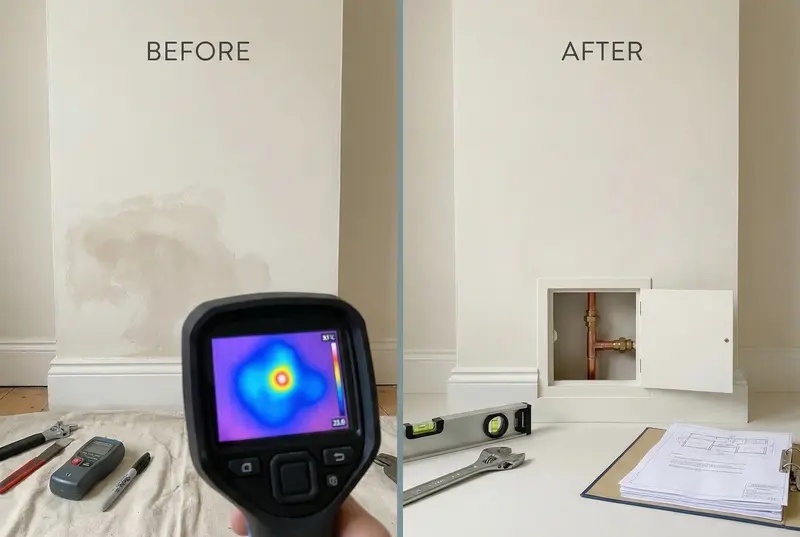
A professional leak detection visit in Plymouth typically begins with an initial assessment — the plumber will check your water meter, isolate sections of the system, and use pressure testing to confirm where water is escaping and roughly how significant the loss is. If the leak isn't immediately obvious, specialist detection equipment comes into play. Acoustic listening devices can pick up the sound of water escaping through soil or concrete, while thermal imaging cameras identify temperature differentials that reveal wet zones hidden behind walls or under floors. Tracer gas detection is another option for stubborn leaks, particularly useful in solid floor situations common in Plymouth's post-war properties. Once the source is pinpointed — and a good engineer will mark the precise location rather than guessing and digging unnecessarily — the repair can begin. For accessible pipework, this might mean cutting out and replacing a damaged section. For buried pipes, it could involve breaking up a small section of floor or, in some cases, re-routing the pipe entirely to avoid the affected run. You'll usually get a pressure test after the repair to confirm it's resolved before any reinstatement work is done. The whole process for a single leak can take anywhere from two hours to a full day depending on access and complexity.
Why Choose a Local Plymouth Specialist
Choosing a local Plymouth plumber for leak detection genuinely matters. Someone who works regularly across the city will know the quirks of Victorian terraces in Mutley, the solid-floor construction typical of Devonport's post-war estates, and the pressure variations that affect certain parts of Plymouth's supply network. They're also more likely to have existing relationships with building inspectors or flooring contractors if reinstatement work is needed after a floor breach. A local engineer can usually respond faster to what is often an urgent situation, and they're accountable to their local reputation in a way that a national call-centre booking service simply isn't.
Frequently Asked Questions
How do I know if I have a hidden leak in my Plymouth home?
The most reliable early indicator is an unexplained rise in your water bill. You can also check your water meter when all taps and appliances are off — if the dial is still moving, water is escaping somewhere. Damp patches on walls, warm spots on floors, or the persistent sound of running water when everything's switched off are also strong signs worth investigating promptly.
Will the engineer need to dig up my floor to find the leak?
Not necessarily. Modern acoustic listening equipment and thermal imaging cameras can pinpoint leaks beneath concrete floors without any excavation. This is particularly important in Plymouth's post-war properties where pipes are often buried in solid floors. The aim is always to locate the leak precisely first, so any digging required is kept to an absolute minimum rather than speculative.
Does hard water in Plymouth make leaks more likely?
It can contribute over time, yes. Plymouth's moderately hard water causes limescale deposits that gradually narrow pipework and increase pressure on joints and connections. This wear is slow but cumulative, and it's one reason why older properties in Plymouth tend to develop pinhole leaks or joint failures more frequently than they might in a softer water area. Regular checks on older systems are sensible preventative maintenance.
Is leak detection and repair covered by home insurance in Plymouth?
It depends on your policy. Many home insurance policies cover the cost of finding a leak — sometimes called 'trace and access' cover — but not always the repair itself or any resulting decoration and reinstatement work. It's worth checking your policy wording before calling an engineer, and a reputable Plymouth plumber should be able to provide documentation suitable for an insurance claim if needed.
Other Plumbing Services in Plymouth
What do you need?
Select your service and urgency level