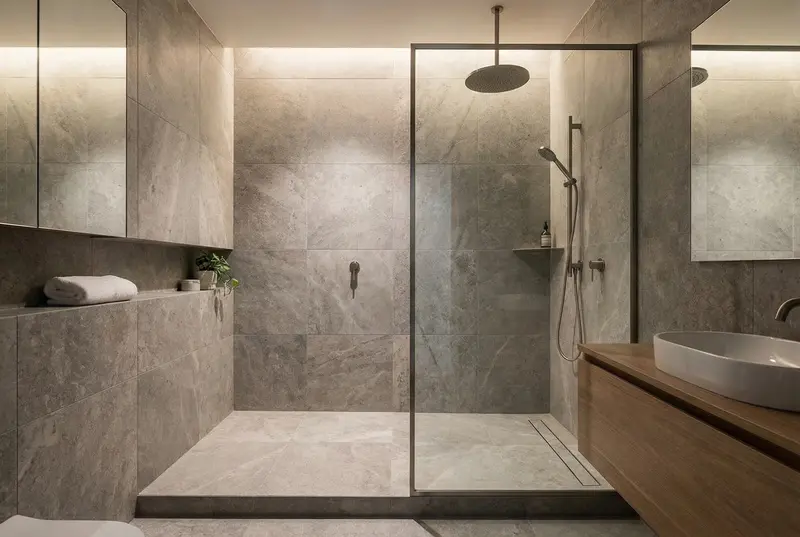
Wet Room Installation in Oldham
Wet rooms have become one of the most sought-after bathroom upgrades across Oldham, and it's easy to understand why. A properly installed wet room transforms a tired bathroom into something that feels genuinely luxurious, works brilliantly for people with mobility needs, and adds real value to a home. But getting one installed correctly is far more involved than a standard bathroom refit — the waterproofing alone can make or break the whole project. In Oldham, where housing stock varies enormously from street to street, there's no one-size-fits-all approach. Getting this right from the start means understanding the building you're working with before a single tile goes up.
Plumbing Conditions in Oldham
Soft water — Pennine reservoir supply
Mixed housing stock across different eras. With 22% of properties built before 1919, older pipework and drainage systems are common — specialist knowledge of period properties matters.
Wet Room Installation in Oldham — Local Expertise
Oldham's housing is genuinely varied, and that variety has a direct impact on how wet rooms are planned and priced. Victorian terraces — common across areas like Werneth, Glodwick, and Hollinwood — typically have solid floors at ground level and timber joists above, meaning a wet room on an upper floor requires careful structural assessment and sometimes a full floor build-up to achieve the correct drainage gradient. Post-war semis and council-built properties across Shaw and Royton often have concrete intermediate floors, which are more straightforward to work with. Newer builds in and around Oldham town centre and Chadderton tend to have modern wet room-friendly construction. Water supply is also worth mentioning: Oldham draws from Pennine reservoirs, making it a soft water area. This is actually good news for wet rooms — limescale buildup on screens, trays, and fittings is far less of an issue than in hard water areas, so your tiling and fixtures will stay looking cleaner for longer with minimal maintenance.
How We Work
A wet room installation in Oldham follows a clear sequence of stages, each one critical to the finished result. The process begins with a survey of the existing bathroom — your installer needs to assess floor structure, joist direction, existing waste pipe positions, and whether the room will need tanking or a pre-formed wet room former. In Victorian properties especially, this survey stage can reveal surprises like uneven floors or limited joist depth that affect the approach. Once the plan is agreed, the existing bathroom is fully stripped out, including the floor covering and often the subfloor. A new drainage channel or central drain is set into the floor, and the gradient — usually around 1:80 — is established either using a wet room tray system or a sand and cement screed. The tanking stage follows, where the entire floor and lower walls are coated with a waterproof membrane system; this is the most important part of the whole job and must be done with care. After tanking is inspected and approved, tiling begins — anti-slip tiles are strongly recommended for the floor. Finally, the shower valve, screen or frameless glass, and all fixtures are fitted and silicone-sealed. A quality installation in Oldham typically takes four to seven days depending on room size and complexity.
Why Choose a Local Oldham Specialist
Choosing a tradesperson who knows Oldham well genuinely matters for a project like this. Local installers will have worked in the same types of Victorian terraces and post-war semis that make up much of the town's housing stock, so they won't be caught off guard by the quirks those properties throw up. They'll also know local building control expectations, have established relationships with nearby tile suppliers and merchants, and can be on site quickly if anything needs attention after completion. For a high-value project like a wet room, that local knowledge and accountability is worth a great deal.
Frequently Asked Questions
Can a wet room be installed in an upstairs bathroom in a Victorian terrace in Oldham?
Yes, but it needs careful planning. Victorian terraces have timber joist floors, so your installer needs to assess joist depth and direction before deciding whether to use a low-profile wet room former or a built-up screed system. In most Oldham terraces this is completely achievable, but it may add cost and time compared to a ground floor or concrete floor installation.
Does Oldham's soft water supply affect how a wet room performs?
It's actually a benefit. Because Oldham's water comes from Pennine reservoirs and is naturally soft, you won't get the heavy limescale deposits that plague wet rooms in hard water areas. Glass screens and tiles stay cleaner with less effort, and shower fittings tend to last longer without scale buildup affecting performance or appearance.
How long does a wet room installation take in Oldham?
Most wet room projects in Oldham take between four and seven working days for a standard-sized bathroom. More complex jobs — such as those in older Victorian properties needing significant floor preparation, or larger rooms with bespoke tiling — can run to eight or ten days. Your installer should give you a realistic programme once they've surveyed the room.
Do I need building regulations approval for a wet room installation in Oldham?
Generally, a like-for-like bathroom replacement doesn't require full building regulations approval, but if you're moving soil pipes, adding an extractor fan to a new position, or doing electrical work, certain elements will need to comply with Part P electrical regulations or Part H drainage rules. A reputable Oldham installer will flag anything that needs signing off and can handle notifications on your behalf.
Other Plumbing Services in Oldham
What do you need?
Select your service and urgency level