Leak Detection & Repair in Oldham
Leaks have a habit of hiding in plain sight — a slightly higher water bill, a damp patch creeping up a wall, or the faint sound of running water when every tap is off. In Oldham, these warning signs shouldn't be ignored. Whether you're dealing with a slow drip under the kitchen sink or a hidden pipe leak causing structural damp, catching it early saves you a significant amount of money and damage. Local plumbers covering Oldham can locate and fix leaks quickly using modern detection equipment, meaning there's no need to start hacking through walls on a guess. Getting the right person in promptly is always the smarter move.
Plumbing Conditions in Oldham
Soft water — Pennine reservoir supply
Mixed housing stock across different eras. With 22% of properties built before 1919, older pipework and drainage systems are common — specialist knowledge of period properties matters.
Leak Detection & Repair in Oldham — Local Expertise
Oldham's housing stock is one of the most varied in Greater Manchester, and that variety directly affects how leaks develop and where they tend to occur. The town has a substantial number of Victorian terraced properties — particularly across areas like Werneth, Coldhurst, and Glodwick — where original lead or iron pipework may still be in service beneath floors or behind walls. These older pipes corrode over time and can develop pinhole leaks that go undetected for months. Post-war council and semi-detached housing from the 1950s and 60s brings its own challenges, with copper pipework now reaching an age where joints and fittings can fail. Newer developments in areas like Royton and Chadderton tend to use plastic push-fit systems, which are generally more resilient but can fail at joints if poorly installed. Oldham is also supplied by soft water drawn from Pennine reservoirs, and while soft water is generally less prone to causing limescale build-up in pipes, it can actually be slightly more corrosive to older metal pipework over time — a factor worth bearing in mind in the town's older properties.
How We Work
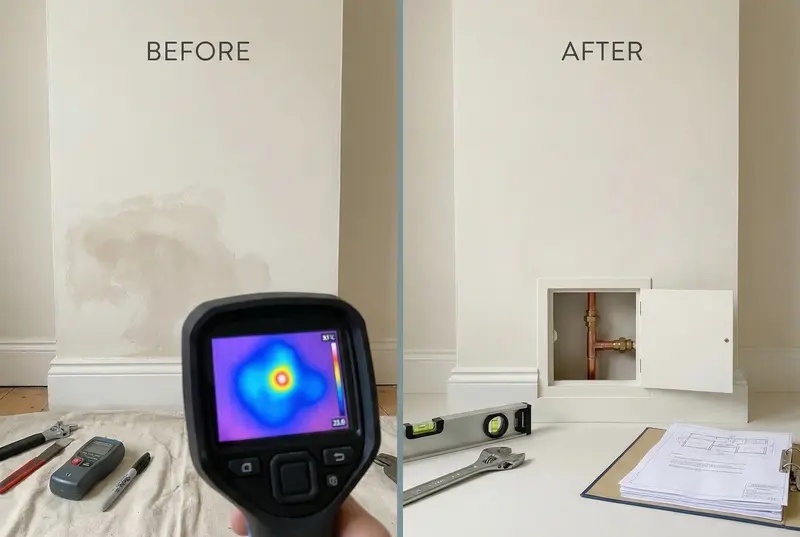
When you contact a plumber about a suspected leak in Oldham, a good tradesperson will start by asking the right questions — where you've noticed moisture or discolouration, whether your water meter reading has been climbing unexpectedly, and what type of property and pipework you have. This helps them arrive with the right tools for the job. On arrival, the plumber will carry out a visual inspection first, checking obvious areas like under sinks, around the toilet cistern, along exposed pipework, and near the boiler. If no obvious source is found, they'll move on to more advanced detection methods. Acoustic leak detection equipment listens for the specific sound frequency that escaping water produces within a pressurised pipe, which allows the plumber to pinpoint a leak without opening up walls or floors unnecessarily. Thermal imaging cameras can also be used to identify temperature differences behind surfaces caused by hidden moisture. Once the leak is located, the plumber will advise you on the repair options — this might mean replacing a section of pipe, reseating a joint, replacing a faulty valve, or in older Oldham properties, recommending a section of pipework is upgraded entirely. Repairs are typically completed in the same visit for straightforward cases, though larger jobs may require a return appointment once materials are sourced.
Why Choose a Local Oldham Specialist
Choosing a plumber who knows Oldham well makes a genuine practical difference. Someone familiar with the town will understand the specific challenges of its Victorian terrace stock, know what pipework they're likely to encounter in a 1960s semi in Shaw or a newer build in Royton, and won't be starting from scratch when they walk through your door. Local plumbers also tend to be quicker to reach you, which matters when water is actively escaping. Word-of-mouth reputation matters more at a local level too — a tradesperson working regularly across Oldham has a strong incentive to do the job properly and treat customers well.
Frequently Asked Questions
How do I know if I have a hidden leak in my Oldham home?
The most reliable indicator is an unexplained rise in your water bill. You can also check your water meter when all taps and appliances are off — if the dial is still moving, water is escaping somewhere. Damp patches on walls or ceilings, a musty smell, or soft spots in flooring are also common signs, particularly in older properties across Oldham.
Will the plumber need to break through my walls or floors to find the leak?
Not necessarily. Modern acoustic detection and thermal imaging equipment can locate most leaks without destructive investigation. In Oldham's older Victorian properties with solid floors, some access may eventually be needed for the repair itself, but a good plumber will always aim to minimise disruption and only open surfaces once the leak location is confirmed.
Does Oldham's soft water supply make leaks more likely?
Soft water from the Pennine reservoirs doesn't cause limescale, which is a benefit, but it can be mildly corrosive to older copper and iron pipework over many decades. This makes it worth keeping an eye on aging pipe systems in Oldham's Victorian and post-war housing stock, as pinhole corrosion leaks are a known issue in properties with original metal pipework.
Can a small leak really wait, or do I need someone out quickly?
Even a slow drip can cause significant damage over time — saturating insulation, rotting timber joists, encouraging mould growth, and potentially undermining plasterwork. In Oldham's older terraced properties especially, where walls and floors have already seen decades of wear, it's always better to get a plumber to assess it promptly rather than wait and risk a much costlier repair down the line.
Other Plumbing Services in Oldham
What do you need?
Select your service and urgency level