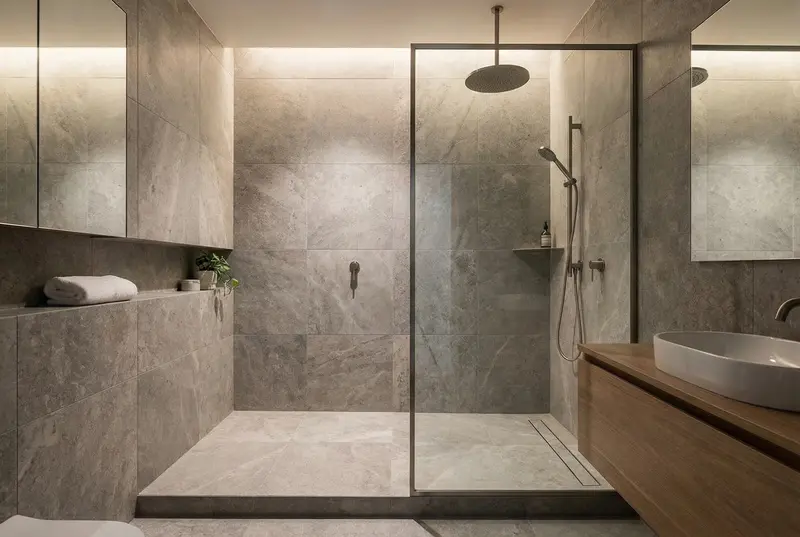
Wet Room Installation in Coventry
Wet rooms have become one of the most sought-after bathroom upgrades in Coventry, and it's easy to see why. They're practical, genuinely stylish, and add real value to a home. But getting one installed properly is a far bigger job than most people realise. It's not just plumbing — it involves waterproofing, drainage gradients, floor reinforcement, and tiling, all of which need to work together perfectly. Get any one element wrong and you're looking at water damage, leaks into the floor below, or a room that simply doesn't drain properly. Done right, a wet room is a brilliant long-term investment for your Coventry home.
Plumbing Conditions in Coventry
Moderately Soft water — Severn Trent supply
Mixed housing stock across different eras. With 22% of properties built before 1919, older pipework and drainage systems are common — specialist knowledge of period properties matters.
Wet Room Installation in Coventry — Local Expertise
Coventry's housing stock is genuinely varied, and that variety has a direct impact on how wet room installations are planned and priced. Victorian terraces — common across areas like Earlsdon and Chapelfields — tend to have suspended timber floors and older drainage layouts, both of which require careful assessment before any wet room work begins. Timber floors need reinforcing or replacing with a solid concrete screed to handle the weight and waterproofing demands of a wet room, which adds time and cost. Post-war properties, particularly the semi-detached housing that makes up much of Allesley, Wyken, and Binley, often have solid concrete ground floors that are more straightforward to work with, though first-floor installations still need structural consideration. Newer builds and modern apartments in the city centre and regeneration areas tend to have better-specified existing pipework, but tighter floor zones can limit drainage options. Coventry also sits in a moderately hard water area, which means limescale can affect shower valves, screens, and fittings over time — worth factoring in when choosing fixtures for your wet room.
How We Work
A professional wet room installation in Coventry typically follows a clear sequence of work, starting well before any tiling or fitting happens. The first stage is a survey visit, where a qualified installer assesses your existing bathroom layout, floor construction, drainage position, and water supply. This is where decisions are made about whether the floor needs to be reinforced or replaced, and where the linear or point drain will sit to achieve the correct fall gradient across the whole floor — usually around 1.5 to 2 degrees. Once the plan is agreed and materials are ordered, installation begins with stripping out the existing bathroom and preparing the subfloor. A tanking system is then applied — this is the critical waterproofing layer that goes onto walls and floor before any tiles are laid. It's a step that should never be rushed or skimped on, because this membrane is what keeps water where it belongs. After tanking, the shower tray former or screeded floor build-up is installed to create the correct drainage falls, followed by wall and floor tiling. Finally, the shower valve, screen or fixed glass panel, sanitaryware, and any heated towel rail or underfloor heating are fitted and commissioned. A full wet room installation in Coventry typically takes between five and eight working days, depending on the size and complexity of the room.
Why Choose a Local Coventry Specialist
Choosing a Coventry-based installer rather than a national firm makes a practical difference on a job like this. Local tradespeople know the city's housing stock — they've worked in the Victorian terraces of Earlsdon, the post-war estates in Cheylesmore, and the newer developments near the canal basin. That experience matters when it comes to assessing floor construction, local building control requirements, and the kind of drainage setups that are common in different parts of Coventry. You're also far more likely to get follow-up support from someone based nearby if any snagging issues arise after completion.
Frequently Asked Questions
Can a wet room be installed on an upper floor in a Coventry Victorian terrace?
Yes, but it requires more preparation work. Victorian terraces typically have suspended timber joists on upper floors, which need to be assessed for strength and usually reinforced or overlaid with a solid substrate before tanking and screeding can begin. It's absolutely achievable, but budget for additional structural work and factor in a few extra days on the timeline.
How long does a wet room last and does hard water in Coventry affect it?
A properly installed wet room with quality materials should last 15 to 20 years or more. Coventry's moderately hard water can cause limescale to build up on shower valves, glass screens, and chrome fittings over time. Choosing a thermostatic valve with easy-clean cartridges, applying a glass treatment to screens, and using a water softener or inline scale inhibitor will all help extend the life of your fittings.
Do I need building regulations approval for a wet room installation in Coventry?
In most cases, a standard wet room replacement within an existing bathroom space doesn't require a full building regulations application. However, if you're moving drainage, altering structural elements, or converting a different room into a wet room, building control notification may be needed. Your installer should advise on this, and any electrical work within the bathroom must comply with Part P regulations regardless.
What's the difference between a wet room and a walk-in shower, and which is better for my Coventry home?
A wet room has the entire floor waterproofed and drained, with no shower tray — the whole room is essentially the shower enclosure. A walk-in shower uses a large tray or defined shower area within the bathroom. Wet rooms suit smaller rooms where you want to maximise space, or homeowners wanting a seamless, accessible design. Walk-in showers are often simpler to retrofit in properties where full floor waterproofing would be disruptive or costly.
Other Plumbing Services in Coventry
What do you need?
Select your service and urgency level