Leak Detection & Repair in Coventry
Leaks are one of those problems that rarely announce themselves clearly. You might notice a damp patch on a ceiling, an unexplained spike in your water bill, or the faint sound of running water when every tap is off. In a city the size of Coventry, with hundreds of thousands of properties spanning more than a century of construction, leaks are an everyday occurrence — and they can cause serious damage if left unaddressed. Whether you're in a terraced house in Earlsdon, a post-war semi in Walsgrave, or a newer build in Canley, getting the source of a leak properly identified and fixed quickly is what separates a minor inconvenience from a costly structural repair.
Plumbing Conditions in Coventry
Moderately Soft water — Severn Trent supply
Mixed housing stock across different eras. With 22% of properties built before 1919, older pipework and drainage systems are common — specialist knowledge of period properties matters.
Leak Detection & Repair in Coventry — Local Expertise
Coventry's housing stock is genuinely varied, and that variety matters when it comes to leak detection. Victorian-era terraces and Edwardian properties — common across areas like Chapelfields and Foleshill — often have original lead or iron pipework that has simply reached the end of its service life. These pipes are prone to pinhole leaks and slow weeps that are easy to miss until the damage is already done. Post-war properties built during Coventry's major reconstruction after the Blitz frequently used materials and plumbing layouts that are now several decades old, meaning joints, stop valves, and buried supply pipes are increasingly unreliable. Newer builds in developments around the outskirts of the city tend to use modern plastic pipework, but that doesn't make them immune — poor installation, ground movement, or thermal expansion can still cause problems. Coventry also sits in a moderately hard water area, which accelerates limescale build-up inside pipes and around fittings. Over time this can cause joint connections to weaken and increase the risk of small leaks developing at solder joints or compression fittings.
How We Work
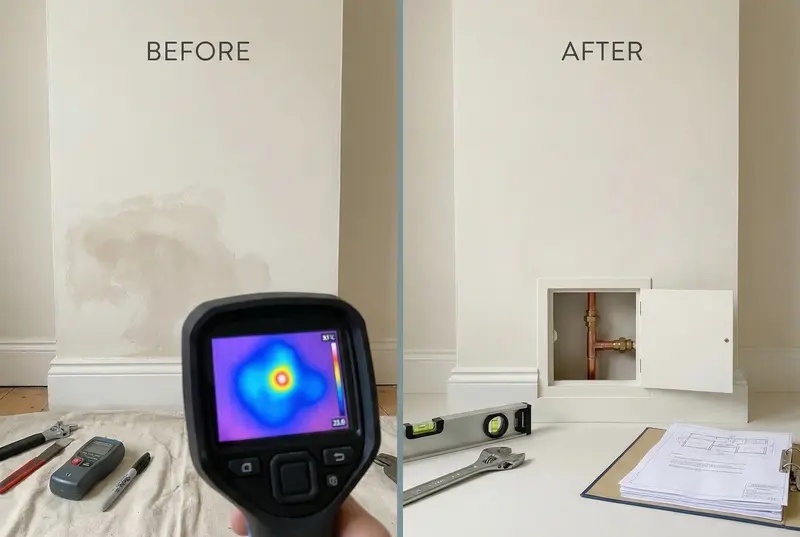
Professional leak detection in Coventry starts with a proper diagnosis rather than guesswork. A qualified plumber will begin by checking your water meter — if the meter is moving while all appliances are off, there's an active leak somewhere in the system. From there, the investigation depends on the suspected location. For internal plumbing, a plumber will check exposed pipework, look behind panels, and inspect obvious risk points like joints and stop valves. Where a leak is hidden — inside a wall, under a floor, or beneath a concrete screed — specialist equipment comes into play. Acoustic listening devices can pick up the sound of water escaping under pressure, while thermal imaging cameras can identify temperature differences caused by water movement behind surfaces. Tracer gas testing is another option for buried or concealed pipework, where a safe gas is introduced into the pipe and a detector traces where it's escaping. Once the source is located, the repair itself is usually straightforward. Pinhole leaks in copper pipe can be repaired with a solder patch or a short section replacement. Failed compression joints are re-made. Cracked plastic pipes are cut out and replaced. In more serious cases — where a buried supply pipe has failed — a full re-route may be the most practical and cost-effective solution rather than digging up floors. You'll be given a clear explanation of what was found and what was done before any work begins.
Why Choose a Local Coventry Specialist
Choosing a local Coventry plumber for leak detection genuinely makes a difference. Someone who works regularly across the city will be familiar with the typical plumbing setups found in Coventry's different housing eras — they'll know what to expect under the floorboards of a 1930s semi in Coundon versus a 1970s townhouse in Binley Woods. Local plumbers can also respond faster, which matters when a leak is actively causing damage. They'll have established relationships with local suppliers, which helps if parts need sourcing quickly, and you can more easily check local reviews and word-of-mouth recommendations before booking.
Frequently Asked Questions
How do I know if I have a hidden leak in my Coventry home?
The most reliable early sign is an unexplained rise in your water bill. You can also check your water meter — turn off every tap and appliance, then watch the meter for a few minutes. If it's still moving, water is escaping somewhere. Damp patches on walls or ceilings, musty smells, and soft spots on floors are also indicators worth taking seriously.
Will the plumber need to break through walls or floors to find the leak?
Not necessarily. Modern acoustic detection and thermal imaging equipment can often locate a leak without any destructive investigation. If the leak is in a buried supply pipe or fully concealed location, some access may be needed, but a good tradesperson will always try the least invasive approach first and explain clearly what access is required before starting work.
My Coventry property is a Victorian terrace — are leaks more common in older homes?
Yes, older properties do carry a higher risk. Victorian terraces in Coventry often still have sections of original pipework, and the combination of age, moderate water hardness, and decades of thermal movement means joints and pipe walls are more vulnerable. It doesn't mean problems are inevitable, but it's worth getting a plumber to assess older pipework if you're buying or if you've never had it checked.
Can hard water in Coventry cause leaks?
Moderately hard water doesn't directly cause leaks, but it does contribute over time. Limescale deposits can build up around fittings and inside pipes, gradually restricting flow and putting additional stress on joints. In older copper pipework, this can weaken solder connections over years. Descaling treatments and regular checks on fittings in hard water areas are a sensible precaution.
Other Plumbing Services in Coventry
What do you need?
Select your service and urgency level