Leak Detection & Repair in Havering
Leaks have a nasty habit of hiding in plain sight — or worse, staying completely hidden until the damage is already done. In Havering, where the housing stock ranges from century-old Victorian terraces to post-war semis and modern new-builds, the variety of pipework and plumbing systems means leaks can show up in all sorts of unexpected ways. A damp patch on a ceiling, an unexplained spike in your water bill, or the faint sound of running water when everything's turned off — these are the signs that something's wrong. Getting it diagnosed and fixed quickly by someone who knows what they're doing can save you hundreds, sometimes thousands, in structural damage down the line.
Plumbing Conditions in Havering
Very Hard water — significant limescale buildup, annual boiler servicing essential
Mixed housing stock across different eras. With 22% of properties built before 1919, older pipework and drainage systems are common — specialist knowledge of period properties matters.
Leak Detection & Repair in Havering — Local Expertise
Havering is a large and varied borough, and its housing stock tells that story clearly. Victorian properties in areas like Romford and Hornchurch often have original or partially updated lead and copper pipework that's now well over a hundred years old — these older systems are far more prone to pinhole leaks and joint failures. Post-war housing, which makes up a significant chunk of residential Havering, commonly features galvanised steel pipes that corrode from the inside out over decades, restricting flow before eventually giving way. Newer developments, meanwhile, tend to use plastic push-fit systems that are generally reliable but can suffer from fitting failures, especially if installed in a rush. On top of that, Havering sits in a moderately hard water area, which means limescale builds up inside pipes and on fittings over time. This scaling can accelerate joint and valve failure, and it's a particularly common culprit behind slow weeping leaks that go unnoticed for months.
How We Work
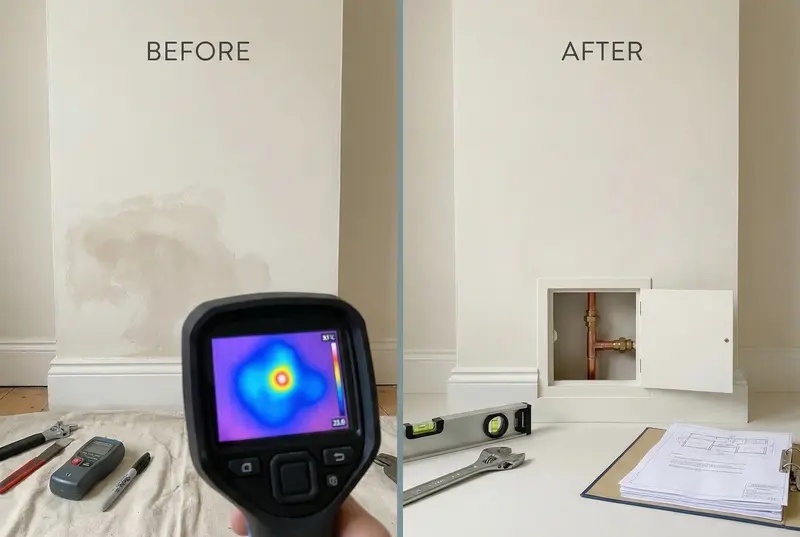
Leak detection in Havering starts with a proper assessment rather than guesswork. A qualified plumber will begin by listening to your description — when you noticed it, where any visible signs are, whether there's been any recent work done — before carrying out a visual inspection of accessible pipework, joints, and appliances. If the source isn't immediately obvious, which is often the case with concealed leaks, more specialist methods come into play. Thermal imaging cameras can identify temperature differences caused by escaping water behind walls or under floors without any need to open things up straight away. Acoustic listening devices can detect the sound of water movement through solid structures, helping to pinpoint the exact location of a hidden leak. Pressure testing — isolating sections of the system and monitoring for pressure drops — is another reliable technique for confirming whether a leak is present and roughly where it sits. Once the leak is found, repair options depend on what's been discovered. A pinhole in a copper pipe might be resolved with a straightforward solder repair or a section replacement. A failed joint might need re-making or fitting replacement. In some cases, particularly with older Havering properties where pipework runs under concrete floors or inside cavity walls, a trace-and-access repair will involve careful cutting or lifting to reach the problem — with reinstatement of any disturbed surfaces discussed and agreed before work begins.
Why Choose a Local Havering Specialist
Choosing a plumber based in or familiar with Havering genuinely makes a difference on leak jobs. Local tradespeople will have worked on the types of properties common to the borough — they'll know the quirks of Victorian terraces in Romford, the underfloor pipework layouts typical of post-war estates in Harold Wood or Elm Park, and the common faults in more recent developments. That familiarity speeds up diagnosis, which saves you money. A local plumber is also more likely to be available quickly, which matters when a leak is actively causing damage, and they'll have built-up relationships with local suppliers for parts.
Frequently Asked Questions
How do I know if I have a hidden leak in my Havering home?
The most common signs are an unexplained rise in your water bill, damp patches on walls or ceilings, mould appearing without an obvious cause, or the sound of running water when everything is switched off. In older Havering properties with original pipework, these symptoms can develop slowly — don't ignore them, as the longer a hidden leak runs, the more damage it causes.
Will the plumber need to dig up my floors or open my walls to find the leak?
Not necessarily. Modern detection equipment like thermal imaging and acoustic devices can locate many leaks without any destructive work upfront. If the leak is in a concealed position that does require access, a good plumber will talk you through exactly what's involved, agree on the approach, and discuss reinstatement before starting. Many leaks in Havering homes are found and fixed with minimal disruption.
Does hard water in Havering make leaks more likely?
Yes, it can contribute. Havering's moderately hard water leads to limescale accumulation inside pipes and on fittings over time. This scaling puts added stress on joints and valves and can cause gradual weeping leaks, particularly in older copper systems. It's worth considering a water softener or scale inhibitor if you're having repeated issues, especially in properties built before the 1980s.
Is leak detection covered by home insurance?
It depends on your policy. Many home insurance policies in the UK cover trace and access — meaning the cost of finding and reaching a leak — but the repair itself may or may not be included. It's worth checking your policy documents before booking, and a reputable Havering plumber can usually provide a written report of findings to support an insurance claim if needed.
Other Plumbing Services in Havering
What do you need?
Select your service and urgency level