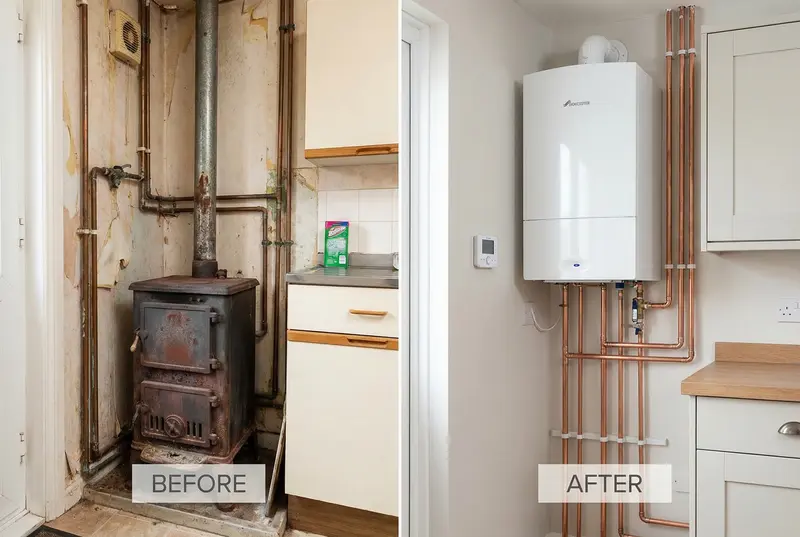
Boiler Installation in Havering
Most boiler installations in Havering are triggered by the same thing: a heating engineer telling a homeowner that their existing boiler is beyond economic repair, or a growing awareness that an ageing system is costing far more to run than a modern replacement would. Whether your boiler has finally packed in during a cold snap or you're planning ahead before next winter, getting the job done properly matters enormously.
Plumbing Conditions in Havering
Very Hard water — significant limescale buildup, annual boiler servicing essential Regular descaling and annual servicing is particularly important in Havering.
Mixed housing stock across different eras. With 22% of properties built before 1919, older pipework and drainage systems are common — specialist knowledge of period properties matters.
Boiler Installation in Havering — Local Expertise
Havering's housing stock is genuinely mixed, and that variety directly affects how a boiler installation is scoped and priced. The Victorian and Edwardian terraces found in areas like Romford and Hornchurch often have older pipework, narrow flues, and limited cupboard space that can complicate a straightforward swap. Post-war semis and council-built properties — common throughout much of Havering — frequently have system boilers with hot water cylinders rather than the combi setups more common in newer builds, meaning a like-for-like replacement isn't always the right choice. Modern developments closer to the borough's edges tend to be more straightforward. There's also the water quality to consider: Havering sits in a moderately hard water area, which means limescale buildup in heat exchangers is a genuine issue over time. Any good installer working in Havering should be recommending a scale reducer or inhibitor dosing as part of the job, especially in older systems where the pipework has seen years of use.
How We Work
A boiler installation in Havering follows a fairly consistent process, though the details vary based on your property and existing system. It typically starts with a survey — either in person or based on photos and details you provide — where an engineer assesses your current setup, the flue route, gas meter capacity, and whether your existing pipework and radiators can support a new boiler without additional work. From there you'll receive a quote covering the unit, labour, and any associated parts like a new thermostat, smart controls, or a magnetic system filter. On installation day, the engineer will drain down your heating system, disconnect and remove the old boiler, and fit the new unit — usually in the same location, though repositioning is sometimes necessary. They'll check and flush the system using a powerflush or chemical flush if needed, fit the new controls, and commission the boiler according to the manufacturer's requirements. Gas Safe regulations require the work to be notified to Building Control, and a good installer will handle this for you as part of the job. You should receive a commissioning checklist, the manufacturer's warranty documentation, and a Gas Safe certificate before they leave. The whole job typically takes one to two days depending on complexity.
Why Choose a Local Havering Specialist
Choosing an engineer who regularly works in Havering makes a practical difference. They'll know the quirks of the borough's older housing stock, be familiar with common issues in post-war properties around Harold Wood or Upminster, and understand the local building regulations process. A local Gas Safe registered engineer is also far easier to hold accountable if anything needs attention under warranty — you're not waiting on a national call centre to dispatch someone from outside the area. Word-of-mouth reputation matters more to tradespeople working in a defined local area, which tends to keep standards higher.
Frequently Asked Questions
How long does a boiler installation take in Havering?
Most standard installations — particularly a combi-for-combi swap in a typical Havering semi or terrace — are completed in a single day. More complex jobs, such as converting from a regular boiler with a cylinder, or repositioning the boiler to a new location, usually take two days. Your engineer should give you a clear timeframe when they survey the job.
Do I need a powerflush when fitting a new boiler in Havering?
Given Havering's moderately hard water and the age of much of the local housing stock, a system flush is strongly advisable before installing a new boiler. A powerflush removes sludge and scale from the pipework that would otherwise reduce efficiency and shorten the life of your new unit. Most manufacturers require evidence of a clean system to honour the warranty.
What size boiler do I need for my Havering home?
Boiler output is measured in kilowatts and needs to be matched to your home's heat loss and hot water demand. A typical three-bedroom post-war semi in Havering will usually need a combi in the 24–30kW range, while larger Victorian properties with more radiators may need 35kW or above. An engineer should calculate this properly rather than just fitting the same size as your old boiler.
Is a combi boiler always the right choice for Havering properties?
Not necessarily. Combis are excellent for most modern and post-war homes in Havering with average hot water demand, but larger Victorian properties with multiple bathrooms may struggle with the flow rate a combi provides. In those cases, a system boiler with an unvented cylinder can be a better fit. A good local engineer will talk you through the options rather than defaulting to the cheapest or easiest solution.
Other Plumbing Services in Havering
What do you need?
Select your service and urgency level