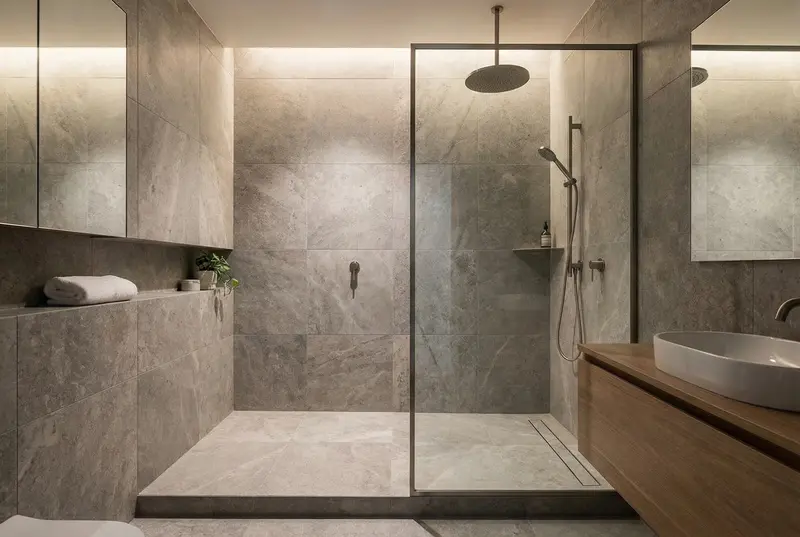
Wet Room Installation in Barnet
Picture a tired, awkwardly-sized bathroom in a 1930s semi in New Barnet — the kind with a shallow bath that's more hazard than luxury, grout that no amount of scrubbing will fix, and a layout that wastes half the floor space. For many Barnet homeowners, a wet room conversion is the answer: a clean, open, fully waterproofed shower space that transforms how you use the room every single day. Whether you're planning ahead for accessibility, upgrading a family bathroom, or simply want something that looks genuinely modern, a professionally installed wet room is one of the most impactful home improvements you can make in this part of North London.
Plumbing Conditions in Barnet
Very Hard water — significant limescale buildup, annual boiler servicing essential
Mixed housing stock across different eras. With 22% of properties built before 1919, older pipework and drainage systems are common — specialist knowledge of period properties matters.
Wet Room Installation in Barnet — Local Expertise
Barnet's housing stock is wonderfully varied, and that variety matters enormously when it comes to wet room installation. Victorian terraces — especially common around East Barnet and Hadley Wood — often have original timber joists that need careful assessment before any waterproofing work begins. Post-war properties, which you'll find throughout Burnt Oak and Colindale, sometimes have solid concrete floors that actually make wet room installation more straightforward, though they bring their own challenges around drainage routing. Newer builds in areas like Whetstone or the regenerated parts of Brent Cross tend to have more predictable floor structures but less generous room dimensions. Barnet is also a moderately hard water area, which means limescale build-up on screens, trays, and fittings is a real concern — a good installer will recommend materials and coatings that stand up to the local water conditions and may suggest a softener or descaler system as part of the project.
How We Work
A wet room installation is a multi-trade job, and understanding what's involved helps you plan properly. It typically starts with a survey visit where a qualified tradesperson assesses your floor structure, checks for existing pipework and waste routes, and discusses the layout with you. Once you've agreed the design, work begins with stripping out the existing bathroom fittings and floor or wall finishes down to the substrate. For timber-joist floors — common in Barnet's Victorian and Edwardian homes — a cement particle board or similar rigid decking is laid first to provide a stable, moisture-resistant base. The critical stage is the tanking: applying a specialist waterproof membrane across the entire floor and up the walls to a height of at least 1.8 metres. This is what separates a proper wet room from a disaster waiting to happen, and it should never be rushed. A linear drain or central drain is then set into the floor with a precisely calculated fall — usually around 1–1.5% gradient — to ensure water flows away cleanly without pooling. Tiling or large-format porcelain slabs go on next, followed by the shower valve, head, screen if required, and any additional fixtures. A full installation including plastering, tiling, and fitting typically takes five to eight working days depending on the complexity of the room.
Why Choose a Local Barnet Specialist
Choosing a tradesperson who regularly works in Barnet makes a real practical difference. They'll understand the quirks of different property eras across the borough, know which building control requirements apply locally, and have existing relationships with tile suppliers and specialist waterproofing merchants nearby. A local installer is also easier to reach if something needs attention after the job is done — and with a wet room, that ongoing relationship matters. Word-of-mouth reputation in a tight-knit community like Barnet carries real weight, which means local tradespeople have strong incentive to get the work right first time.
Frequently Asked Questions
Does my Barnet Victorian terrace need special preparation before a wet room can be installed?
Almost certainly, yes. Victorian and Edwardian properties in Barnet typically have suspended timber floors, which need to be overlaid with a rigid, moisture-resistant board before tanking can begin. A surveyor will assess the joist condition and any deflection in the floor — excessive movement is a problem for waterproof membranes over time. Budget for this additional preparation work when planning your project.
How long does a wet room installation take from start to finish in Barnet?
Most wet room conversions in Barnet take between five and eight working days on site, assuming no hidden surprises once the strip-out begins. More complex projects — changing drain positions, reconfiguring pipework, or working in larger rooms — can extend to ten days. Your installer should give you a realistic timeline before work starts, including any time needed for the waterproof membrane to cure properly before tiling.
Will hard water in Barnet cause problems with my wet room once it's installed?
Barnet's moderately hard water will leave limescale deposits on tiles, screens, and chrome fittings over time if you don't manage it. Choosing larger-format tiles with fewer grout lines reduces the surface area where scale builds up. Matte finishes on fittings and anti-limescale coatings on glass screens help considerably. Some homeowners also install an inline water softener as part of the project — worth discussing with your installer at the planning stage.
Do I need planning permission or building regulations approval for a wet room in Barnet?
Planning permission isn't usually required for an internal bathroom conversion in Barnet. However, if the work involves moving or creating drainage connections, building regulations may apply — particularly under Part H (drainage) and Part P (electrical work). Any electrical work within the bathroom must be carried out by a qualified electrician and notified to the local authority. Your installer should handle this as part of the project and provide a completion certificate.
Other Plumbing Services in Barnet
What do you need?
Select your service and urgency level