Leak Detection & Repair in Barnet
You notice a damp patch spreading across the ceiling below your bathroom, or your water bill has crept up by twenty pounds a month for no obvious reason. These are the moments when Barnet homeowners realise they've got a leak somewhere in the system — and the longer it's left, the worse it gets. Hidden leaks are surprisingly common across the borough, from the older terraces in East Barnet to the newer builds around Colindale. Getting the problem found and fixed quickly is the difference between a straightforward repair job and dealing with structural damage, mould, or a collapsed ceiling. The good news is that modern leak detection equipment means most issues can be located without tearing up your floors or ripping out walls.
Plumbing Conditions in Barnet
Very Hard water — significant limescale buildup, annual boiler servicing essential
Mixed housing stock across different eras. With 22% of properties built before 1919, older pipework and drainage systems are common — specialist knowledge of period properties matters.
Leak Detection & Repair in Barnet — Local Expertise
Barnet is a large and varied borough, and the age and type of your property has a real bearing on where leaks tend to occur. Victorian and Edwardian terraces — which make up a good chunk of the housing stock in areas like New Barnet, Cockfosters, and High Barnet — were built with lead or iron pipework that has had well over a century to corrode, shift, and develop pinhole leaks. Post-war semis and council-built properties often have older copper or early plastic pipework that can suffer from joint failure as the materials age. Modern developments, particularly in regeneration areas like Colindale and Brent Cross, can still experience leaks from poorly installed fittings or early manufacturing defects. Barnet sits in a moderately hard water area, which means limescale builds up inside pipes and on fittings over time. This scaling can mask small leaks initially but eventually causes pressure issues and joint weakness — making routine checks all the more worthwhile if you're in an older Barnet property.
How We Work
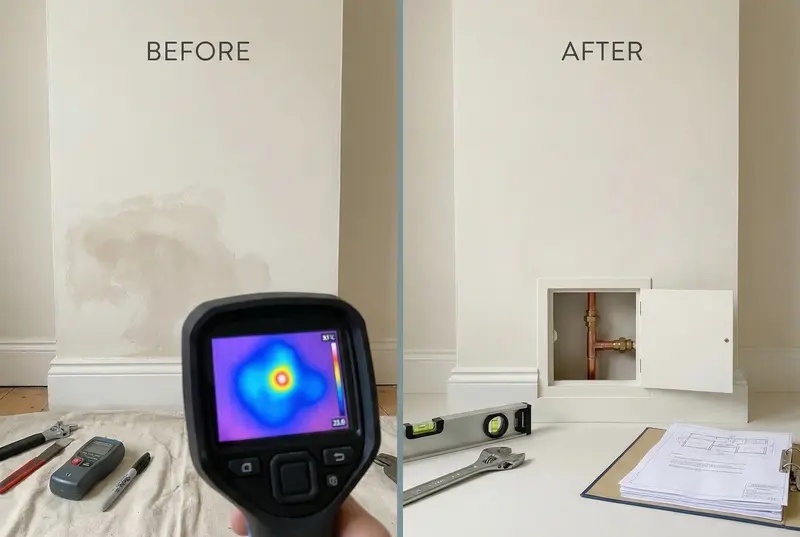
When a leak detection specialist arrives at your Barnet home, the first step is a thorough assessment of the symptoms — water staining, unexplained damp, drop in water pressure, or a constantly running meter. From there, they'll typically start with a meter test: turning off all water in the property and checking whether the meter continues to move. If it does, there's an active leak on the supply side. For central heating leaks, a pressure drop test on the system will confirm whether the loop is losing water. The real skill comes in locating exactly where the leak is. Technicians use a combination of acoustic listening equipment, thermal imaging cameras, and tracer gas to pinpoint leaks without invasive digging or demolition. Acoustic devices pick up the sound of water escaping under pressure; thermal imaging shows temperature differences through floors and walls caused by escaping water; and tracer gas — a harmless mix of hydrogen and nitrogen — can find even tiny leaks in buried pipes. Once the leak is located, the repair itself is usually straightforward. A pinhole in a copper pipe might be resolved with a push-fit repair collar or a short section replacement. A failing joint under a concrete screed may require a small section of floor to be lifted, but only precisely where needed rather than wholesale excavation. Most Barnet jobs are completed in a single visit.
Why Choose a Local Barnet Specialist
A plumber who works regularly in Barnet will know the borough's housing stock inside out — the common pipe configurations in the post-war semis around New Barnet, the original lead supplies still lurking under some Victorian terraces, and the layout quirks that come with properties built across different eras. That local knowledge saves time and reduces guesswork. They'll also understand the moderately hard water conditions that affect Barnet's pipes, and they're familiar with local suppliers should parts need sourcing quickly. A local tradesperson is also accountable to their reputation in the community — they're not passing through.
Frequently Asked Questions
How do I know if I have a hidden leak in my Barnet home?
The most reliable check is your water meter. Turn off all taps and appliances that use water, then watch the meter dial for 15–30 minutes. If it moves, water is escaping somewhere. Other signs include unexplained damp patches, mould in unusual spots, warm areas on a cold floor, or a water bill that's risen without any change in usage. Don't ignore these — in older Barnet properties especially, small leaks can cause significant damage quickly.
Will the plumber need to dig up my floor to find the leak?
Not necessarily. Modern acoustic and thermal imaging equipment can pinpoint a leak's location to within a few centimetres before any work begins. In most cases, only a small, targeted area needs to be opened up rather than a whole floor or wall. This is particularly important in Barnet's older Victorian homes where original tiling or period features might be at risk — a good technician will minimise disruption wherever possible.
Is a slow leak really that urgent — can it wait a few weeks?
It's understandable to put it off, but even a slow leak loses a significant amount of water over weeks and causes cumulative damage. In Barnet's older housing stock, water getting into original timber joists, lime plaster, or under solid floors can lead to rot, rising damp, and structural problems that cost far more to fix than the original leak. Mould also develops quickly in damp conditions. Getting it sorted sooner rather than later is nearly always the cheaper option.
Does hard water in Barnet make leaks more likely?
Moderately hard water, as found across much of Barnet, does accelerate limescale build-up inside pipes and around fittings. Over time this can restrict flow, increase pressure on joints, and cause fittings to fail prematurely — particularly in properties with original copper or older plastic pipework. It won't cause leaks overnight, but it's a contributing factor in ageing systems. Descaling treatments and water softeners can help slow this process if you're in a property where it's become a recurring issue.
Other Plumbing Services in Barnet
What do you need?
Select your service and urgency level