Leak Detection & Repair in Islington
Leaks rarely announce themselves at a convenient time, and in a densely populated borough like Islington, a slow drip or hidden burst pipe can cause serious damage before you even realise there's a problem. Whether you've spotted a damp patch on a ceiling, noticed an unexplained spike in your water bill, or heard the faint sound of running water when everything should be off, getting a professional leak detection survey booked quickly is the smartest move. Islington properties vary enormously in age and construction, which means leaks can hide in all sorts of unexpected places — and knowing where to look requires genuine local knowledge and the right equipment.
Plumbing Conditions in Islington
Very Hard water — significant limescale buildup, annual boiler servicing essential
Mixed housing stock across different eras. With 22% of properties built before 1919, older pipework and drainage systems are common — specialist knowledge of period properties matters.
Leak Detection & Repair in Islington — Local Expertise
Islington's housing stock is one of the most varied in London. You'll find beautifully restored Victorian terraces in Barnsbury and Canonbury sitting alongside 1960s council blocks in Holloway and sleek modern apartment developments near Angel and King's Cross. Each property type brings its own leak risks. Victorian homes typically have older lead or iron pipework that has had well over a century to corrode, joint, and shift — often running beneath original floorboards or through solid brick walls where damage is hard to spot. Post-war properties can suffer from ageing plastic or copper supply pipes that have become brittle or poorly jointed. Modern builds tend to have better pipework but are not immune to installation faults or sealant failures around bathrooms and kitchens. Islington also sits in a moderately hard water area, which means limescale build-up inside pipes and at joints is a real and ongoing issue. Over time, scale accumulation can increase pressure on joints and accelerate corrosion, making even relatively modern pipework vulnerable to pinhole leaks.
How We Work
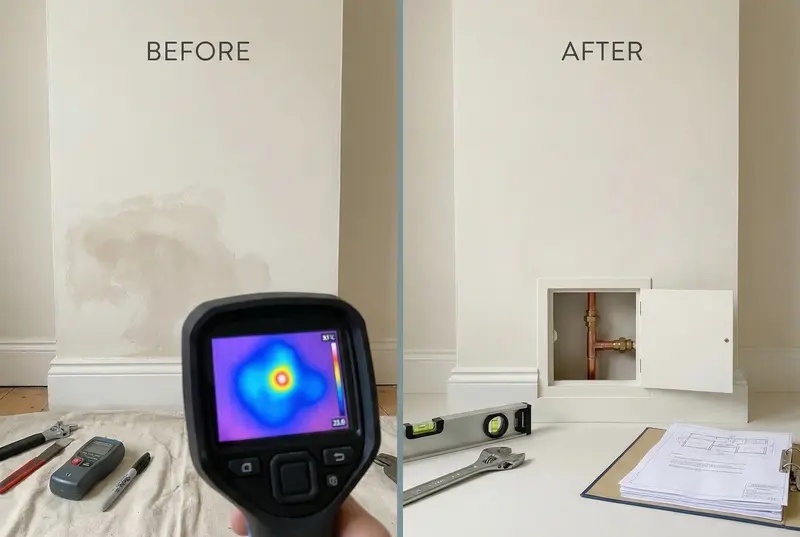
When a plumber arrives to carry out leak detection in Islington, the process begins with a thorough visual inspection of all accessible pipework, joints, stop valves, and appliances. This often turns up obvious culprits quickly — a weeping compression fitting under a sink, for instance, or a failing seal behind a toilet cistern. However, many leaks in older Islington properties are concealed within walls, beneath floorboards, or underground in the supply pipe running from the street to your stopcock. For these hidden leaks, specialist non-invasive equipment is used. Acoustic listening devices can detect the sound of escaping water through solid floors and walls without any drilling or digging. Thermal imaging cameras reveal temperature differences caused by wet areas behind plasterwork. In some cases, tracer gas is introduced into the pipework — a harmless hydrogen and nitrogen mix — which escapes through the leak point and is detected at the surface with a sensitive probe. Once the leak is accurately located, the plumber will walk you through the repair options clearly before any work begins. Repairs range from replacing a single section of pipe or a faulty joint through to re-routing a corroded supply line entirely. In most Islington homes, the job can be completed in a single visit, though more complex situations in Victorian properties with inaccessible pipework may require a return.
Why Choose a Local Islington Specialist
Choosing a plumber who regularly works in Islington genuinely makes a difference. A local tradesperson will already be familiar with the common pipework configurations found in Barnsbury terraces, the shared riser problems in Holloway flats, and the specific stop valve locations typical of Angel-area conversions. They'll understand the building regulations that apply in the borough and will have existing relationships with local suppliers, which can speed up parts sourcing considerably. For anything involving shared pipework in flats or maisonettes — common across Islington — a plumber who knows how these buildings are typically laid out is invaluable.
Frequently Asked Questions
How do I know if I have a hidden leak in my Islington home?
Common signs include an unexplained rise in your water bill, damp patches appearing on walls or ceilings, the sound of running water when all taps are off, or soft spots appearing in flooring. In Islington's older Victorian properties, musty smells beneath floorboards are also a telling sign. If you suspect a leak, don't ignore it — water damage escalates quickly.
Will the plumber need to damage my walls or floors to find the leak?
Not necessarily. Modern acoustic detection and thermal imaging equipment can locate many hidden leaks without any invasive work at all. Tracer gas detection is also non-destructive. If physical access is ultimately needed, a good plumber will make targeted, minimal openings rather than tearing out large sections — and will advise you honestly about what's required before starting.
My Islington flat shares pipework with other flats — who is responsible for the leak?
This is a common issue in Islington's converted Victorian houses and purpose-built blocks. Generally, you're responsible for pipework within your own flat, while shared or communal supply pipes are the freeholder or management company's responsibility. It's worth checking your lease carefully. A plumber can help identify where exactly the leak is originating, which is often the key first step in resolving any dispute.
Can limescale in Islington's water supply cause leaks?
Yes, indirectly. Islington's moderately hard water leads to gradual limescale build-up inside pipes, particularly at joints and around valves. Over time this increases internal pressure and can accelerate corrosion, leading to pinhole leaks or joint failures — especially in older copper pipework. Fitting a scale reducer or water softener can help reduce this risk over the long term.
Other Plumbing Services in Islington
What do you need?
Select your service and urgency level