Leak Detection & Repair in Greenwich
You notice a damp patch creeping across the ceiling below your bathroom, or your water bill has quietly crept up for no obvious reason. Maybe you can hear water running somewhere in the walls late at night when everything's silent. These are the kinds of signs Greenwich homeowners tend to ignore for a few weeks, hoping the problem resolves itself. It rarely does. A hidden leak left unattended can cause serious structural damage, encourage mould growth, and turn what would have been a straightforward repair into a costly renovation job. Getting a leak traced and fixed quickly is almost always the cheaper, less stressful option — and in a borough as densely populated as Greenwich, the sooner you act, the better.
Plumbing Conditions in Greenwich
Very Hard water — significant limescale buildup, annual boiler servicing essential
Mixed housing stock across different eras. With 22% of properties built before 1919, older pipework and drainage systems are common — specialist knowledge of period properties matters.
Leak Detection & Repair in Greenwich — Local Expertise
Greenwich has an exceptionally varied housing stock, and the type of property you live in has a real bearing on where leaks are likely to occur and how tricky they are to find. Victorian terraces — common across areas like Blackheath, Woolwich, and Greenwich town itself — were built with lead or early copper pipework that has often been patched and extended over many decades. These older systems are more prone to pinhole leaks and joint failures, particularly where different pipe materials meet. Post-war council and semi-detached properties typically have aging plastic or copper systems that can suffer from joint degradation. Newer builds and modern flats, increasingly common along the riverside corridor, tend to have concealed pipework within walls and floors, which makes tracing leaks more technically involved. Greenwich also sits in a moderately hard water area, meaning limescale build-up is a genuine factor. Over time, scale deposits can narrow pipes and increase pressure at joints and fittings, contributing to slow leaks that aren't immediately obvious.
How We Work
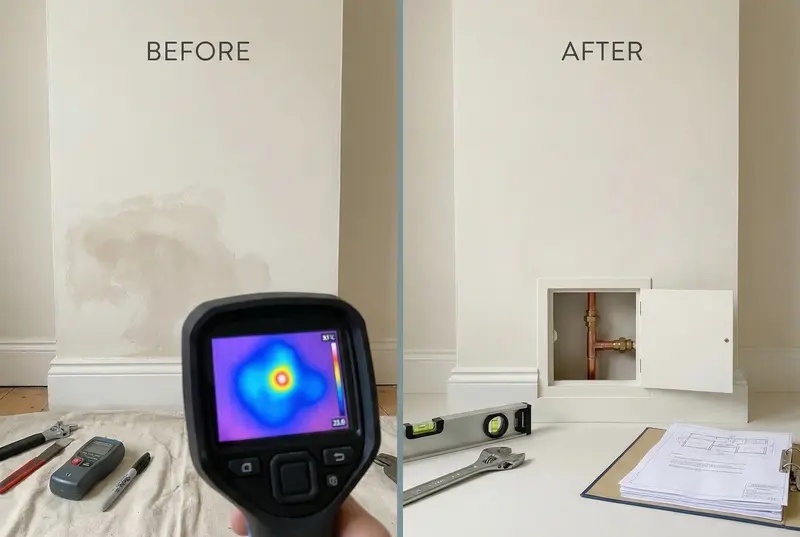
When a leak detection specialist arrives at your Greenwich home, the first thing they'll do is a thorough visual inspection — checking under sinks, around appliances, behind panels, and at any visible pipe runs. This often picks up obvious issues straight away. Where the source isn't visible, the plumber will use specialist equipment to trace the leak without unnecessary destruction. Acoustic listening devices can detect the sound of water escaping through walls or under floors. Thermal imaging cameras identify cold or damp patches hidden within building fabric. For supply pipes, a pressure test can confirm whether there's an active leak in the system even before the location is pinpointed. Once the leak is found, you'll get a clear explanation of what's happened and what the repair involves. In many cases — a failed compression joint, a corroded section of copper pipe, a cracked plastic fitting — the repair can be completed the same day. If the leak is behind tiling or under a concrete floor, some access work will be needed, but a good tradesperson will keep this to a minimum and make good as far as possible after the repair. You'll also be advised on whether the surrounding pipework shows signs of similar wear, which is worth knowing — especially in older Greenwich properties where a single repair can sometimes reveal a wider picture.
Why Choose a Local Greenwich Specialist
Choosing a plumber who regularly works across Greenwich makes a real practical difference. They'll be familiar with the kinds of pipe configurations found in Victorian terraces in Blackheath or the concealed systems in riverside apartment blocks, and they'll know which local suppliers can get parts quickly. A tradesperson who works locally also has their reputation to protect in the community — they're not a one-visit-and-gone operation. Response times tend to be quicker too, which matters when a leak is actively causing damage. For anything beyond a minor drip, local knowledge genuinely counts.
Frequently Asked Questions
How do I know if I have a hidden leak in my Greenwich home?
The most common signs are unexplained increases in your water bill, damp patches on walls or ceilings, the sound of running water when everything is turned off, or low water pressure with no obvious cause. In Greenwich's older Victorian properties, musty smells in ground floor rooms can also indicate a long-running leak under floorboards. If you suspect something is wrong, it's worth getting it checked quickly rather than waiting.
Will the plumber need to break through my walls or floors to find the leak?
Not necessarily. Modern acoustic detection and thermal imaging equipment can often locate a leak without any access work at all. Where some access is unavoidable — for example, a leak within a solid floor or behind tiling — a good plumber will keep it to the minimum required and should discuss this with you before starting. In newer Greenwich builds with concealed pipework, some targeted access is more likely, but it shouldn't mean wholesale destruction.
Does hard water in Greenwich cause more leaks?
It can be a contributing factor. Greenwich's moderately hard water encourages limescale build-up inside pipes and on fittings over time. This narrows the internal diameter of pipes, which raises pressure and puts more strain on joints and connections. In older properties where the pipework hasn't been updated, this combination of age and scale can lead to slow leaks at joints. It's one reason older Greenwich homes benefit from periodic checks of their pipework.
How quickly can a plumber get to me in Greenwich for an urgent leak?
Most plumbers covering Greenwich can attend the same day for an urgent call-out, and many offer emergency response for active leaks. If water is escaping rapidly, turn off your stop tap first — usually found under the kitchen sink or where the supply enters the property — and then call. For non-urgent suspected leaks, you can typically book within a day or two. Response times across a borough the size of Greenwich do vary, so checking availability at the point of enquiry is always sensible.
Other Plumbing Services in Greenwich
What do you need?
Select your service and urgency level