Underfloor Heating in Sutton
The most common reason homeowners in Sutton enquire about underfloor heating is straightforward: they're renovating a kitchen or bathroom, the floor is already coming up, and it feels like the right moment to do something they've been thinking about for years. Underfloor heating transforms how a room feels — no radiators eating wall space, no cold tiles underfoot on a winter morning, and a noticeably more even warmth throughout the room. Whether you're fitting it in a single bathroom or running it across an open-plan ground floor, getting the installation right from the start is what separates a system that performs well for decades from one that causes headaches.
Plumbing Conditions in Sutton
Very Hard water — significant limescale buildup, annual boiler servicing essential
Mixed housing stock across different eras. With 22% of properties built before 1919, older pipework and drainage systems are common — specialist knowledge of period properties matters.
Underfloor Heating in Sutton — Local Expertise
Sutton's housing stock is genuinely mixed, and that mix matters a lot when it comes to underfloor heating. The borough has a significant number of Victorian and Edwardian terraces — particularly around areas like Carshalton and Cheam — where solid ground floors and limited ceiling void height can complicate installation. Retrofitting wet underfloor heating in these properties often means either a low-profile screed system or electric mat systems, depending on floor depth. Post-war semis and detached homes, which are common across much of Sutton, tend to have suspended timber floors upstairs and concrete ground floors, each requiring a different approach. Newer builds and modern extensions are generally the most straightforward, as they're often built with UFH in mind. Sutton is also a moderately hard water area, which is relevant for wet underfloor heating systems — over time, limescale can build up in pipework and manifolds, so specifying a suitable inhibitor and fitting a good quality manifold with isolation valves is worth doing properly from day one.
How We Work
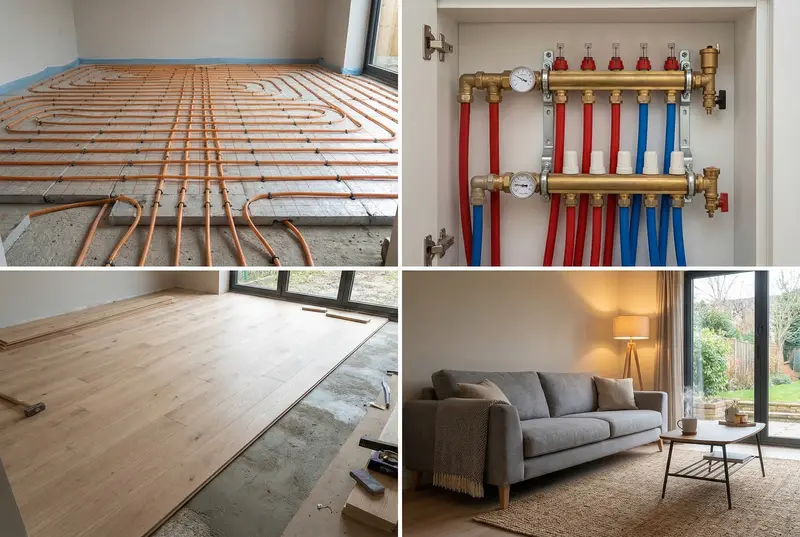
A wet underfloor heating installation starts with a heat loss calculation for each room — this determines the pipe spacing and flow temperatures needed to keep the space comfortable, and a good installer won't skip this step. Once the design is agreed, the manifold location is chosen, typically in a cupboard or utility area where it can connect to your boiler or heat pump. For a wet system, flexible PEX or polybutylene pipework is laid in a specific pattern across the floor, clipped to insulation boards that sit beneath the screed. The insulation is critical — without it, you're heating the ground rather than the room. A liquid screed or traditional sand-and-cement screed is then poured over the pipework. This needs to cure properly before the floor covering goes down, which typically takes two to four weeks depending on screed type. Electric systems, which suit smaller areas like a single bathroom, are faster to install — a heating mat or loose wire element is bedded into adhesive under tiles. Both types need a thermostat in each zone, and a competent installer will ensure these are wired correctly and positioned to give an accurate room reading. You should receive a full commissioning report showing the system has been tested and balanced before they leave.
Why Choose a Local Sutton Specialist
An installer who regularly works in Sutton will know the quirks of the local housing stock — the solid floors in older Carshalton properties, the shallow ceiling voids in post-war semis, and how to route pipework through the kind of layouts common in the area. They'll also have relationships with local merchants, which matters for lead times on specialist materials. Local tradespeople are easier to reach if a question comes up after installation, and they care about their reputation in the community. For a planned, high-value job like this, working with someone who knows the borough makes a genuine difference.
Frequently Asked Questions
Can underfloor heating be installed in an older Victorian property in Sutton?
Yes, but it requires careful planning. Many Victorian homes in Sutton have solid floors with limited depth, so a low-profile system using thin insulation boards and a fast-flow screed is often the best approach. Suspended timber ground floors can work too, with pipework fitted between joists from below. A good installer will assess your specific floor before recommending anything.
How does Sutton's hard water affect an underfloor heating system?
Sutton's moderately hard water means limescale can gradually build up inside the pipework and manifold of a wet system. The best defence is to add a quality inhibitor to the system at commissioning and check it annually. Some installers also recommend a scale reducer on the incoming supply. It's not a dealbreaker, but it's worth taking seriously from day one.
Is underfloor heating compatible with my existing boiler in Sutton?
Most modern combi and system boilers in Sutton can work with underfloor heating, though UFH runs at lower flow temperatures than radiators. A heat pump is actually an ideal pairing. Where both radiators and UFH exist on the same system, a blending valve is fitted to reduce the temperature for the UFH circuits without affecting the radiators. Your installer should check your boiler's output capacity before committing to a design.
How long does underfloor heating installation take in a typical Sutton home?
The physical installation for a ground floor wet system typically takes two to four days. After that, you need to allow the screed to cure — usually two to four weeks before fitting floor coverings. Electric mat systems in a single room can be done in a day. The overall project timeline, including screed cure time, is worth factoring in if you're coordinating with other trades.
Other Plumbing Services in Sutton
What do you need?
Select your service and urgency level