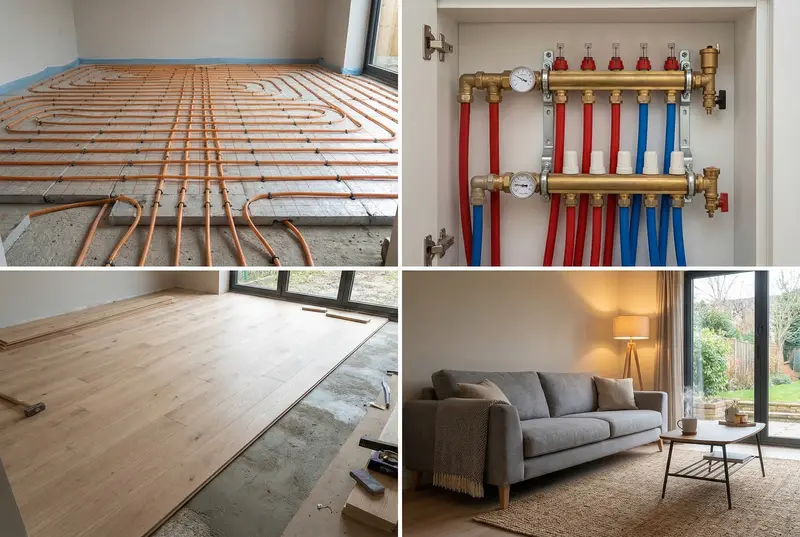
Underfloor Heating in Waltham Forest
For homeowners across Walthamstow, Leytonstone, Chingford, and the rest of the borough, it's one of the most rewarding home improvements you can make. You get rid of radiators, free up wall space, and enjoy warmth that rises evenly from the ground rather than blasting from a single point. Done properly, it adds genuine value to a property and can reduce heating bills when paired with a modern boiler or heat pump.
Plumbing Conditions in Waltham Forest
Very Hard water — significant limescale buildup, annual boiler servicing essential
Mixed housing stock across different eras. With 22% of properties built before 1919, older pipework and drainage systems are common — specialist knowledge of period properties matters.
Underfloor Heating in Waltham Forest — Local Expertise
Waltham Forest has one of the most varied housing stocks in East London. You've got late Victorian terraces across Walthamstow and Leyton, post-war semis and council-built properties in Highams Park and Chingford, and a growing number of modern flats and new-builds around the Blackhorse Road area. Each property type presents different challenges for underfloor heating. Victorian terraces often have suspended timber ground floors, which require careful insulation planning and typically suit electric or low-profile wet systems. Post-war properties tend to have solid concrete ground floors, making them ideal candidates for a full wet system installation. Modern builds sometimes already have underfloor heating roughed in during construction. Waltham Forest sits in a moderately hard water area, which is worth factoring in for wet underfloor systems — limescale can build up in pipework over time, so fitting a suitable inhibitor and using quality manifolds is important for long-term reliability.
How We Work
A typical underfloor heating installation in Waltham Forest follows a clear process, though the specifics vary depending on your floor type and whether you're going wet (hydronic, connected to your boiler) or electric (mat or cable systems suited to smaller areas or renovations). The first step is a site survey, where an installer will assess your floor construction, check your boiler's output capacity if you're going wet, and measure the rooms carefully to design the pipe or cable layout. For a wet system on a solid floor, the process involves laying insulation boards directly onto the existing slab, running the pipework in loops across the floor, connecting everything back to a manifold, and then covering with a screed. That screed needs time to cure — typically around four to six weeks before you can run the system at full temperature. For a suspended timber floor, the pipes are clipped between the joists from above or below, which avoids screed entirely and suits properties where raising the floor height is a problem. Electric systems are faster to fit — often a single day — and work well under tile or stone in kitchens and bathrooms. Once installation is complete, the system is commissioned, thermostats are set up, and you'll be shown how to use the controls effectively.
Why Choose a Local Waltham Forest Specialist
Choosing a tradesperson who works regularly in Waltham Forest makes a real difference on a job like this. They'll know the typical floor constructions found across different parts of the borough — the suspended floors common in Victorian Walthamstow terraces versus the solid slabs in post-war Chingford homes. They're also likely to have relationships with local suppliers, which can keep material costs down and reduce delays. A local installer will be easy to reach if you have questions during the commissioning period, and follow-up visits — which are sometimes needed as a system beds in — are far more straightforward.
Frequently Asked Questions
Can underfloor heating be installed under an existing Victorian timber floor in Waltham Forest?
Yes, it's one of the more common installations we see across Walthamstow and Leyton. The pipes are run between the joists, either by lifting floorboards or working from below if there's cellar access. It avoids raising floor height and works well with the older suspended floor construction typical of Waltham Forest's Victorian terraces.
Will I need a new boiler to run underfloor heating in my Waltham Forest home?
Not always. If your existing boiler is relatively modern and has enough output capacity, it can often run a wet underfloor system. An installer will check this during the survey. Older or undersized boilers may need upgrading. Heat pumps are increasingly popular in Waltham Forest as a paired option, since underfloor heating runs efficiently at the lower flow temperatures heat pumps produce.
How does hard water in Waltham Forest affect an underfloor heating system?
Waltham Forest has moderately hard water, and over time this can cause limescale to build up inside pipework and at manifold connections. A good installer will add a quality inhibitor to the system fluid and may recommend a magnetic filter. Getting the water treated properly during installation is far cheaper than dealing with a blocked or corroded system years down the line.
How long does underfloor heating installation take in a typical Waltham Forest home?
For a wet system covering a ground floor, the physical installation usually takes two to four days. If screed is required, allow another four to six weeks for it to fully cure before the system runs at full temperature. Electric systems are much faster — a single room can often be fitted in a day. Your installer should give you a clear timeline during the quote stage.
Other Plumbing Services in Waltham Forest
What do you need?
Select your service and urgency level