Underfloor Heating in Croydon
Underfloor heating has become one of the most sought-after home upgrades across Croydon in recent years, and it's not hard to see why. Whether you're renovating a period property in South Croydon, extending a post-war semi in Thornton Heath, or fitting out a new-build apartment near East Croydon station, underfloor heating offers a genuinely superior alternative to traditional radiators. It distributes heat evenly across a room, frees up wall space, and when paired with a modern heat pump or condensing boiler, it can meaningfully reduce energy bills. This guide covers everything you need to know before booking an installation in Croydon.
Plumbing Conditions in Croydon
Very Hard water — significant limescale buildup, annual boiler servicing essential
Mixed housing stock across different eras. With 22% of properties built before 1919, older pipework and drainage systems are common — specialist knowledge of period properties matters.
Underfloor Heating in Croydon — Local Expertise
Croydon's housing stock is remarkably varied, and the type of property you own has a direct bearing on which underfloor heating system will work best. Edwardian semis — common in areas like Purley and Sanderstead — typically have suspended timber floors, which means a dry electric or low-profile water system is often the most practical choice, since digging up original floorboards can be costly and structurally disruptive. Post-war estates, which make up a large chunk of housing in Norbury, New Addington, and Broad Green, usually have solid concrete ground floors that are ideal for wet underfloor heating systems embedded in screed. Modern developments near the Croydon town centre regeneration zones tend to be built with underfloor heating already in mind, making retrofitting straightforward. Croydon sits in a moderately hard water area, which is worth factoring in for wet systems — limescale can gradually reduce efficiency in pipework and manifolds, so fitting a scale inhibitor or using inhibitor fluid in the system from day one is a sensible precaution that any experienced local installer should recommend.
How We Work
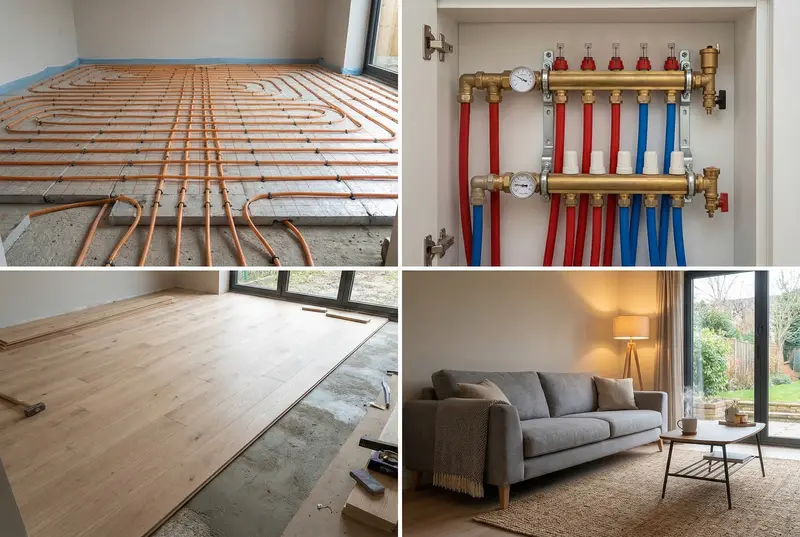
A professional underfloor heating installation in Croydon follows a clear sequence of steps, and understanding what's involved helps you plan realistically. The process begins with a site survey, where the installer assesses your floor construction, room sizes, heat loss, and existing heating setup. This determines whether a wet (hydronic) system or a dry electric mat system is appropriate for your home. For wet systems, the installer will design a pipe layout, usually in a continuous loop per zone, and plan where the manifold — the central control hub — will sit, typically in a cupboard or utility area. Floor preparation comes next: for a screed installation, the subfloor is insulated to prevent heat loss downwards, pipes are laid and pressure-tested, and then a liquid screed is poured over the top. This needs to cure for several weeks before the floor finish is laid, which is an important timeline consideration. For electric mat systems, the process is quicker — mats are rolled out under tiles or flooring, thermostats are wired in, and the system can often be operational within a day or two. In both cases, the installer should commission the system carefully, balancing flow rates across zones and programming thermostats for efficiency. A good Croydon installer will also talk you through ongoing maintenance, including annual inhibitor checks for wet systems.
Why Choose a Local Croydon Specialist
Choosing a Croydon-based installer rather than a national firm really does make a practical difference. Local tradespeople understand the mix of property types across the borough — they've worked in Edwardian houses in Addiscombe, post-war estates in Fieldway, and new builds near the Westfield development zone, so they won't be surprised by what they find under your floorboards. They're also familiar with local building control requirements and can often recommend trusted suppliers nearby, which keeps lead times shorter. When something needs a follow-up visit, a local installer can be back quickly rather than scheduling weeks in advance.
Frequently Asked Questions
Is underfloor heating suitable for an Edwardian semi in Croydon?
Yes, though it requires more planning than a modern home. Suspended timber floors are common in Croydon's Edwardian properties and work best with low-profile electric mats or slim dry water systems rather than a traditional screed installation. A surveyor will assess whether the existing joists can support the system and recommend the most practical approach for your specific property.
How does Croydon's hard water affect underfloor heating systems?
Croydon has moderately hard water, which means mineral deposits can build up inside wet underfloor heating pipework over time, reducing efficiency. A reputable installer should add a corrosion and scale inhibitor to the system fluid at commissioning, and you should have it checked annually. This is a simple and inexpensive precaution that significantly extends the life of your system.
How long does underfloor heating installation take in a typical Croydon home?
An electric mat system in one or two rooms can be completed in one to two days. A wet system covering the whole ground floor typically takes three to five days for installation, followed by a four to six week curing period for the screed before you can lay your final floor finish. Planning ahead — especially if you're mid-renovation — is important to avoid delays.
Do I need planning permission or building regulations approval for underfloor heating in Croydon?
Planning permission isn't usually required for underfloor heating as it's considered an internal alteration. However, building regulations do apply, particularly if the work involves changes to your boiler or electrical circuits. In Croydon, your installer should notify building control or work through a competent persons scheme — this is standard practice and provides you with the necessary completion certificate.
Other Plumbing Services in Croydon
What do you need?
Select your service and urgency level