Underfloor Heating in Perth
Most homeowners in Perth start thinking about underfloor heating when their current radiator system just isn't cutting it — rooms that never quite warm up properly, pipework running along skirting boards that ruins the look of a well-kept period room, or simply the appeal of that consistent, radiant warmth underfoot on a cold Scottish morning. With Perth's winters being genuinely harsh, underfloor heating has moved from a luxury to a practical upgrade for many households, particularly those moving into older stone-built properties or newly built homes on the expanding estates around the city. Done properly, it's a significant investment that adds comfort, efficiency, and real value to your home.
Plumbing Conditions in Perth
Soft water — Perthshire supply
Victorian stone tenements in cities, traditional stone cottages in rural areas. With 35% of properties built before 1919, older pipework and drainage systems are common — specialist knowledge of period properties matters.
Underfloor Heating in Perth — Local Expertise
Perth's housing stock creates some interesting challenges for underfloor heating installers. The older stone-built properties and period cottages that make up a large part of the city's residential character — particularly in areas like Kinnoull, Bridgend, and the South Inch fringes — often have solid floors, thick walls, and limited insulation, which affects both the system design and the likely heat-up times. These properties can still benefit enormously from underfloor heating, but they typically require more preparation work, including laying insulation boards before the pipework goes in. Perth's modern estates, by contrast, are generally better insulated and easier to retrofit. It's also worth noting that Perth sits in a moderately hard water area, which means that for wet underfloor heating systems, a suitable inhibitor and ideally a scale reducer or filter is worth factoring into the installation — particularly to protect the manifold and pipework over the long term.
How We Work
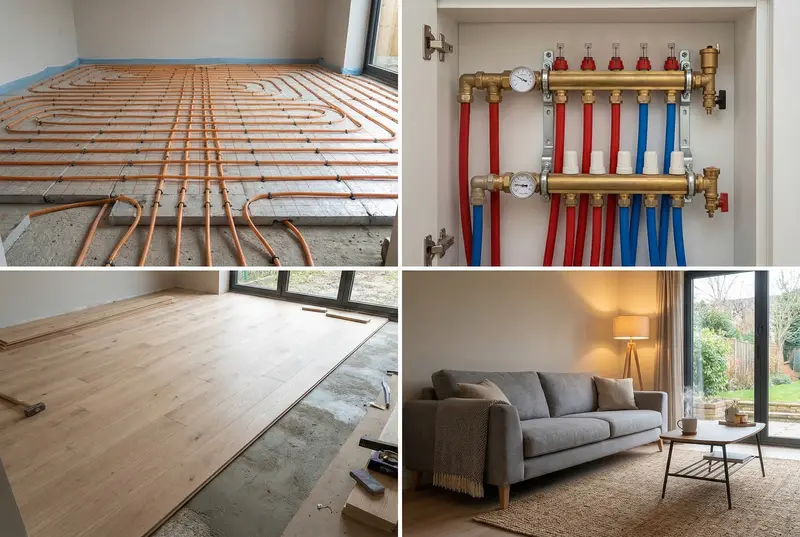
A wet underfloor heating installation in Perth typically begins with a full survey of the property. The installer will assess floor construction, room dimensions, existing boiler output, and insulation levels before designing the system. For most Perth homes being retrofitted, this means deciding between a screed system — where pipes are embedded in a new floor layer — or a low-profile system that sits above the existing floor and adds minimal height, which is often better suited to the older properties where door clearances and floor levels are already fixed. Once the design is agreed, the work involves laying insulation panels to prevent heat loss downward, fitting the manifold (usually in a cupboard or utility area), and running the flexible pipework in loops across each zone. In screed installations, a self-levelling compound is then poured over the pipes, which needs to cure — typically around seven days before light foot traffic and several weeks before full commissioning. The system is then filled, pressure tested, and balanced before being connected to your boiler or heat pump. A commissioning process raises the temperature gradually over several days to cure the screed properly and protect the pipework. Throughout, a good installer will also check the boiler is capable of running the system efficiently — older boilers common in Perth's period properties sometimes need upgrading at the same time.
Why Choose a Local Perth Specialist
Choosing a Perth-based installer matters more than you might think with underfloor heating. A local tradesperson will have hands-on experience with the specific property types found across Perth — they'll know the quirks of older sandstone construction, the floor build-ups common in Victorian terraces, and the manifold placements that work in modern kit homes on the newer estates. They're also easier to reach if you need adjustments during commissioning or have questions in the months after installation. Local reputation counts for a lot in a city of Perth's size, and established tradespeople here tend to stand behind their work.
Frequently Asked Questions
Is underfloor heating suitable for older stone-built properties in Perth?
Yes, but it needs careful planning. Older Perth properties often have solid floors with little existing insulation, so the installation will typically include laying insulation boards before the pipework. Heat-up times can be slightly longer in these buildings, but the even, radiant warmth is actually very well suited to high-ceiling period rooms that radiators often struggle to heat consistently.
Can I run underfloor heating from my existing boiler?
Often yes, but it depends on the boiler's age and output. Underfloor heating runs at lower flow temperatures than traditional radiators, which actually suits modern condensing boilers very well. However, some older boilers found in Perth's period properties may not be compatible or efficient enough, and your installer should assess this during the survey stage before any work begins.
How long does an underfloor heating installation take in a typical Perth home?
For a standard ground floor retrofit in a Perth semi-detached or detached property, installation typically takes three to five days. If a screed pour is involved, you then need to allow around a week before walking on it and up to four weeks for full curing before the system is commissioned at full temperature. Planning around this timeline is important, especially if it's your main living space.
Does Perth's water hardness affect underfloor heating systems?
Perth is a moderately hard water area, which is worth taking seriously for a wet underfloor heating system. Hard water can cause scale to build up inside the pipework and manifold over time, reducing efficiency. A good installer should include a quality inhibitor in the system fluid and may recommend a scale reducer or magnetic filter — a small upfront cost that protects a significant long-term investment.
Other Plumbing Services in Perth
What do you need?
Select your service and urgency level