Underfloor Heating in Edinburgh
Underfloor heating is becoming an increasingly popular choice for Edinburgh homeowners who want to upgrade their heating system without the visual intrusion of traditional radiators. In a city where elegant interiors and period features are prized, the idea of warming a room from the ground up — invisibly, and with impressive efficiency — has obvious appeal. Whether you're renovating a New Town flat, extending a Victorian terrace in Morningside, or fitting out a contemporary conversion in Leith, underfloor heating can be a genuinely transformative addition. Done properly, it delivers consistent warmth, reduces running costs, and frees up wall space that radiators would otherwise occupy.
Plumbing Conditions in Edinburgh
Soft water — Pentland Hills reservoir supply
Victorian stone tenements in cities, traditional stone cottages in rural areas. With 35% of properties built before 1919, older pipework and drainage systems are common — specialist knowledge of period properties matters.
Underfloor Heating in Edinburgh — Local Expertise
Edinburgh's housing stock presents some specific considerations for underfloor heating installation that any experienced installer will be familiar with. The city's Georgian townhouses and period properties dominate much of the central areas and popular neighbourhoods like Stockbridge, Marchmont, and the New Town. These buildings typically have solid stone floors or original timber suspended floors, both of which influence which system — wet (hydronic) or electric — is most practical, and how much preparatory work is needed before installation can begin. Solid floors generally suit wet underfloor heating well, provided the screed depth can be accommodated, while suspended timber floors often work better with electric mats or low-profile wet systems designed specifically for retrofit. Edinburgh is also a moderately hard water area, which is worth factoring in if you're installing a wet system connected to your boiler. Hard water can cause limescale build-up in pipework and manifolds over time, so it's worth discussing inhibitor treatments and system flushing protocols with your installer to protect the investment long-term.
How We Work
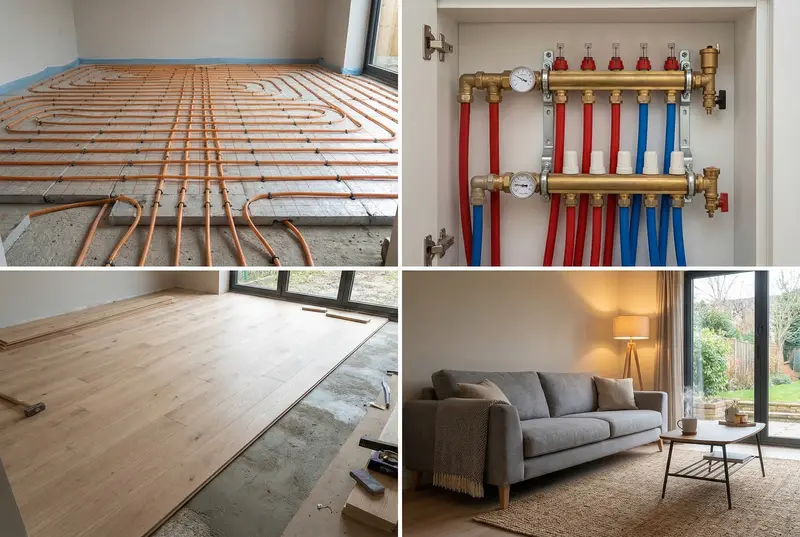
The installation process varies depending on the system type and your property's construction, but here's what you can generally expect when getting underfloor heating fitted in an Edinburgh home. The process starts with a proper survey — a good installer will assess your floor construction, existing heat source, room dimensions, and insulation levels before recommending wet or electric underfloor heating. This isn't a decision to rush; the wrong choice for your property type can lead to poor performance or unnecessary expense. For a wet system, installation involves laying insulation boards to prevent heat loss downward, then running flexible pipework in a continuous loop across the floor area. This is connected to a manifold, which links back to your boiler or heat pump. A screed is then poured over the pipework — typically 65–75mm deep — and must be left to cure for several weeks before the system is commissioned and floor coverings are laid. For electric systems, installation is considerably faster. Heating mats or cables are laid directly onto the subfloor, connected to a thermostat, and can often be tiled over within 24–48 hours. Both systems require a qualified electrician to connect the thermostat and controls, and wet systems should be installed by a Gas Safe registered engineer if connected to a gas boiler. Commissioning involves a full pressure test, a slow heat-up process to cure the screed (for wet systems), and thermostat programming.
Why Choose a Local Edinburgh Specialist
Working with an Edinburgh-based installer matters more than it might seem. Local tradespeople understand the nuances of the city's housing stock — they'll have worked in Georgian flats, know the quirks of solid stone construction, and won't be thrown by a suspended timber floor in a Victorian terrace. They're also more likely to be familiar with any planning or building control considerations relevant to listed buildings or conservation areas, which are plentiful across Edinburgh. Ongoing aftercare is easier too; if something needs adjusting after commissioning, a local installer can return promptly rather than treating a callback as uneconomical.
Frequently Asked Questions
Is underfloor heating practical in Edinburgh's older stone-built properties?
Yes, but it requires careful planning. Many of Edinburgh's Georgian and Victorian properties have solid stone floors that suit wet underfloor heating well, though floor build-up depth needs to be managed around door thresholds and existing floor levels. Suspended timber floors are also workable using retrofit-specific systems. A proper survey from an experienced local installer will tell you exactly what's feasible in your property.
How long does underfloor heating installation take in a typical Edinburgh home?
Electric systems can be installed in a single room within a day or two. Wet systems are more involved — allow one to two weeks for installation in a multi-room project, plus four to eight weeks for screed curing before floor coverings can go down. In Edinburgh's period properties, additional time may be needed for preparatory floor work or if access is complicated by stone construction or listed building requirements.
Does Edinburgh's water hardness affect a wet underfloor heating system?
Edinburgh sits in a moderately hard water area, which can gradually lead to limescale deposits in pipework and manifolds if the system isn't properly treated. Your installer should add a corrosion inhibitor to the system water and may recommend a scale reducer depending on your specific supply. Annual system checks should include testing inhibitor levels — this is a simple step that significantly extends system life and maintains efficiency.
Can underfloor heating work with my existing boiler, or do I need to upgrade?
It depends on the age and output of your current boiler. Underfloor heating runs at lower flow temperatures than radiators, which actually suits modern condensing boilers well and can improve their efficiency. However, older boilers in many Edinburgh homes may not be optimised for this. Your installer should assess your boiler as part of the initial survey — in some cases a service or upgrade is recommended before commissioning the new system.
Other Plumbing Services in Edinburgh
What do you need?
Select your service and urgency level