Underfloor Heating in Havering
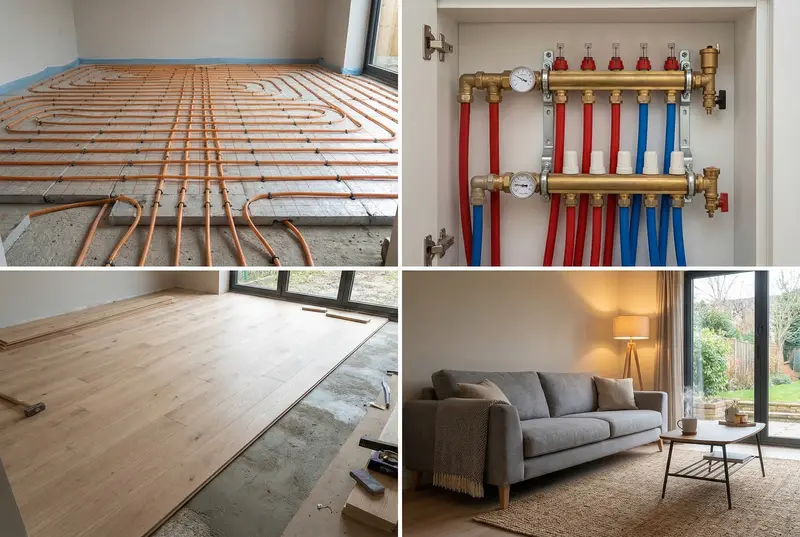
The most common reason homeowners in Havering start looking into underfloor heating is a boiler replacement or extension project that makes them rethink how they heat their home altogether. When you're already lifting floors or replanning a layout, it makes sense to consider a system that delivers even, comfortable warmth without radiators taking up wall space. Underfloor heating has moved well beyond luxury territory — it's a practical, energy-efficient choice that suits a wide range of properties across Havering, from period terraces in Hornchurch to newer builds in Harold Wood. Done properly by a qualified installer, it can reduce heating bills and add genuine value to your home.
Plumbing Conditions in Havering
Very Hard water — significant limescale buildup, annual boiler servicing essential
Mixed housing stock across different eras. With 22% of properties built before 1919, older pipework and drainage systems are common — specialist knowledge of period properties matters.
Underfloor Heating in Havering — Local Expertise
Havering's housing stock is genuinely varied, and that diversity matters a lot when planning underfloor heating. Victorian and Edwardian terraces, which are common across areas like Romford and Upminster, typically have solid or suspended timber ground floors that require different approaches — wet systems in solid floors need careful preparation, while electric mat systems are often more practical under timber where digging up a concrete screed isn't viable. Post-war semis and 1960s–80s builds make up a large chunk of Havering's housing and often have existing solid concrete floors that are well-suited to a wet water-fed system. Modern developments in places like Rainham and Beam Park are increasingly built with underfloor heating already in mind, making retrofits or upgrades more straightforward. It's also worth noting that Havering sits in a moderately hard water area, which means any wet underfloor heating system connected to your mains supply should be fitted with appropriate scale inhibitors and inhibitor fluid to protect the pipework and manifold from limescale build-up over time.
How We Work
A professional underfloor heating installation in Havering follows a clear process, though the exact steps depend on whether you're going for a wet (hydronic) system or a dry electric system. For a wet system — the most popular choice for whole-floor or whole-home heating — the installer will first carry out a heat loss survey to calculate how much output you need room by room. From there, they'll design the pipe layout, specify the manifold location, and confirm how the system connects to your boiler or heat pump. On installation day (or across several days for larger projects), the subfloor is prepared, insulation boards are laid to direct heat upwards rather than into the ground, and the pipework is laid in loops across the floor area. Once pressure-tested, a screed is poured over the pipes and left to cure — typically two to four weeks — before flooring goes down. The system is then commissioned, balanced, and handed over with full documentation. For electric systems, the process is faster: heating mats or cables are laid directly onto the subfloor, covered with a self-levelling compound, and connected to a dedicated thermostat. Your installer should also advise on compatible floor coverings, as some materials like thick carpet can reduce efficiency significantly. Throughout, expect a qualified installer to keep disruption manageable and communicate clearly at each stage.
Why Choose a Local Havering Specialist
Choosing a local Havering installer rather than a national outfit makes a real difference on a job like this. A tradesperson who works regularly across Romford, Hornchurch, and Upminster will understand the typical floor constructions found in the area, know how to handle the quirks of both period and post-war properties, and be familiar with local building control requirements. They're also easier to get back if something needs adjusting after commissioning. Look for someone registered with a recognised scheme such as Gas Safe (if connecting to a gas boiler) and ideally with experience in both wet and electric underfloor systems — Havering's mixed housing stock means a good installer needs to be adaptable.
Frequently Asked Questions
Can underfloor heating be installed in an older Victorian property in Havering?
Yes, but it requires more planning. Many Victorian homes in Havering have suspended timber ground floors or solid floors with limited depth. An experienced installer will assess whether a wet or electric system is more suitable. Electric mat systems are often the more practical option in these properties, particularly where raising the floor height significantly isn't possible.
How does Havering's hard water affect an underfloor heating system?
Havering's moderately hard water supply means limescale can build up inside wet underfloor heating pipework over time, reducing efficiency and potentially causing blockages. A good installer will add a scale inhibitor to the system and use corrosion inhibitor fluid in the water. Annual system checks help catch any issues early and keep the system running efficiently for years.
How long does underfloor heating installation take in a typical Havering home?
For a wet system covering a ground floor, allow around two to four days for installation, followed by a curing period of two to four weeks before floor coverings can be laid. Electric systems are quicker — often one to two days per room. Your installer should give you a clear timeline upfront, including any delays related to screed drying or boiler connection work.
Is underfloor heating compatible with the heat pumps being installed in Havering's newer homes?
Absolutely — underfloor heating and air source heat pumps are an excellent pairing. Heat pumps work most efficiently at lower flow temperatures, which is exactly how underfloor systems are designed to operate. If you're in one of Havering's newer developments or considering a heat pump upgrade, combining it with underfloor heating is one of the most energy-efficient choices you can make.
Other Plumbing Services in Havering
What do you need?
Select your service and urgency level