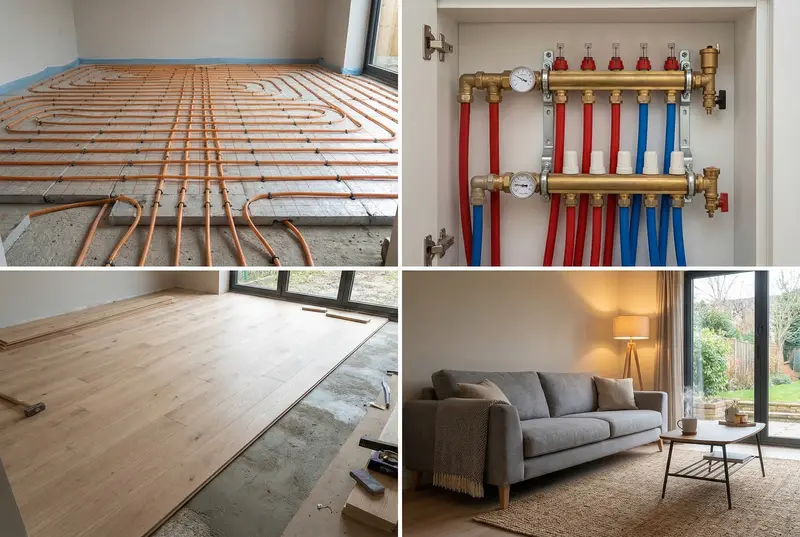
Underfloor Heating in Hammersmith and Fulham
Underfloor heating is one of those upgrades that genuinely transforms how a home feels day-to-day, and demand for it across Hammersmith and Fulham has grown steadily as homeowners look for smarter, more efficient ways to heat older and newer properties alike. The challenge here isn't just picking a system — it's matching the right type of underfloor heating to the reality of your home. Whether you're in a Victorian-era terrace, a post-war flat, or a recently built apartment block, the structural constraints, floor build-up allowances, and existing heating setup all shape what's possible. Getting that assessment right from the start is what separates a smooth installation from an expensive rethink halfway through.
Plumbing Conditions in Hammersmith and Fulham
Very Hard water — significant limescale buildup, annual boiler servicing essential
Mixed housing stock across different eras. With 22% of properties built before 1919, older pipework and drainage systems are common — specialist knowledge of period properties matters.
Underfloor Heating in Hammersmith and Fulham — Local Expertise
Hammersmith and Fulham has a genuinely mixed housing stock, and that mix matters enormously when planning underfloor heating. The Edwardian semis found across much of the borough — particularly around Fulham, Parsons Green, and parts of Shepherd's Bush — often have solid or suspended timber floors with limited depth allowance, which typically makes electric underfloor heating systems the more practical choice unless a full floor renovation is already underway. Post-war estates, common in pockets of White City and North Hammersmith, tend to have concrete ground floors that actually suit wet (hydronic) systems well, provided the boiler and pipework can support the lower flow temperatures involved. Modern developments in areas like Fulham Reach or the redeveloped riverside zones are frequently built with wet underfloor heating already designed in. Hammersmith and Fulham sits in a moderately hard water area, which is worth noting for wet systems — limescale build-up in pipework and manifolds is a genuine long-term concern, and installers should account for this with appropriate inhibitors and system design to keep your installation performing properly for years.
How We Work
A professional underfloor heating installation in Hammersmith and Fulham begins with a detailed survey of your property. An experienced installer will assess the floor construction, room dimensions, heat loss calculations, and your existing heating system before recommending either a wet (water-based) or electric (dry) system. This isn't a decision to rush — the wrong choice can mean poor performance or unnecessary disruption later. For wet systems, the process involves fitting a manifold, laying loops of flexible pipework across the floor area (often embedded in screed or laid within low-profile panels), connecting to your boiler, and commissioning the system with careful pressure testing. Because Hammersmith and Fulham is a moderately hard water area, a quality inhibitor should be added to the system fluid and a magnetic filter fitted to protect the manifold and pipework from scale and debris over time. Electric systems are less invasive and quicker to install — thin heating mats or cables are laid beneath the floor finish and connected to a dedicated thermostat — making them a popular choice in Hammersmith and Fulham homes where floor depth is restricted. Either way, the installation ends with zone-by-zone commissioning, thermostat programming, and a proper handover so you understand how to get the most from the system. Most residential installations in Hammersmith and Fulham take between one and three days depending on the number of rooms and floor type involved.
Why Choose a Local Hammersmith and Fulham Specialist
Choosing a tradesperson who knows Hammersmith and Fulham well genuinely makes a difference here. Local installers understand the specific floor constructions common in Edwardian and post-war properties across the borough, and they're familiar with the planning and building regulations that apply in this part of Greater London. They're also more likely to have existing relationships with local building control officers if your project requires sign-off. Practically speaking, a local specialist can visit quickly for the survey, respond promptly if any snagging issues arise after installation, and give you realistic advice based on real experience with homes like yours in Hammersmith and Fulham — not generic guidance that doesn't account for local conditions.
Frequently Asked Questions
Can underfloor heating be installed in an Edwardian semi in Hammersmith and Fulham without major structural work?
Yes, in many cases. Electric mat systems can be fitted under tiles, engineered wood, or LVT with minimal floor height increase — often as little as 3–5mm. If your floors are already being renovated, a low-profile wet system becomes more viable too. An in-person survey will tell you exactly what's feasible in your specific property.
Will hard water in Hammersmith and Fulham cause problems with a wet underfloor heating system?
It can if the system isn't properly set up. Hammersmith and Fulham's moderately hard water means limescale can gradually affect manifolds and pipework. A good installer will add a quality corrosion inhibitor, fit a magnetic system filter, and recommend an annual check. Handled correctly, hard water doesn't need to shorten the life of your system.
How long does underfloor heating installation typically take in a Hammersmith and Fulham home?
A single-room electric installation can be completed in a day. A wet system covering the whole ground floor of a typical Hammersmith and Fulham Edwardian semi usually takes two to three days for installation, plus additional time if new screed needs to cure before the floor finish can go down — typically three to four weeks for standard screed.
Is underfloor heating compatible with the combi boilers common in Hammersmith and Fulham flats and houses?
It can be, but it depends on the boiler's output and whether it can run at the lower flow temperatures underfloor heating requires — typically 35–45°C rather than the 60–70°C used for radiators. Many modern combi boilers handle this well, but older units may struggle. Your installer should assess boiler compatibility before specifying a wet system.
Other Plumbing Services in Hammersmith and Fulham
What do you need?
Select your service and urgency level