Underfloor Heating in Coventry
Underfloor heating has become one of the most popular home upgrades in Coventry over the last decade, and it's easy to see why. Rather than relying on radiators that heat unevenly and take up wall space, underfloor heating spreads warmth gently across the entire floor surface, making rooms feel consistently comfortable from the ground up. Whether you're renovating a period terrace in Earlsdon, extending a post-war semi in Tile Hill, or fitting out a new-build in Cannon Park, underfloor heating is a realistic and worthwhile investment — provided it's designed and installed properly for your specific property and heating setup.
Plumbing Conditions in Coventry
Moderately Soft water — Severn Trent supply
Mixed housing stock across different eras. With 22% of properties built before 1919, older pipework and drainage systems are common — specialist knowledge of period properties matters.
Underfloor Heating in Coventry — Local Expertise
Coventry's housing stock is genuinely varied, and that variety matters when planning an underfloor heating installation. The city has a large number of Victorian and Edwardian terraces, particularly in areas like Chapelside, Hillfields, and parts of Cheylesmore. These older properties often have solid ground floors, limited insulation under the floor, and existing boilers that may not be compatible with the lower flow temperatures that underfloor heating prefers. Getting the heat output right in these homes takes careful design. Post-war housing — which makes up a significant portion of Coventry's suburbs — typically has suspended timber floors on the ground floor, which can still accommodate underfloor heating but requires the right type of system and often benefits from added insulation below the pipes. Modern new-builds and recent extensions are generally the easiest to work with, as they're built to better insulation standards and often have combi or system boilers already suited to UFH flow temperatures. Coventry sits in a moderately hard water area, which is worth noting if you're opting for a wet underfloor heating system — scale build-up in pipes and manifolds is a real concern over time, and fitting an inline filter or inhibitor dosing pot is a sensible precaution that any good installer should include as standard.
How We Work
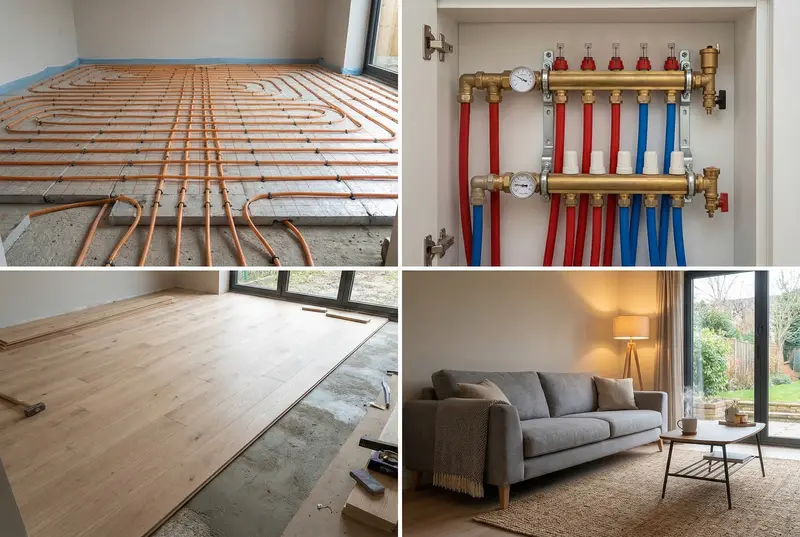
A wet underfloor heating installation — where warm water circulates through pipework laid beneath the floor — is the most common type fitted in Coventry homes undertaking renovations or extensions. The process starts with a site survey, where the installer will assess the floor construction, existing boiler output, room heat loss, and the thickness available for the screed or build-up. Getting the heat loss calculation right is critical; undersize the system and the rooms won't reach temperature on cold January mornings, which are genuinely cold in Coventry. Once the design is signed off, the installation begins with laying insulation boards directly onto the subfloor — this is essential to direct heat upward rather than losing it into the ground. Pipework is then clipped or stapled to the insulation in a pattern calculated for each room's heat requirements. A manifold is installed, usually in a cupboard or utility area, connecting all the individual room circuits and allowing each zone to be controlled independently. The pipework is pressure-tested before any screed or floor covering goes down, and this test result should be documented. For wet systems going into a concrete screed, you'll typically wait four to six weeks before laying the final floor finish and commissioning the system. Electric mat systems are also available for smaller areas like bathrooms or single rooms, and these are quicker to install with less disruption — though they cost more to run day-to-day. At commissioning, the installer should balance the manifold circuits, set up the thermostats, and walk you through how to use the system properly.
Why Choose a Local Coventry Specialist
Choosing a Coventry-based installer rather than a national firm genuinely makes a difference with underfloor heating. Local tradespeople are familiar with the specific floor constructions common across Coventry's housing stock — they've worked in the Victorian terraces of Earlsdon, the post-war semis of Wyken, and the modern estates around Binley. They understand the quirks of local planning and building control requirements, and they're accessible if something needs adjusting after installation. A local installer also has a reputation to protect in the area, which tends to translate into more careful, thorough work than you might get from a contractor who travels in from elsewhere.
Frequently Asked Questions
Can underfloor heating be fitted in an older Victorian terrace in Coventry?
Yes, but it requires more planning than a modern property. Solid concrete ground floors need insulation laid before the pipework, which raises the floor level slightly. Suspended timber floors can also be retrofitted using low-profile systems between or below the joists. The key is ensuring your boiler can handle the lower flow temperatures UFH needs — older boilers sometimes can't without an upgrade.
How long does an underfloor heating installation take in a typical Coventry home?
For a wet system covering a ground floor, expect two to four days for the physical installation, plus the screed curing time of four to six weeks before the final floor covering can go down. Electric mat systems in a single room can be completed in a day. The survey and design stage usually takes a week or two before any work begins on site.
Does Coventry's hard water affect underfloor heating systems?
Coventry is a moderately hard water area, so scale build-up in a wet UFH system is a genuine concern over time. A good installer will include a system filter and dose the pipework with inhibitor fluid at commissioning. Annual checks of inhibitor levels are recommended. This is the same advice that applies to central heating systems generally in this part of the West Midlands.
Is underfloor heating cheaper to run than radiators in a Coventry home?
Wet underfloor heating typically runs at lower flow temperatures than radiators, which makes it more efficient — especially when paired with a heat pump or a modern condensing boiler. The savings depend heavily on your insulation levels. In a well-insulated Coventry home, running costs can be noticeably lower. In an older property with poor insulation, the savings are smaller, and improving insulation first will make a bigger difference.
Other Plumbing Services in Coventry
What do you need?
Select your service and urgency level