Leak Detection & Repair in Nottingham
If you suspect a leak in your Nottingham home, the cost of fixing it early is almost always far less than leaving it to cause damage. Getting a plumber in quickly isn't just about stopping water waste; it's about protecting your home from damp, mould, and structural damage that can cost thousands to put right. The good news is that modern leak detection equipment means most leaks are found and fixed in a single visit.
Plumbing Conditions in Nottingham
Moderately Hard water — Trent Valley
Mixed housing stock across different eras. With 22% of properties built before 1919, older pipework and drainage systems are common — specialist knowledge of period properties matters.
Leak Detection & Repair in Nottingham — Local Expertise
Nottingham's housing stock creates some very specific plumbing challenges. The city has a high concentration of Victorian terraces and Edwardian semis — particularly in areas like Mapperley, Sherwood, West Bridgford, and the Meadows — and these properties typically have original pipework that's now well over a century old. Lead pipes, old iron mains, and compression joints that have been patched and re-patched over the decades are common culprits behind hidden leaks. Nottingham is also a moderately hard water area, which means limescale builds up inside pipes and around joints over time. This scale can cause pressure to build unevenly, and as it flakes away it can leave pinhole leaks or weaken seals. In Victorian terraces in particular, pipes often run through solid brick walls or under suspended timber floors, making it harder to trace where a leak has actually started without specialist equipment. If you've noticed damp patches, a rising water bill, or the sound of running water when everything is switched off, these are all classic signs in older Nottingham properties.
How We Work
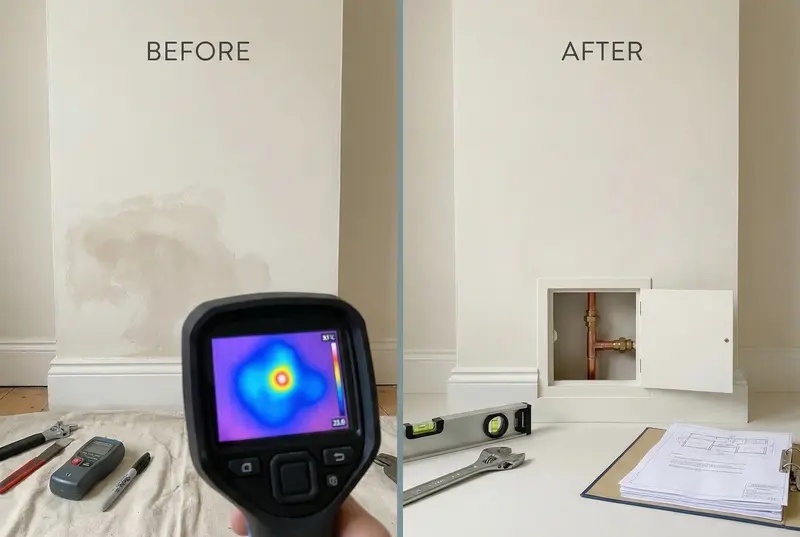
When a plumber arrives to investigate a suspected leak in your Nottingham home, the first step is a thorough assessment. They'll check your water meter (if you have one) to confirm water is escaping even when all taps and appliances are off. They'll also inspect obvious risk areas — under sinks, around the boiler, behind the toilet cistern, and along any visible pipework — before moving on to harder-to-reach areas. For hidden leaks, plumbers use acoustic listening devices that pick up the sound of water escaping through walls or floors, as well as thermal imaging cameras that detect the temperature difference caused by damp behind surfaces. In Nottingham's older properties, tracer gas testing is sometimes used to pinpoint leaks within sealed pipe runs without having to cut into walls unnecessarily. Once the leak is located, repair options are discussed with you before any work begins. A simple joint repair or pipe section replacement is usually straightforward and completed the same day. If the leak is within a solid floor or a tiled wall, the plumber will explain exactly what needs opening up, what it will cost, and what reinstatement work follows. You should expect to receive a clear explanation at every stage — a good local plumber won't start cutting tiles without your agreement first.
Why Choose a Local Nottingham Specialist
Choosing a Nottingham-based plumber rather than a national call centre makes a real difference with leak detection. A local tradesperson will be familiar with the common issues in Victorian terraces and Edwardian semis across the city — they'll know that properties in certain Nottingham postcodes are more likely to have lead communication pipes, or that a particular style of suspended floor makes pipe access more complicated. They're also easier to call back if a problem recurs, and they have a local reputation to protect, which tends to mean a more honest and straightforward service. Response times are faster too, which genuinely matters when water is actively leaking.
Frequently Asked Questions
How do I know if I have a hidden leak in my Nottingham home?
The most reliable DIY check is your water meter. Turn off all taps and appliances, note the meter reading, and check it again after an hour without using any water. If it's moved, you almost certainly have a leak. Unexplained damp patches on walls or floors, a musty smell, or a sudden increase in your water bill are also strong indicators — particularly common in older Victorian terraces in Nottingham.
Will the plumber need to damage my walls or floors to find the leak?
Not necessarily. Modern acoustic and thermal imaging technology means many leaks in Nottingham homes can be pinpointed precisely before any investigation begins. This reduces unnecessary damage significantly. Where access is needed — through a floor panel or a small section of plasterboard — a reputable plumber will discuss this with you first and keep disruption to the minimum required to fix the problem properly.
Does hard water in Nottingham make leaks more likely?
It does increase risk over time. Nottingham's moderately hard water causes limescale to accumulate inside pipes and around fittings. In older properties, this can cause joints to weaken and pinhole leaks to develop. It's one reason why Victorian terraces and Edwardian semis in Nottingham tend to have more pipe-related issues than newer builds — the combination of aged pipework and decades of scale build-up takes its toll.
Is a leak covered by my home insurance?
It depends on your policy. Most standard home insurance covers damage caused by a sudden, unexpected leak but not gradual seepage or maintenance issues. Some policies include trace and access cover, which pays for the cost of finding and reaching a hidden leak. It's worth checking your documents before booking a plumber — if you do have cover, your insurer may require you to use an approved contractor or follow a specific claims process.
Other Plumbing Services in Nottingham
What do you need?
Select your service and urgency level