Leak Detection & Repair in Derby
Leaks have a way of starting small and becoming expensive very quickly. Whether you've noticed a damp patch on the ceiling, an unexplained spike in your water bill, or you can hear running water somewhere in the house when everything's turned off, getting a proper leak detection job done sooner rather than later is almost always the cheaper option. Derby's size and varied housing stock mean leaks turn up in all sorts of guises — from corroded pipes in older terraces to slab leaks beneath modern extensions. The good news is that today's detection methods mean most leaks can be located without tearing apart walls or floors unnecessarily.
Plumbing Conditions in Derby
Moderately Soft water — Peak District millstone grit
Mixed housing stock across different eras. With 22% of properties built before 1919, older pipework and drainage systems are common — specialist knowledge of period properties matters.
Leak Detection & Repair in Derby — Local Expertise
Derby is a genuinely mixed city when it comes to housing. The older Victorian and Edwardian terraces you'll find across areas like Normanton, Pear Tree, and Litchurch tend to have original lead or early copper pipework that has simply been added to over the decades rather than replaced wholesale. These properties are particularly prone to pinhole leaks, joint failures, and deteriorating stopcock valves. Post-war housing — which makes up a large chunk of Derby's suburban stock across areas like Mackworth and Sinfin — often has pipework that was installed in the 1950s through 1970s and is now approaching or past its expected service life. Modern new-builds, increasingly common on Derby's expanding outskirts, tend to use plastic push-fit systems that can develop leaks at poorly installed joints. Derby also sits in a moderately hard water area, which contributes to limescale build-up inside pipes over time. This narrowing of internal pipe diameter increases water pressure at weak points and accelerates the kind of slow, persistent leak that's easy to overlook until real damage has been done.
How We Work
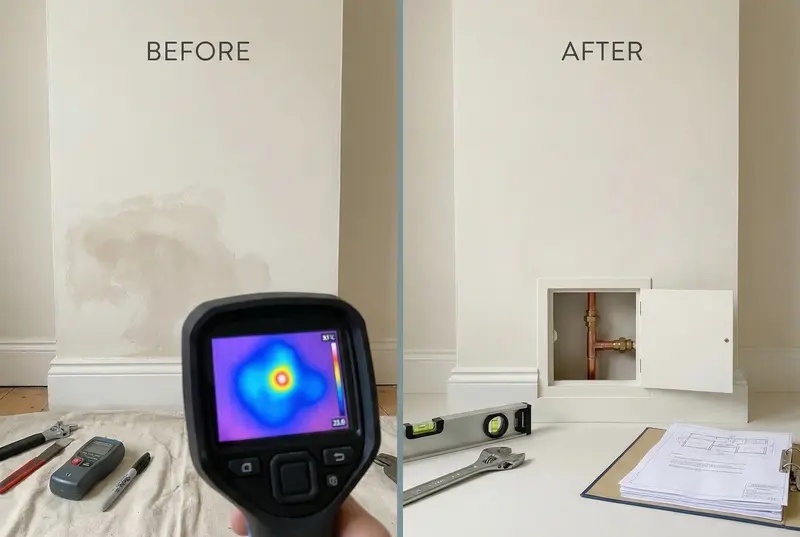
When a leak detection specialist arrives at your Derby property, the first thing they'll do is a thorough visual survey — checking under sinks, around the boiler, inspecting visible pipework in the loft, and looking for tell-tale signs like water staining, mould patches, or peeling plaster. If the leak isn't immediately obvious, which is often the case with pipes buried in walls or beneath floors, they'll move on to diagnostic tools. Acoustic listening devices are commonly used to pick up the sound of water escaping under pressure — even through concrete or thick plasterwork. Thermal imaging cameras are another useful tool, identifying temperature differences in walls or floors caused by escaping water. For underground supply pipes, tracer gas methods involve introducing a harmless gas into the pipework and detecting where it surfaces. Once the leak is pinpointed, the engineer will talk you through the repair options before starting any work. For a straightforward pipe repair this might mean cutting out a short section and fitting a new joint or replacement pipe. More complex repairs — particularly in Victorian properties with inaccessible pipework — may involve partial rerouting. The plumber should always pressure-test the system after the repair to confirm the problem is fully resolved before signing off.
Why Choose a Local Derby Specialist
A plumber who works regularly in Derby understands the city's housing stock in a practical, hands-on way. They'll know that a 1930s semi in Allestree is likely to have a different set of pipe problems than a new-build off the A52, and they won't be surprised by the quirks of older Derby properties — low water pressure from original pipe diameters, awkward stopcock locations, or the limescale-related issues that come with the local water supply. Local trades also have established relationships with merchants and suppliers in the area, which can speed up getting parts and keep repair costs reasonable.
Frequently Asked Questions
How do I know if I have a hidden leak in my Derby home?
Common signs include a water bill that's noticeably higher than usual without any obvious reason, damp or discoloured patches on walls or ceilings, the sound of running water when all taps are off, or a water meter that keeps ticking when nothing is in use. In Derby's older Victorian properties, musty smells in ground-floor rooms can also point to a slow leak beneath the floorboards.
Will the plumber need to dig up my floors or break into my walls?
Not necessarily. Modern acoustic and thermal imaging equipment can pinpoint leaks with a high degree of accuracy before any physical work begins, meaning access is kept to a minimum. In many cases a single small opening is enough. That said, some older Derby properties with pipes buried in solid concrete or thick Victorian plasterwork do require more invasive access — your plumber should explain this clearly before starting.
Can limescale from Derby's water supply actually cause leaks?
Yes, over time it can contribute to them. Derby's moderately hard water causes limescale to build up on the inside of pipes and fittings. In older copper systems this gradually restricts flow and raises pressure at weak points, which can accelerate wear on solder joints and connections. It's worth having a plumber check for this if your property has original pipework that hasn't been updated in many years.
Is leak detection covered by home insurance?
Policies vary, but many UK home insurance policies do cover trace and access work — meaning the cost of finding and gaining access to a leak — even if the repair itself isn't always included. It's worth checking your policy documents or calling your insurer before booking, as some Derby homeowners are surprised to find the investigation costs are partially or fully covered.
Other Plumbing Services in Derby
What do you need?
Select your service and urgency level