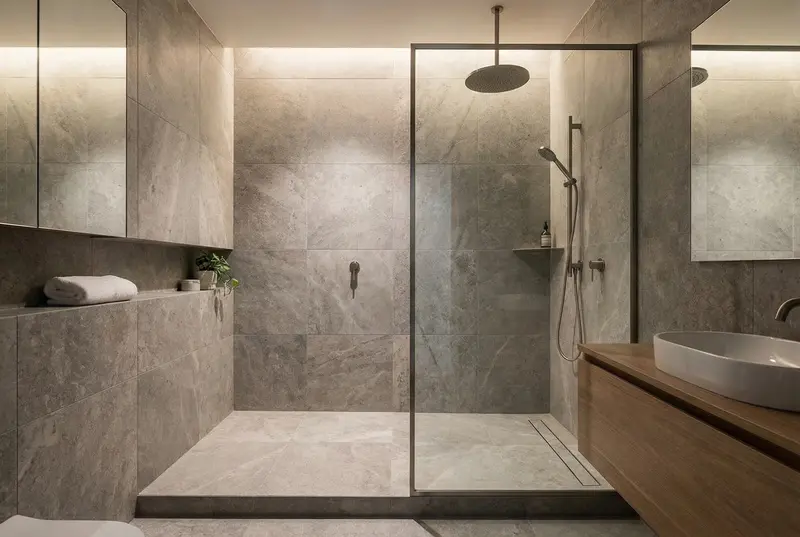
Wet Room Installation in Nottingham
A wet room is one of the most practical and stylish bathroom upgrades you can make, and demand for them across Nottingham has grown steadily as homeowners invest in longer-term comfort and accessibility. That might sound like a significant outlay, but a well-executed wet room adds real value to a Nottingham home and lasts decades with minimal maintenance. Getting the installation right from the start is everything — cut corners on tanking or drainage and you'll be dealing with damp and structural damage within a few years.
Plumbing Conditions in Nottingham
Moderately Hard water — Trent Valley
Mixed housing stock across different eras. With 22% of properties built before 1919, older pipework and drainage systems are common — specialist knowledge of period properties matters.
Wet Room Installation in Nottingham — Local Expertise
Nottingham's housing stock creates some specific challenges for wet room installation that are worth understanding before you commit. Victorian terraces and Edwardian semis dominate across areas like Mapperley, West Bridgford, Sherwood, and Beeston, and these properties were built with solid floors, original joists, and sometimes unpredictable plumbing layouts. Creating a level-access shower tray or fully recessed drain in a Victorian terrace often means significant subfloor work — sometimes dropping the floor level or reinforcing joists — which adds to both time and cost. Edwardian semis can present similar headaches, particularly in upstairs bathrooms where the structural work below the floor is more involved. Nottingham also sits in a moderately hard water area, which matters for wet rooms because limescale builds up on wall tiles and drain components faster than in softer water regions. Choosing grout sealants and drain materials that handle hard water well is something a local installer who knows the area will factor in automatically.
How We Work
A proper wet room installation in Nottingham follows a clear sequence of stages, and understanding what's involved helps you hold any installer to account. The process begins with a full survey of your existing bathroom or wet room space — checking floor structure, drain fall, existing plumbing runs, and ventilation. In older Nottingham properties, this survey stage can flag up lead pipework or outdated soil stacks that need addressing before the wet room work begins. Once the survey is complete and a specification agreed, the room is fully stripped back to the structural floor and walls. The critical stage is tanking — the application of a continuous waterproof membrane across every surface, including into corners and around pipe penetrations. This has to be done properly because any gap in the membrane is a future leak. Once tanked and inspected, the former (if used) or screeded floor is laid to create the correct fall toward the drain. Wall boards or tiles go on next, followed by the shower fixtures, screen if required, and any heated towel rails or underfloor heating. Ventilation is also essential in a wet room — building regulations require adequate extraction, and in a Victorian terrace with limited external wall access, this sometimes means a ceiling-mounted fan with ducting through the loft. Final sign-off should include a water test of the entire installation.
Why Choose a Local Nottingham Specialist
Choosing a tradesperson who works regularly in Nottingham makes a genuine difference on a project like this. They'll know the quirks of local property types — the typical joist configurations in a Sherwood terrace, the plumbing layouts common in Edwardian semis around West Bridgford, and which building control officers are active in the Nottingham City or Rushcliffe areas. Local installers also tend to have established relationships with local tile suppliers and bathroom showrooms, which can mean better lead times and more competitive pricing on materials. And if something needs attention after installation, a local tradesperson is far more likely to come back promptly.
Frequently Asked Questions
Do I need building regulations approval for a wet room in Nottingham?
In most cases, a like-for-like bathroom conversion doesn't require building regulations approval, but if you're altering drainage, moving soil pipes, or adding a new electrical circuit for underfloor heating or extractor fans, you will need to notify Nottingham City Council or Rushcliffe Building Control depending on your location. A competent installer will handle this notification as part of the job.
Can a wet room be installed in an upstairs bathroom in a Victorian terrace?
Yes, but it requires more work than a ground-floor installation. Upstairs wet rooms in Nottingham's Victorian terraces often need joist reinforcement and careful management of the floor level to accommodate a recessed drain. It's entirely achievable, but budget for additional structural work and make sure your installer has specific experience with this type of property before committing.
How do I maintain a wet room given Nottingham's hard water?
Nottingham's moderately hard water means limescale will build up on screens, tiles, and drain grates more quickly than in softer water areas. A squeegee after each use makes a significant difference. Use a pH-neutral, limescale-removing cleaner on tiles and fittings regularly, and consider a water softener if you're investing in high-end fixtures. Grout should be sealed annually to prevent staining and moisture ingress.
How long does a wet room installation take in a typical Nottingham home?
For a standard bathroom conversion in a Nottingham property, allow around 7–12 working days for a full wet room installation. Victorian terraces and Edwardian semis with complex subfloor work can extend this to two to three weeks. Agree a detailed programme with your installer upfront and factor in that you'll be without a bathroom during this period — worth planning carefully if it's your only facility.
Other Plumbing Services in Nottingham
What do you need?
Select your service and urgency level