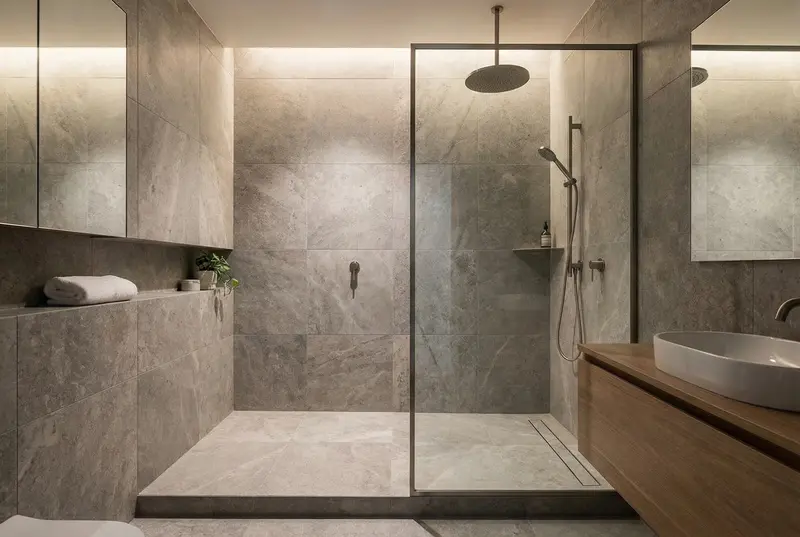
Wet Room Installation in Southwark
Wet rooms are one of the most sought-after bathroom upgrades in Southwark right now, and it's easy to see why. Whether you're converting a cramped Victorian terrace bathroom in Bermondsey, modernising a 1960s flat in Peckham, or finishing out a new-build near London Bridge, a properly installed wet room adds real value and practical daily comfort. Done right, it's a seamless, watertight space that looks sharp and functions brilliantly. Done badly, it's an expensive flood waiting to happen. That's why getting a properly qualified, locally experienced installer matters enormously — someone who understands Southwark's unique mix of property types and building conditions before a single tile goes down.
Plumbing Conditions in Southwark
Very Hard water — significant limescale buildup, annual boiler servicing essential
Mixed housing stock across different eras. With 22% of properties built before 1919, older pipework and drainage systems are common — specialist knowledge of period properties matters.
Wet Room Installation in Southwark — Local Expertise
Southwark's housing stock is genuinely varied, and that variety has a direct impact on how wet room installations are planned and priced. Victorian terraces and conversions — common across areas like Camberwell, Walworth, and parts of Borough — typically have suspended timber floors, which need careful structural assessment before a wet room can be installed. Laying a waterproof tanked system over a springy timber subfloor requires additional preparation, often including a cement backer board build-up or even a full floor reconstruction. Post-war housing, particularly the council-era blocks and maisonettes found throughout Southwark, usually has concrete floors, which are much more straightforward to work with. Modern apartments near Elephant and Castle or the riverside developments tend to be more wet-room-ready from the outset. One factor that affects every property in the area is Southwark's moderately hard water supply. Limescale builds up on shower fittings, screens, and drains over time, so specifying a thermostatic shower valve with descaling features and using larger-format tiles with minimal grout lines will save you significant cleaning effort long-term.
How We Work
A wet room installation in Southwark typically unfolds across several distinct stages, each one critical to the finished result. The process begins with a proper site survey — an experienced installer will assess your floor structure, check existing drainage positions, and evaluate the condition of any current plumbing before quoting. This step is especially important in Southwark's older properties where unexpected issues, like decaying joists or outdated pipework, are fairly common. Once the survey is complete and the design is agreed, the first physical stage is strip-out: removing the existing bathroom suite, tiles, and floor coverings back to the substrate. If the floor is timber, this is where reinforcement or rebuilding takes place to create a solid, level base capable of supporting the waterproofing system. Next comes the tanking — a multi-layer waterproof membrane applied across the floor and up the walls to create a completely watertight tray. This is the most technically important stage; any shortcuts here will result in water ingress into the structure below. The linear or centre drain is then set into the floor at the correct fall angle, typically a one-to-two percent gradient towards the drain. Tiling follows, with the floor tiles usually cut and laid to direct water flow cleanly. Finally, the shower valve, screen or frameless glass partition, and any heated towel rails or underfloor heating are installed and connected. The whole process usually takes between five and eight working days depending on complexity.
Why Choose a Local Southwark Specialist
Choosing a tradesperson who works regularly across Southwark makes a real practical difference. They'll know the common quirks of the area's building stock — the shallow drainage runs in older Bermondsey terraces, the floor void depths in post-war Southwark estates, the building control requirements for listed conversions near Borough Market. A local installer also tends to have established relationships with nearby tile showrooms and plumbing merchants, which can help with lead times and material sourcing. And if something needs a return visit after completion, you're not waiting on someone who treats Southwark as an occasional job.
Frequently Asked Questions
Can a wet room be installed on a timber floor in a Victorian property in Southwark?
Yes, but it requires more preparation than a concrete floor. The subfloor needs to be structurally sound, level, and reinforced — typically with a cement backer board system — before tanking can be applied. In many of Southwark's Victorian terraces, this adds cost and time but is entirely achievable when done by an experienced installer who knows what to look for.
Do I need building regulations approval for a wet room installation in Southwark?
For a like-for-like bathroom conversion, full building regulations approval is not usually required. However, if you're moving drainage, altering structural elements, or the property is in a conservation area — which applies to several parts of Southwark — you may need to notify the local authority or obtain consent. Your installer should be able to advise based on your specific property and location.
How do I deal with limescale on wet room fittings given Southwark's hard water?
Southwark's water supply is moderately hard, so limescale on shower heads, drains, and glass screens is a genuine maintenance consideration. Specifying a thermostatic valve with an easy-clean cartridge, choosing chrome or brushed brass fittings rated for hard water, and squeegeeing glass after each use all help significantly. Some homeowners also install an inline water softener, which extends the life of all your fittings noticeably.
How long does a wet room installation typically take in Southwark?
Most installations take between five and eight working days from strip-out to final fix, assuming no major structural surprises. Victorian properties in Southwark occasionally reveal issues — like damaged joists or old cast-iron drainage — that add a day or two. Your installer should build a realistic programme into the quote and keep you informed if anything unexpected comes up during the works.
Other Plumbing Services in Southwark
What do you need?
Select your service and urgency level