Leak Detection & Repair in Southwark
Leaks have a way of hiding in plain sight — a damp patch on the ceiling, a water meter that keeps ticking when everything's turned off, or a mysteriously high bill from Thames Water. In Southwark, where the housing stock ranges from ornate Victorian terraces to 1960s council blocks and brand-new riverside apartments, the causes of leaks vary enormously depending on what's behind your walls. This guide walks you through what professional leak detection in Southwark actually involves, what it costs, and what questions are worth asking before anyone starts pulling up your floorboards.
Plumbing Conditions in Southwark
Very Hard water — significant limescale buildup, annual boiler servicing essential
Mixed housing stock across different eras. With 22% of properties built before 1919, older pipework and drainage systems are common — specialist knowledge of period properties matters.
Leak Detection & Repair in Southwark — Local Expertise
Southwark's mix of property ages creates a genuinely varied set of plumbing challenges. Victorian properties in areas like Bermondsey and Peckham often have original lead or iron supply pipes that have corroded slowly over decades — sometimes leaking inside walls for months before any visible damage appears. Post-war housing, including the many council-built estates across the borough, frequently has older copper pipework that's now approaching the end of its serviceable life, and joints that were soldered rather than compression-fitted can fail without warning. More modern developments around London Bridge and the riverside tend to have plastic push-fit systems that are generally reliable but can fail at joints if installed under stress. Southwark also sits in a moderately hard water area, which means limescale buildup inside pipes and at fittings is a genuine factor — over time this can accelerate joint failure and reduce flow, making small leaks easier to miss until they're bigger problems. Knowing which era your property is from matters a lot when it comes to diagnosing where a leak is likely to be hiding.
How We Work
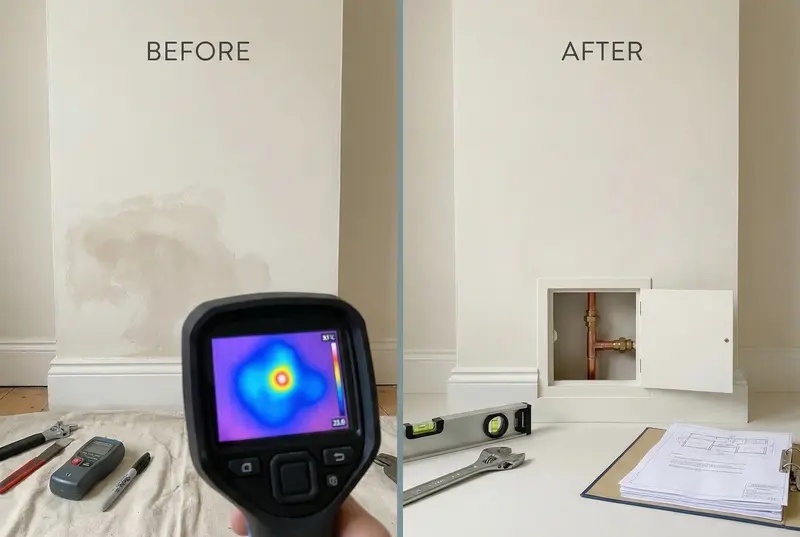
When a plumber arrives for a leak detection job in Southwark, the first step is a thorough visual inspection — checking meter readings, looking for damp patches, inspecting visible pipework under sinks, behind toilets, and in any accessible ceiling voids. If the source isn't immediately obvious, they'll move on to more targeted methods. Thermal imaging cameras are one of the most effective tools available: they pick up temperature differences in walls and floors caused by warm or cold water passing through hidden pipes, without any need to open up surfaces. Acoustic leak detection uses sensitive listening equipment to pick up the sound of water escaping under pressure, and is particularly useful for tracing supply pipe leaks under concrete floors — something that comes up regularly in Southwark's post-war flat conversions and ground-floor properties. Tracer gas testing involves introducing a harmless gas mixture into the pipework; the gas escapes at the leak point and is detected at the surface, pinpointing the exact spot with impressive accuracy. Once the leak is located, you'll get a clear explanation of what's been found and your options for repair — whether that's a straightforward joint fix, a section of pipe replacement, or rerouting pipework entirely if the original route is no longer accessible or sensible. Reputable plumbers will always explain the trade-offs before starting work.
Why Choose a Local Southwark Specialist
A plumber who works regularly across Southwark will have seen the same issues repeat themselves across the borough's different property types — the corroded iron mains feeds common in older Bermondsey terraces, the shoddy pipe runs in certain 1980s conversions around Elephant and Castle, the limescale-related failures that show up in hard water areas like this one. That local experience shortens the diagnostic process considerably. They're also more likely to understand access complications specific to the area — basement flats, converted Victorian houses with shared services, and high-rise estates all present different challenges that a non-local plumber might approach less efficiently.
Frequently Asked Questions
How do I know if I have a hidden leak in my Southwark property?
The most reliable early sign is a water meter that continues to move when all taps and appliances are off. Other indicators include unexplained damp patches on walls or ceilings, a musty smell in a specific area, or a Thames Water bill that's noticeably higher than usual. In older Southwark properties, slight floor warping or peeling skirting boards can also point to a slow leak beneath the surface.
Will the plumber need to break up my floor or open my walls?
Not necessarily, and a good plumber won't do so until the leak is accurately located. Modern detection methods — thermal imaging, acoustic equipment, and tracer gas — are specifically designed to pinpoint leaks without unnecessary damage. In Southwark flats with concrete floors, tracer gas is often used precisely because it avoids exploratory breaking-out, which would be both disruptive and expensive.
Does hard water in Southwark make leaks more likely?
It does increase certain risks, yes. Limescale deposits can build up inside older copper pipework and at compression fittings, gradually restricting flow and putting additional stress on joints. In Victorian and post-war properties across Southwark, this is a real contributing factor to joint failures over time. It's worth having older pipework inspected if you haven't done so recently, particularly if you're buying or renovating.
Who is responsible for fixing a leak in a Southwark leasehold flat?
It depends on where the leak is. Internal pipework serving only your flat is generally your responsibility as the leaseholder. Shared supply pipes or drainage serving multiple units are usually the freeholder or management company's responsibility. If a leak from a neighbouring flat has caused damage to yours, their insurer may be liable. Always check your lease and contact your building manager early — delays can complicate insurance claims considerably.
Other Plumbing Services in Southwark
What do you need?
Select your service and urgency level