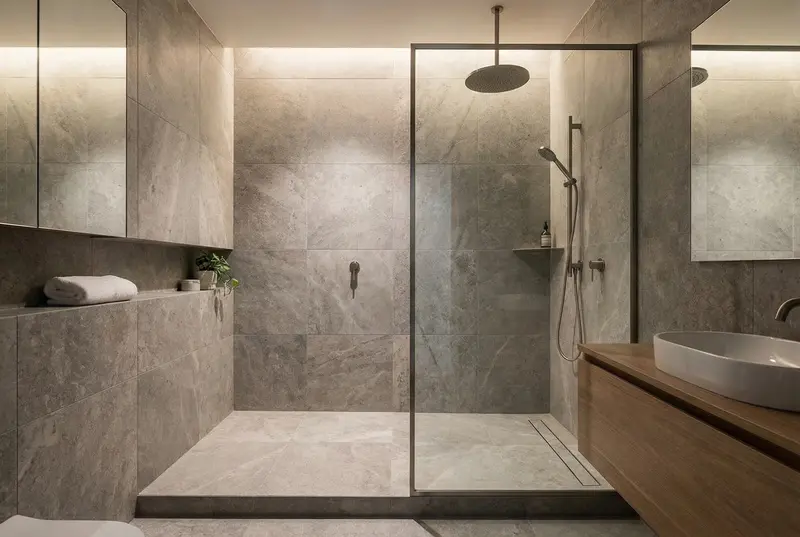
Wet Room Installation in London
Getting a wet room installed in London is one of the most popular bathroom upgrades homeowners are investing in right now — and for good reason. A properly designed wet room adds real value, looks fantastic, and solves practical problems that standard shower enclosures can't. But London properties throw up some genuine complications that homeowners elsewhere don't always face. Older construction methods, shallow floor joists, shared walls with neighbours, and the city's notoriously hard water all need careful consideration before a single tile goes down. Done well, a wet room installation transforms a tired bathroom into something genuinely special. Done badly, it becomes an expensive leak waiting to happen.
Plumbing Conditions in London
Very Hard water — significant limescale buildup, annual boiler servicing essential
Mixed housing stock across different eras. With 22% of properties built before 1919, older pipework and drainage systems are common — specialist knowledge of period properties matters.
Wet Room Installation in London — Local Expertise
The overwhelming majority of London homes are Victorian terraces and Edwardian semis, and these properties were not designed with wet rooms in mind. Suspended timber floors — common in ground and first-floor bathrooms in these houses — need structural assessment and often reinforcement before installation begins. The original floor joists may be too shallow to accommodate a linear drain or a recessed shower tray, which means the design has to be adapted accordingly. Party walls are another factor: many London terraces share drainage stacks with next-door neighbours, and any changes to waste pipe routing need to be planned carefully to avoid noise complaints or compliance issues. Then there's the water. London sits firmly in a hard water zone supplied by Thames Water and Affinity Water, drawing heavily from chalk aquifers. This means limescale buildup on glass, screens, and fittings is a real ongoing concern — something worth factoring into your choice of materials and surface finishes from the outset.
How We Work
A wet room installation in London typically begins with a detailed survey of the existing bathroom. The installer will assess the floor structure, check for signs of existing damp or rot — not uncommon in older London properties — and measure the fall required to direct water to the drain effectively. If the floor is timber, a backer board system or a full concrete screed may be applied depending on the depth available. If it's a solid concrete floor, the process is more straightforward. Once the subfloor is prepared, a full tanking system is applied to walls and floor — this is the waterproofing membrane that keeps water where it belongs. Corners, junctions, and around any pipe penetrations are reinforced with tape and compound. This stage is non-negotiable and should never be rushed. After tanking is complete and inspected, tiling begins. Large-format tiles are popular in London bathrooms right now, though they require a flatter, more precisely prepared surface. Underfloor heating is often fitted at this stage and is well worth considering given London winters. Finally, the shower valve, drain, glass screen or frameless partition, and any lighting are installed and tested thoroughly before sign-off. A straightforward wet room in a standard London terraced bathroom takes around five to eight working days from strip-out to completion.
Why Choose a Local London Specialist
Choosing a London-based installer rather than a national firm or someone travelling in from outside the M25 makes a genuine difference on a job like this. Local tradespeople understand the quirks of Victorian and Edwardian construction, know how building control operates across different London boroughs, and have established relationships with local tile suppliers and merchants — which matters when you need specific materials quickly. They're also easier to hold accountable if something needs attention after completion. A wet room is a significant investment, and having someone who knows London's housing stock and can respond promptly if any issues arise is worth a great deal.
Frequently Asked Questions
Can a wet room be installed on a timber floor in a London Victorian terrace?
Yes, but it requires careful preparation. The joists need to be assessed for strength and depth, and a suitable backer board or screed system installed to create a stable, waterproof base. Many London installers do this regularly — it's a known challenge in older properties rather than a reason to avoid a wet room altogether.
How do I deal with limescale on my new wet room given London's hard water?
London's hard water from the Thames Water and Affinity Water supply areas means limescale is inevitable on glass and tiles. Opting for matte or textured surfaces rather than polished finishes helps disguise it between cleans. A squeegee after each use makes a big difference, and some homeowners install a whole-house water softener — worth considering if you're doing a full renovation.
Do I need planning permission or building regulations approval for a wet room in London?
Planning permission isn't usually required for a wet room. However, building regulations can apply — particularly if you're altering drainage or installing electric underfloor heating. Your installer should advise on this for your specific London borough, as local authority processes can vary slightly. Always make sure any notifiable work is properly signed off.
How long does a wet room installation take in a typical London home?
For a standard bathroom in a London terrace or semi, expect five to eight working days from strip-out to final fit. More complex projects involving structural floor work, bespoke tiling, or tricky access — common in tightly packed London streets — can extend this to ten days or more. Your installer should give you a clear programme before work starts.
Other Plumbing Services in London
What do you need?
Select your service and urgency level