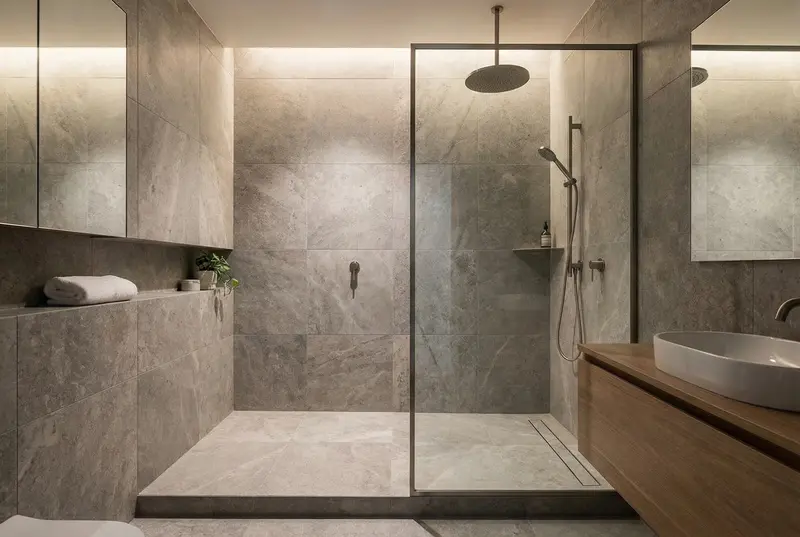
Wet Room Installation in Ipswich
Wet rooms have become one of the most popular bathroom upgrades across Ipswich over the past decade, and it's easy to see why. A properly installed wet room transforms an ordinary bathroom into something genuinely luxurious — fully waterproofed, beautifully tiled, and far easier to keep clean than a traditional shower enclosure. Whether you're thinking about converting a tired family bathroom or making a ground-floor shower room more accessible for an older relative, a wet room is a long-term investment that adds real value to your home. In Ipswich, where property prices have been steadily rising, a well-executed wet room can meaningfully increase what buyers are prepared to pay.
Plumbing Conditions in Ipswich
Hard to Very Hard water — chalk aquifers
Mixed housing stock across different eras. With 22% of properties built before 1919, older pipework and drainage systems are common — specialist knowledge of period properties matters.
Wet Room Installation in Ipswich — Local Expertise
Ipswich has a wonderfully mixed housing stock, and the type of property you live in has a direct bearing on how your wet room installation will be planned and priced. Edwardian semis — particularly common in areas like Rushmere and Tuddenham Road — often have solid timber floors and older pipework that needs careful assessment before tanking begins. Post-war estates, which make up a significant chunk of housing in areas like Whitehouse and Whitton, tend to have concrete ground floors that are actually well-suited to wet room conversions but may need upgrading for drainage falls. Modern developments, meanwhile, are generally easier to work with structurally but can have tighter floor voids that complicate underfloor drainage routing. Ipswich sits in a moderately hard water area, which is worth bearing in mind when specifying your shower fixtures and screens — limescale will build up on exposed surfaces over time, so choosing quality brass or chrome fittings and considering a water softener for the feed can save you a lot of maintenance headaches down the line.
How We Work
A wet room installation in Ipswich typically follows a clear sequence of stages, and understanding what's involved helps you plan realistically. The process begins with a proper survey of the existing bathroom — the installer will check floor joist depth and condition, existing waste pipe runs, the location of the soil stack, and whether the subfloor can support the weight of a tanked and tiled wet room. In older Ipswich properties, this stage sometimes uncovers surprises like undersized joists or outdated drainage that need addressing first. Once the survey is complete, the room is stripped back to the bare structure. The floor is then built up with a purpose-made shower former or a screeded slope — typically around 1 in 80 fall — to ensure water drains reliably toward a linear or central drain. Tanking is the most critical step: two or three coats of waterproof membrane are applied across every wall and floor surface, with special attention paid to the junctions between floor and wall, which is where leaks most commonly start. After tanking is fully cured, the tiler works across the entire room, including wet and dry zones. Plumbing connections — thermostatic shower valve, fixed head, handheld attachment and any body jets — are made, and electrical items like heated towel rails and underfloor heating are connected by a qualified electrician. A final check for drainage flow and waterproofing integrity wraps the job up before the room is handed back to you.
Why Choose a Local Ipswich Specialist
Choosing a tradesperson who works regularly in Ipswich makes a practical difference. They'll know the common structural quirks of Edwardian semis around the town centre, the concrete floor constructions typical of post-war estates out toward Whitton and Gainsborough, and which local suppliers stock the materials needed to finish the job promptly. A locally based installer is also far easier to get back should a snagging issue arise — and with wet rooms, where waterproofing integrity is everything, having someone nearby who stands behind their work isn't just convenient, it's genuinely important.
Frequently Asked Questions
How long does a wet room installation take in a typical Ipswich home?
Most wet room installations in Ipswich take between seven and fourteen working days from strip-out to completion. Older properties like Edwardian semis sometimes add a few extra days if joist work or drainage modifications are needed. Your installer should give you a realistic programme once the initial survey is done, so you're not left without a bathroom for longer than expected.
Will a wet room work on an upper floor in an Ipswich Edwardian semi?
Yes, but it requires more careful preparation than a ground-floor conversion. The timber joists common in Ipswich's older semis need to be assessed for depth and condition, and a cement particle board or similar rigid substrate is usually required before tanking. An experienced installer will specify this correctly from the outset — cutting corners on upper-floor wet rooms is where leaks and costly damage to ceilings below tend to originate.
Does the hard water in Ipswich cause problems in wet rooms?
Ipswich's moderately hard water does mean limescale will accumulate on shower heads, valves and any exposed chrome or glass over time. Specifying a thermostatic valve with ceramic cartridges, choosing a rainfall head that's easy to descale, and wiping down surfaces regularly after use all help significantly. Some homeowners in Ipswich also fit an inline scale inhibitor to the shower supply, which reduces build-up on internal components and extends the life of your fittings.
Do I need planning permission for a wet room conversion in Ipswich?
In the vast majority of cases, no — wet room conversions are treated as permitted development. However, if you live in a listed building or a conservation area (there are several in central Ipswich), you may need consent before making structural alterations. It's always worth a quick check with Ipswich Borough Council if you're unsure, and any reputable local installer should flag this during the survey stage.
Other Plumbing Services in Ipswich
What do you need?
Select your service and urgency level