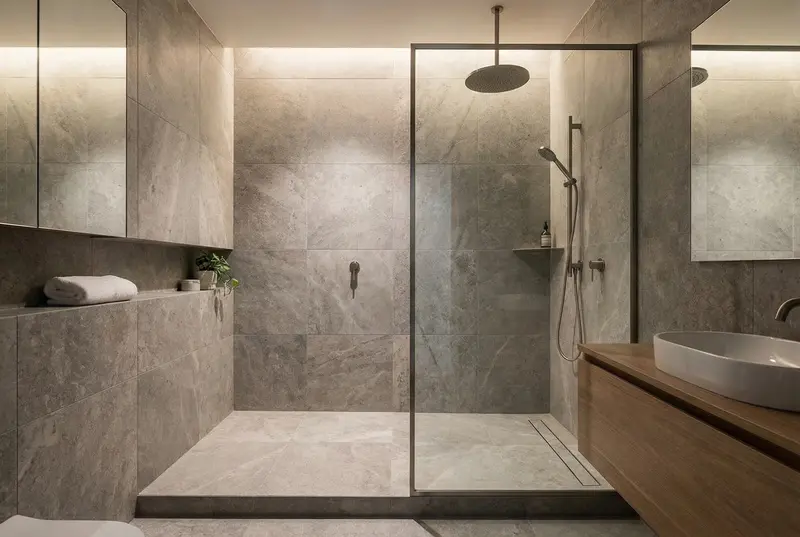
Wet Room Installation in Gloucester
You've been thinking about it for a while — that cramped, dated bathroom in your Gloucester home that never quite works for the whole family. Maybe you're tired of stepping over a bath you barely use, or you're planning ahead for older relatives who need safer access. A wet room installation transforms that wasted space into something genuinely functional and modern, with a fully waterproofed, level-access shower area that looks great and adds real value to your property. Gloucester homeowners are increasingly choosing wet rooms as a practical long-term investment, and with the right installer, the process is far more straightforward than most people expect.
Plumbing Conditions in Gloucester
Moderately Hard water — Cotswold limestone
Mixed housing stock across different eras. With 22% of properties built before 1919, older pipework and drainage systems are common — specialist knowledge of period properties matters.
Wet Room Installation in Gloucester — Local Expertise
Gloucester's housing stock is wonderfully varied, and the type of home you own has a direct bearing on how a wet room installation is planned and priced. Edwardian semis — common across areas like Kingsholm and Longlevens — often have solid timber floor joists that need careful structural assessment before tanking, as the subfloor needs to support the added weight of screed and drainage. Post-war estates across Tuffley, Matson, and Podsmead typically have concrete ground floors, which can actually make wet room installation more straightforward, though older pipework may need upgrading at the same time. Newer developments around Quedgeley and Barnwood are generally easier to work with from a structural standpoint, though bathroom sizes vary considerably. Gloucester sits in a moderately hard water area, which means limescale buildup is a real consideration — worth factoring in when choosing tiling grout, glass screens, and showerheads, as textured surfaces or low-quality fittings will show scale deposits quickly and become harder to keep clean.
How We Work
A wet room installation in Gloucester typically follows a clear sequence of work, usually taking between four and seven days depending on the size of the bathroom and condition of the existing space. The process begins with stripping out your existing suite — removing the bath, toilet, basin, and any existing flooring down to the subfloor. Your installer will then assess the structural integrity of the floor and walls before any waterproofing work begins. Tanking is the critical stage: a specialist waterproof membrane is applied across the entire floor and partway up the walls, creating a completely sealed wet zone. This is not a job to cut corners on, as poor tanking is the root cause of almost every wet room leak. Once the tanking has cured, a former or screed bed is laid to create the correct gradient towards the drain — typically a fall of around 1 in 80. Drainage is recessed into the floor, usually a linear drain along one wall or a central point drain. Wall tiles and floor tiles are then laid, with drainage positioned to remain accessible. Finally, the shower fixtures, screens, sanitaryware, and any heated towel rails or underfloor heating elements are fitted and commissioned. A good installer will leave the space clean and fully functional, and will test every connection before signing off.
Why Choose a Local Gloucester Specialist
Choosing a local Gloucester tradesperson for your wet room installation genuinely matters. Someone who regularly works across the city's mix of Edwardian semis, post-war builds, and newer developments will already know the common floor and wall construction types they're likely to encounter — and won't be surprised by what's behind your tiles. Local installers also have established relationships with nearby tile suppliers and merchants, which can help with lead times and problem-solving mid-project. And if something needs attention after installation, a Gloucester-based business is reachable quickly — far more practical than dealing with a national firm that dispatches someone from Bristol or beyond.
Frequently Asked Questions
Can a wet room be installed in a small Gloucester bathroom?
Yes — in fact, wet rooms often work better in compact spaces than a standard shower enclosure because there's no bulky tray or frame eating into the room. Many Gloucester homeowners with modest-sized bathrooms in post-war semis find a wet room actually makes the space feel larger and easier to clean. The minimum practical size is roughly 1.2m x 1.2m for the wet zone.
Will limescale be a problem with my wet room in Gloucester?
Gloucester's moderately hard water does mean limescale can build up on glass screens, tile grout, and showerheads over time. Choosing a squeegee-friendly glass screen, large-format tiles with minimal grout lines, and a quality thermostatic shower with a descalable head all help significantly. A water softener in the airing cupboard is another option worth considering if it's a concern.
How long will a wet room installation take in my Gloucester home?
Most wet room installations in Gloucester take between four and seven working days, assuming no major surprises once the existing suite is stripped out. Edwardian properties occasionally reveal issues like rotten floor joists or redundant lead pipework that add a day or two. Your installer should give you a realistic programme once they've done a proper pre-start inspection.
Do I need planning permission for a wet room in Gloucester?
In almost all cases, no — converting an existing bathroom to a wet room is considered permitted development and doesn't require planning permission. However, if your Gloucester property is a listed building, or if you're making structural changes that affect an external wall, it's worth checking with Gloucester City Council. Building regulations approval isn't usually required either, but electrical work must still comply with Part P.
Other Plumbing Services in Gloucester
What do you need?
Select your service and urgency level